

What if the best way to get more from solar isn’t exporting power, but using it at home? A system designed around your household can help you make better use of solar energy for your home, reduce reliance on the grid and manage electricity bills. Solar Victoria says households installing solar through its Solar Homes Program can save up to $1,000 a year on energy bills, though actual savings depend on how and when you use power.
It’s understandable to have questions before committing. Victorian rebates can be confusing, poor-quality installations are a concern, and an older switchboard may need attention before solar can be safely integrated. The right system needs to suit your household, roof and existing electrical setup, not just look good on a quote.
This guide explains what to check in 2026, including Victorian and federal incentives, installer quality, switchboard readiness and how solar can work alongside a heat pump hot water system. Use the practical checks here to compare quotes and plan for your home, rather than relying on a one-size-fits-all promise.
Key Takeaways
- Learn how solar energy for your home turns sunlight into usable electricity, and what the inverter does.
- Understand how using solar power at home affects potential savings, and what to consider before adding other electric upgrades.
- Check Solar Victoria rebate eligibility and confirm it before installation.
- See why a site assessment matters, including roof shading and whether your switchboard is ready for solar.
What is Solar Energy for Your Home and How Does It Work?
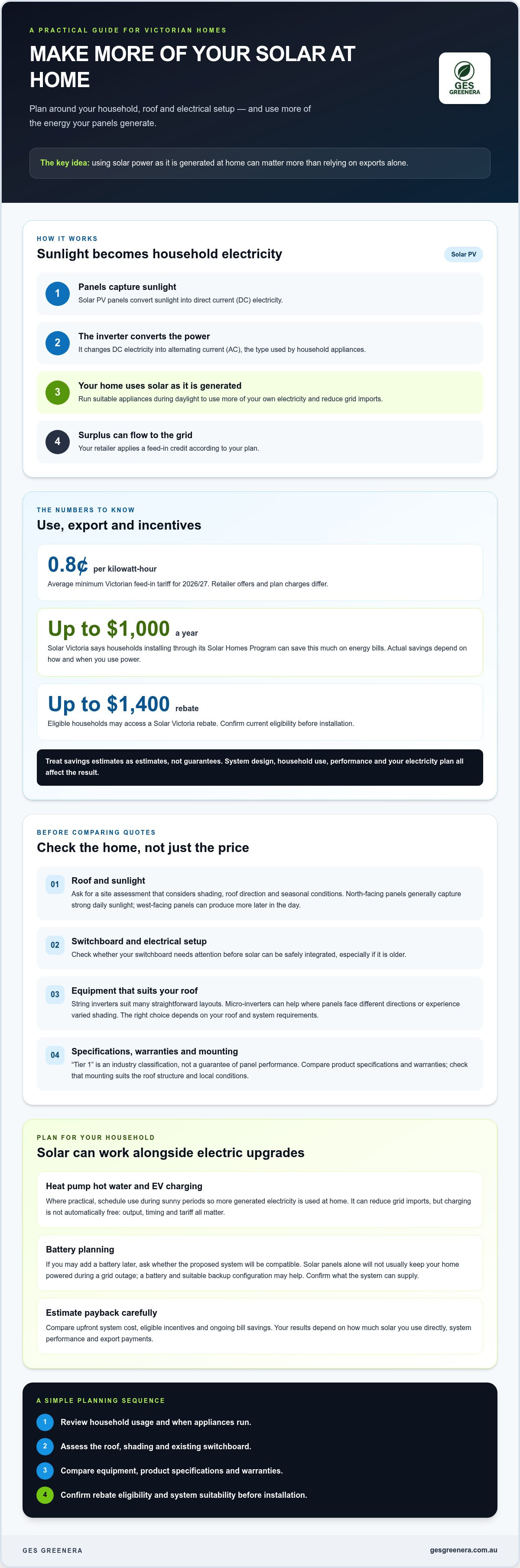
Residential solar PV panels convert sunlight into direct current (DC) electricity. An inverter changes that into alternating current (AC), the type used by household appliances. Your home uses solar power as it’s generated. Any surplus can flow to the Victorian grid, with your retailer applying a feed-in credit according to your plan. In 2026/27, the average minimum Victorian feed-in tariff is 0.8 cents per kilowatt-hour, so using your solar power at home can matter more than relying on exports.
Solar can be part of a broader home energy system, alongside options such as electric hot water and battery storage. The Solar power in Australia overview provides wider context on the country’s use of this technology.
For a visual example of a home using solar power, watch:
The Components of a Modern Solar System
Panels, an inverter and a secure mounting system work together to generate and convert electricity. “Tier 1” is an industry classification, not a guarantee of panel performance, so compare product specifications and warranties rather than relying on the label alone. String inverters suit many straightforward roof layouts. Micro-inverters can help where panels face different directions or experience varied shading. The right choice depends on the roof design and system requirements. Mounting must suit the roof structure and local conditions, including Melbourne’s storms.
How Much Sunlight Does a Melbourne Home Actually Get?
Peak sun hours estimate the daily solar energy available at a site. Melbourne’s actual yield changes with season, weather, shading and panel direction. North-facing panels generally capture strong daily sunlight, while west-facing panels can produce more later in the day. Solar irradiance is the sunlight energy reaching a surface. Higher irradiance can increase panel output, subject to temperature and system conditions.
With lower feed-in returns and growing interest in home electrification, self-consumption is central to energy planning. A system designed for your home can help you use more of the electricity you generate, rather than depending on exports alone.
The Benefits: Why Switch to Solar Energy in 2026?
Solar can reduce the electricity you buy from the grid, particularly when you run appliances during daylight hours. Your actual bill savings depend on system design, household usage and your electricity plan, so treat estimates as estimates, not guarantees. Generating more of your own power can also reduce exposure to changing electricity prices. A well-designed system may appeal to future buyers, but any effect on your home’s value depends on the property and market.
Using renewable electricity at home can lower the emissions associated with your household’s energy use and support Victoria’s shift towards renewable energy. Solar panels alone won’t usually keep your home powered during a grid outage. A battery and suitable backup configuration may help, but confirm what a proposed system can actually supply.
Financial ROI and Payback Periods
To estimate payback, compare the upfront system cost, eligible incentives and ongoing bill savings. Savings vary with how much solar power you use directly, system performance and export payments. For 2026/27, the average minimum Victorian feed-in tariff is 0.8 cents per kilowatt-hour, though retailer offers and plan charges differ. Eligible households may access a Solar Victoria rebate of up to $1,400. Check current Victorian solar rebates and eligibility before installation. Improving household electrical efficiency can help you use generated power well. This residential electrician guide covers practical considerations.
Powering the All-Electric Future
Solar becomes more valuable as homes add electrical loads. Where practical, schedule EV charging or heat pump hot water during sunny periods so more generated energy is used at home. This can reduce grid imports, but charging isn’t automatically free. System output, timing and your tariff all affect the result. If you may add a battery later, ask whether the proposed system will be compatible.
GES Greenera installs solar PV systems, EV chargers and heat pumps. If you’re planning more than one upgrade, consider solar PV system installation as part of a coordinated home energy plan.
Victorian Solar Rebates and Planning Your Installation
Solar Victoria’s 2026 rebate can reduce the upfront cost of solar energy for your home. Eligible households may receive up to $1,400, with an optional interest-free loan of up to the same amount, repayable over four years. From 1 July 2026, the combined taxable income of all property owners must be below $150,000, and the property must be valued under $3 million. The address must not have previously received a Solar Homes Program solar panel or battery rebate, although you may apply at a new property after moving. Check the current Victorian solar panel rebate criteria before proceeding.
To qualify, get a quote from an authorised solar retailer and have Solar Victoria confirm your eligibility before installation. Use eligible products and an appropriately qualified installer. The programme requires a licensed electrician with Clean Energy Council (CEC) accreditation. The loan can help lower the upfront barrier, but remember it must be repaid.
Navigating the Paperwork
Start with the quote and rebate eligibility check, then confirm approval before installation. Your installer should also coordinate the grid connection application with your local distribution network service provider (DNSP), such as AusNet Services, CitiPower or Jemena. Ask who submits the application and when approval is required. Separately, federal Small-scale Technology Certificates (STCs) provide an upfront discount on eligible solar installations, typically reducing system costs by about 30%. They’re distinct from the Victorian rebate.
Selecting the Right System Size
A 6.6kW system is a common Melbourne residential choice because it can balance household generation with practical roof space, though the right size depends on your usage and site. A 10kW system may suit homes with higher daytime demand, but more capacity isn’t automatically better if surplus power is exported for a low feed-in tariff. Review when your household uses electricity, including daytime heating, hot water or EV charging, to make better use of your generation.
For a system designed around your home’s electrical setup, explore solar PV installation with GES Greenera.
The Installation Process: Integrating Solar with Your Home's Electrics
A safe, effective solar energy for your home installation starts with a site assessment. The installer checks roof condition, orientation and shading, then considers how the proposed system will connect with your home’s electrical setup. This can identify issues before equipment is installed on the roof.
Before installation, an electrician should inspect the switchboard. Solar changes how electricity moves through your home: power can flow from the grid into the property, while solar electricity can supply household circuits or be exported. Older boards may need an upgrade to accommodate the system safely. The electrician also checks circuit breakers, residual current devices (RCDs) and whether they’re suitable for the installation.
Once the design and connection arrangements are confirmed, panels are secured to roof mounting rails and wired to the inverter. After electrical testing and commissioning, the system can be connected for operation. Ask how to access its monitoring platform or app, if included, so you can track generation and notice changes in performance. Installations must comply with AS/NZS 3000, the Wiring Rules, and an electrician must issue a Certificate of Electrical Safety.
Why Your Switchboard is the Key to Solar Safety
The switchboard is the link between solar, household circuits and the grid. A professional check confirms whether its capacity, protective devices and wiring are suitable, or whether a residential switchboard upgrade is needed. Don’t assume an older board is automatically unsuitable or ready to go. Have it assessed as part of the system design.
Choosing a Local Expert in Western Melbourne
When comparing installers for a home in Melton, Melbourne Airport, Diggers Rest, Deanside, Bacchus Marsh, Sunbury, Sunshine, Altona, Williamstown, Essendon, Thomastown, Epping, Eynesbury or Werribee, ask how they’ll assess your site and manage the grid connection. Before signing, check that the quote clearly lists system components and brands, warranties, any switchboard work, grid approval responsibilities and commissioning. Confirm who will provide documentation and explain system monitoring. Business owners can also read this guide to commercial electrical services.
Make a Confident Start Towards Solar
Choosing solar is about more than putting panels on a roof. The right setup is designed around your household’s energy use, roof and switchboard, so the system can work safely and make practical sense. Before committing, check rebate eligibility and approvals, compare system components, and consider how much solar electricity your household can use directly.
Solar can also work alongside other electrical upgrades. GES Greenera provides solar PV installation, EV charging stations, heat pump hot water systems and electrical services for local homes, including in Melton, Sunbury and Bacchus Marsh.
Ready to explore what could suit your property? Request a solar assessment for your Melbourne home from GES Greenera. A tailored assessment can help you plan solar energy for your home with greater confidence.
Frequently Asked Questions
Is solar energy for your home worth it in Melbourne with current feed-in tariffs?
Solar energy for your home can still make financial sense in Melbourne, but the value comes mainly from using generated power yourself, not exporting it. For 2026/27, the average minimum Victorian feed-in tariff is 0.8 cents per kilowatt-hour, while retailer offers vary. Compare your quote and likely daytime self-consumption with your usage charges, supply fees and any incentives. Savings depend on your home and plan.
How many solar panels do I need to run a standard 4-bedroom home in Victoria?
There’s no set panel count for a four-bedroom home. The right system depends on your household’s electricity use, panel capacity, available roof space, orientation and shading. A family using more power during the day, or planning to charge an EV or run a heat pump, may have different needs from a household that’s often out. Ask for a design based on your bills and expected usage, not bedroom count alone.
Can I install solar panels if my roof is shaded by trees or other buildings?
Often, yes, but shade can reduce solar generation. The effect depends on how much of the roof is shaded and when. A site assessment can identify shaded areas and help determine whether the proposed panel layout suits your roof. Ask the installer to explain how shading affects estimated output across the day and year, and whether another roof section could provide a better result.
Do I need to upgrade my electrical switchboard before installing solar?
Not always. An electrician needs to inspect your switchboard, wiring and protective devices to check whether they’re suitable for a solar connection. Some older boards may need an upgrade to support the installation safely, while others may be suitable as they are. Ask for the switchboard assessment to be included in the system planning, so any required electrical work is identified before installation.
How long does a residential solar installation take from start to finish?
There’s no single reliable timeframe. The overall process depends on site assessment, DNSP approval, rebate confirmation, installer scheduling, weather and whether switchboard work is needed. Ask for separate estimates for approval, on-site installation and commissioning, rather than assuming the roof work is the full timeline. GES Greenera serves homes across Melton, Melbourne Airport, Diggers Rest, Deanside, Bacchus Marsh, Sunbury, Sunshine, Altona, Williamstown, Essendon, Thomastown, Epping, Eynesbury and Werribee.


