

What if that irritating midnight chirp from your ceiling isn't just a low-battery warning, but a sign that your home's fire safety is out of step with Victorian law? It's a common frustration for many in Melbourne, where navigating the shift from simple battery units to a permanent hard wired smoke alarm system can feel like a moving target. You want to know your family is protected without having to climb a ladder every few months just to silence a nuisance beep.
We understand that staying on top of the latest Victorian Building Authority standards and mandatory rental audit requirements can be overwhelming. You deserve a fire safety setup that works silently in the background, providing fail-safe protection and full insurance compliance. In this guide, we'll explain why hard-wired photoelectric alarms are the superior choice for 2026, how the 1997 build rule affects your specific property, and exactly what you need to do to ensure your home meets current Australian Standards for total peace of mind.
Key Takeaways
- Understand the 2026 Victorian regulations that mandate photoelectric sensors and annual safety audits to keep your property compliant and safe.
- Learn why a hard wired smoke alarm provides superior reliability by combining 240V mains power with a fail-safe battery backup.
- Discover how interconnected alarm systems provide a vital early warning by triggering every unit in the home the moment smoke is detected.
- Realise why professional installation by a licenced Melbourne electrician is essential for both legal compliance and maintaining valid home insurance.
- Gain peace of mind by following the mandatory 10-year replacement cycle and professional testing schedules for all residential smoke detectors.
What is a Hard-Wired Smoke Alarm and How Does it Work?
A hard wired smoke alarm is a permanent safety fixture integrated directly into your property's 240V electrical circuit. Unlike standalone battery units that rely solely on a small internal power source, these systems draw their primary energy from the mains power. This infrastructure provides a dual-power advantage; the mains power handles the heavy lifting of continuous monitoring, while a backup battery remains on standby to take over instantly if a power outage occurs. Understanding how smoke detectors work helps clarify why this redundancy is so critical for modern Victorian homes.
The backup battery serves as your final safety net. In many older models, this is a replaceable 9V alkaline battery that requires annual checking. However, modern high-end units often feature a sealed, rechargeable lithium battery designed to last the full ten-year lifespan of the alarm. This shift toward rechargeable technology reduces maintenance and ensures the unit remains functional even if a homeowner forgets a battery change.
The Anatomy of a 240V Smoke Alarm
A professional installation involves more than just clicking a unit into place. These alarms feature a dedicated mounting base with a hard-wired terminal block where your electrician secures the 240V wiring. Inside the unit, a photoelectric sensing chamber uses a light source and sensor to monitor for smoke particles. You can easily check the status of your system by looking at the LED indicators. A solid green light typically confirms mains power is active, while a flashing red light indicates the unit is performing regular self-tests or has been triggered.
Photoelectric vs. Ionisation Technology
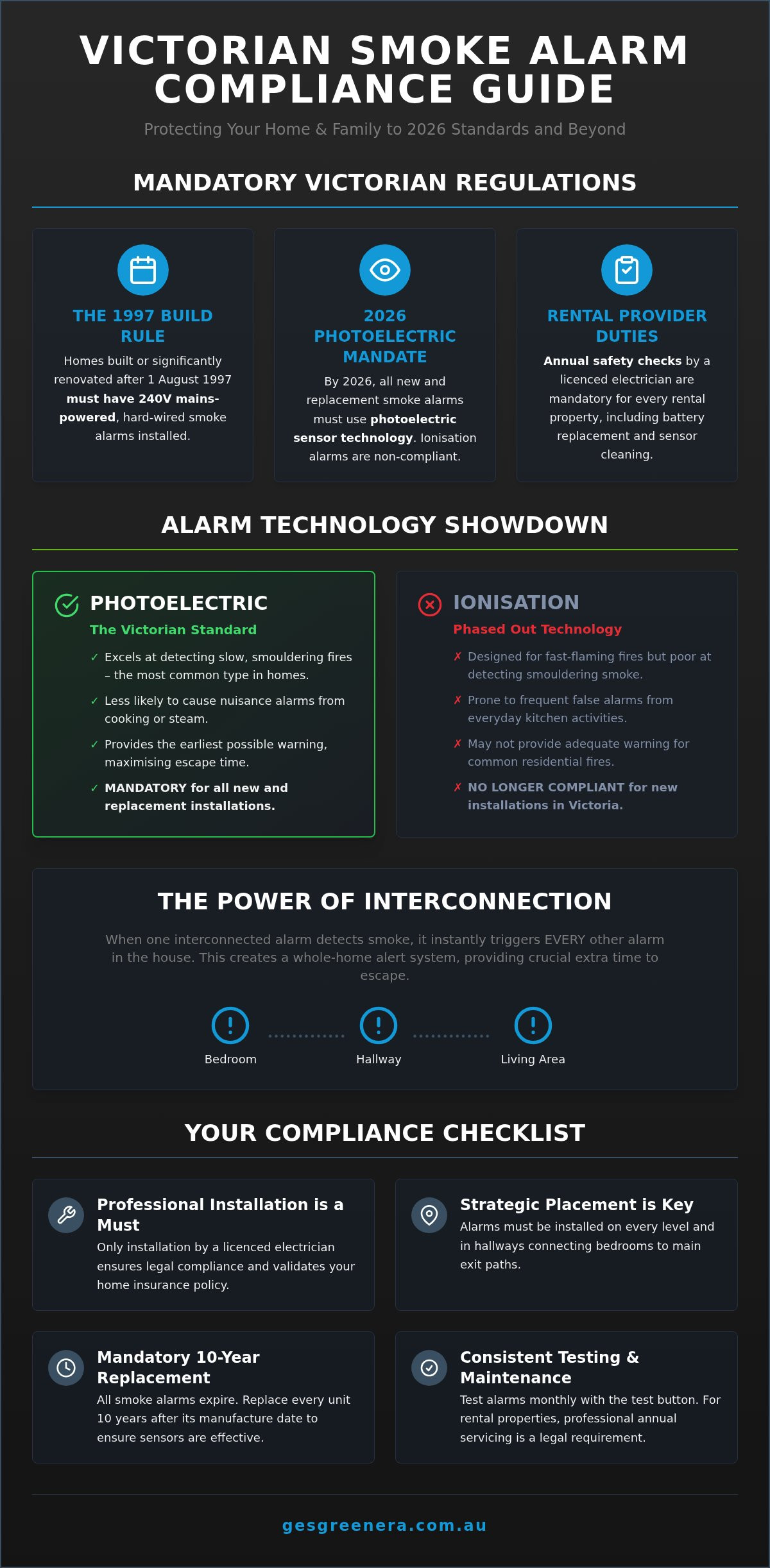
Victoria is moving away from older ionisation technology, which uses radioactive isotopes to detect fast-flaming fires but often struggles with slow-burning hazards. Photoelectric sensors are now the mandatory standard because they excel at detecting smouldering fires, which are the most common type of residential fire in Australia. These sensors are also much more "intelligent" when it comes to everyday life. They are less likely to trigger a nuisance alarm just because you've slightly overdone the toast or stepped out of a steamy shower.
Photoelectric technology provides the most effective defence against slow-burning house fires by providing an early warning during the critical smouldering stage.
Victorian Smoke Alarm Legislation: Requirements in 2026
In Victoria, fire safety isn't just a recommendation; it's a strictly regulated legal obligation. For homes built or significantly renovated after August 1, 1997, the law is clear: you must have a hard wired smoke alarm connected to the 240V mains power. These units aren't just temporary gadgets; they are permanent electrical infrastructure. By 2026, the shift to photoelectric technology is absolute across the state. Ionisation alarms no longer meet the grade for new installations because they often fail to detect smouldering fires quickly enough to allow safe evacuation. Following CFA smoke alarm recommendations ensures your property aligns with the highest safety standards while keeping you on the right side of the law.
Compliance for Melbourne Landlords
The Victorian Residential Tenancies Act has introduced rigorous standards for rental providers that cannot be ignored. Since late 2025, annual smoke alarm safety checks have become mandatory for every rental property across Melbourne. As a landlord, you can't simply press the "test" button yourself and assume you're covered. Insurance companies now frequently require professional certification to prove the entire system is fully operational and compliant with AS 3786:2014. A licenced electrician provides the necessary record-keeping, ensuring batteries are replaced and sensors are cleaned of dust or insects. Our team can help you stay compliant with professional smoke alarm testing that protects your investment and your tenants.
Where Must Alarms Be Installed?
Placement is just as vital as the type of alarm you choose. The Building Code of Australia (BCA) dictates that alarms must be positioned on the path of travel people take to evacuate during an emergency. This ensures that an alarm sounds before smoke blocks your exit routes.
- Hallways: Units must be installed between every bedroom area and the rest of the house to catch smoke before it reaches sleeping occupants.
- Multi-storey homes: Every level requires at least one working alarm, even if there are no bedrooms on that floor, to ensure coverage across the entire structure.
- Dead air spaces: Avoid mounting units directly in corners or within 300mm of a wall junction. These areas trap "dead air" where smoke may circulate around the sensor instead of entering the chamber.
Every unit also has a hard expiry date. Regardless of their appearance, all smoke alarms must be replaced every 10 years to ensure the sensors remain sensitive enough to save lives. This decade-long limit is a non-negotiable standard for Victorian homeowners, as sensor degradation over time is inevitable.
Hard-Wired vs. Battery-Powered Alarms: The Reliability Debate
Choosing between power sources isn't just about convenience; it's about the fundamental safety of your household. While battery-powered units seem easier to install, they lack the permanent connection that defines a modern safety system. A hard wired smoke alarm provides a level of consistency that independent units simply can't match. Because they draw power from your property's electrical circuit, you aren't reliant on a chemical battery to trigger the sensor when it matters most. While professional installation requires an upfront investment, it eliminates the long-term cost and hassle of purchasing annual replacement batteries for every unit in the house.
The Danger of 9V Battery-Only Alarms
Many households fall into a "set and forget" trap with battery units. When a standalone alarm starts chirping at 3 AM, the common reaction is to pull the battery out to stop the noise and leave it on the kitchen bench. This creates a lethal gap in your home's protection that might not be discovered until it's too late. There's also the persistent issue of "battery theft," where 9V cells are scavenged for other household gadgets and never replaced. Battery-only units are now largely reserved for older homes where hard-wiring is physically impossible.
Why 240V Systems Offer Better Peace of Mind
A hard wired smoke alarm system is monitored through your switchboard, ensuring constant power is available. These systems offer higher decibel ratings and more consistent performance during an emergency compared to aging battery models. They can also be integrated into modern home security systems, allowing for remote monitoring and alerts to your smartphone even when you aren't at home. According to Victorian smoke alarm legislation, these units must be installed by a professional, ensuring the placement and wiring meet Australian Standard AS 3786:2014.
Interconnection is the real safety benchmark here. While some battery units offer wireless pairing, a hard-wired system allows for robust, physical interconnection through your home's wiring. This ensures that if a fire starts in the garage, the alarm in your bedroom sounds immediately. It's the difference between hearing a faint beep behind a closed door and being woken by a full-volume alert exactly where you are sleeping. Dealing with the occasional "low battery" chirp is also much simpler with 240V units, as the mains power keeps the system active while you replace the backup cell at a more convenient time.
Interconnection: The "One Goes Off, All Go Off" Rule
Interconnection is the ultimate safety benchmark for modern Melbourne residences. It ensures that the moment one sensor detects smoke, every alarm in the house triggers simultaneously. This is critical because a fire in a remote part of the home, like a laundry or garage, could remain silent to sleeping occupants until the situation becomes dire. When you install a hard wired smoke alarm system with this feature, you remove the risk of being isolated from a life-saving alert by distance or closed doors. In a multi-storey house, this means a fire detected on the ground floor will immediately wake those sleeping upstairs, providing the extra seconds needed for a safe evacuation.
Physical Interconnection (Wired)
For property owners undertaking a new build or a major renovation, physical wiring is the most robust option available. During the rough-in stage, electricians install a dedicated "switch leg" or interconnect wire that links every unit back to the main circuit. This physical link provides absolute reliability. The communication signal doesn't rely on batteries or radio signals that could be blocked by heavy building materials or electronic interference. It's a permanent, hard-wired safety network that ensures consistent performance for the entire ten-year lifespan of your detectors.
Wireless Interconnection for Existing Homes
You don't necessarily need to tear up your plaster to achieve this level of safety in an established Melbourne home. Modern technology allows for wireless RF (Radio Frequency) bases to be fitted to your hard-wired alarms. These bases create a secure mesh network between units, allowing a hard wired smoke alarm in the hallway to communicate wirelessly with another in a distant bedroom. It's an efficient way to retrofit safety without the cost of extensive rewiring through the ceiling or walls. Our team can assess your property's layout to ensure signal strength remains strong across all zones, providing a seamless safety net for your family.
Testing an interconnected system is best done as a two-person job. When you press and hold the test button on one unit, you should hear every other alarm in the house sound within seconds. If a remote alarm stays silent, there's a fault in the link that requires professional attention. Regular testing is the only way to confirm your property is truly protected by this "all-for-one" system. If you're unsure if your current setup is linked correctly, our experts can perform a new home electrical fit-out or safety audit to get your system up to code.
Professional Installation with GES Greenera: Your Safety Partner
Engaging a licenced electrician for your smoke alarm needs isn't just a recommendation in Victoria; it's a legal requirement for any 240V work. Attempting a DIY installation on a hard wired smoke alarm poses significant risks of electric shock and can void your home insurance. At GES Greenera, we take a safety-first approach to every installation, ensuring your property meets the 2026 Victorian compliance standards while providing a reliable, low-maintenance solution for your family.
Our process extends beyond simply mounting a unit. We evaluate the health of your entire electrical system, particularly the switchboard. A modern smoke alarm circuit must be protected by a functional RCD (Safety Switch) to ensure that if a fault occurs, the power is cut instantly. By linking your fire safety to your switchboard's overall health, we provide a holistic security net that many standalone services overlook. This ensures that your permanent electrical infrastructure remains as efficient as it is safe.
Our Melbourne Smoke Alarm Services
We offer comprehensive fire safety solutions tailored to the unique needs of Melbourne property owners. Our services include:
- Full System Audits: Detailed inspections for residential homes and commercial properties to identify non-compliant, expired, or poorly positioned units.
- Expert Installation: Professional setup of interconnected photoelectric 240V alarms, ensuring they are integrated correctly with your home's existing wiring.
- Switchboard Compliance: Checking that your safety switches and circuit breakers are up to code and capable of supporting your fire safety infrastructure.
The Benefit of Local Expertise
Melbourne's diverse architecture, from heritage weatherboards in the inner north to modern builds in the outer suburbs, presents specific electrical challenges. We understand these local building styles and the technical nuances required for a clean, safe installation. Whether you are dealing with a persistent "chirping" alarm in the middle of the night or need a full upgrade before a new tenancy begins, our team provides prompt and professional service. We pride ourselves on being pragmatic innovators, using high-quality components that offer long-term reliability.
Protecting your home shouldn't be a source of stress. By partnering with a trusted local expert, you can rest assured that your fire safety system is legally compliant, professionally installed, and ready to perform when it matters most. Contact GES Greenera for a professional smoke alarm audit today to secure your property and gain total peace of mind.
Securing Your Melbourne Home for 2026 and Beyond
Transitioning to a hard wired smoke alarm system is more than just a legal box-ticking exercise; it's a permanent investment in your family's safety. By choosing interconnected photoelectric sensors, you ensure that every corner of your property is monitored by a fail-safe network that won't let you down. These systems remove the common risks associated with forgotten or disabled batteries and provide the critical early warning needed to escape smouldering fires during the night.
Navigating the 2026 Victorian compliance landscape doesn't have to be a headache. Our team of Fully Licenced A-Grade Electricians brings expert local Melbourne knowledge to every job, ensuring your installation meets all current standards. We provide official Compliance Certificates for your records, giving you the documentation needed for insurance purposes and mandatory rental audits. Don't leave your property's safety to chance when professional help is just a call away.
Book Your Professional Smoke Alarm Installation with GES Greenera and enjoy the peace of mind that comes with a truly reliable fire safety system. We are ready to help you protect what matters most.
Frequently Asked Questions
Do smoke alarms in Victoria have to be hard-wired?
Yes, all Victorian homes built or significantly renovated after August 1, 1997, must have a hard wired smoke alarm installed. For properties constructed before this date, standalone battery powered units are legally permitted, though upgrading to a mains powered system is the gold standard for safety. Regardless of the build date, all new installations must use photoelectric technology to comply with current Victorian Building Authority standards and ensure maximum protection.
How often should hard-wired smoke alarms be replaced?
You must replace every smoke alarm in your home every 10 years, regardless of whether it is a battery or hard-wired model. Over time, the internal sensors become less sensitive due to dust accumulation and component degradation, which can significantly delay detection. You can usually find the manufacture or expiry date printed on the side or back of the unit. If your alarm is over a decade old, it's no longer reliable.
Why is my hard-wired smoke alarm chirping even after I changed the battery?
Persistent chirping often indicates that the unit has reached its 10-year expiry date or there's a fault in the 240V mains connection. While a low backup battery is the most common cause, dust or small insects trapped in the sensing chamber can also trigger a nuisance chirp. If the noise continues after a battery swap, the unit likely needs a professional cleaning or a complete replacement by a licenced electrician to restore safety.
Can I install a hard-wired smoke alarm myself?
No, you cannot legally install or replace a hard wired smoke alarm yourself in Victoria. Because these units are connected directly to your home's 240V electrical circuit, the work must be completed by a licenced A-Grade electrician. DIY electrical work is not only dangerous but can also lead to the rejection of insurance claims and significant fines under Victorian energy safety regulations. Professional installation ensures your system is correctly integrated and compliant.
What are the rules for smoke alarms in Melbourne rental properties?
Under the Victorian Residential Tenancies Act, rental providers must ensure smoke alarms are tested and cleaned at least once every 12 months. This audit must confirm the units are positioned correctly and haven't reached their expiry date. Landlords are also required to provide tenants with information on how to test the alarms. Professional testing ensures you receive a compliance certificate, which is vital for meeting your legal obligations and protecting your tenants.
How many smoke alarms do I need in a two-storey house?
You are required to have at least one working smoke alarm on every storey of a multi-level home, even if the level doesn't contain bedrooms. In a standard two-storey house, you should place alarms in the hallways outside sleeping areas and near the path of travel to the exits. Interconnecting these units is highly recommended so that an alarm triggered downstairs will immediately alert occupants sleeping on the upper floor of a fire.
What is the difference between photoelectric and ionisation alarms?
Photoelectric alarms use a light source to detect smoke particles and are superior at sensing slow, smouldering fires common in residential settings. Ionisation alarms use a small amount of radioactive material to detect fast-flaming fires but are prone to nuisance alarms from cooking. Because photoelectric technology provides earlier warnings for the types of fires most likely to occur while you sleep, it is now the mandatory standard for all new Victorian installations.
Do hard-wired smoke alarms work if there is a power outage?
Yes, a hard-wired smoke alarm will continue to function during a power outage because it includes a dedicated backup battery. Most older models use a replaceable 9V battery, while modern high-performance units feature a 10-year sealed lithium battery. This redundancy ensures that your family remains protected even if the mains power is cut during a storm or an electrical fault, providing constant fire monitoring and total peace of mind.


