

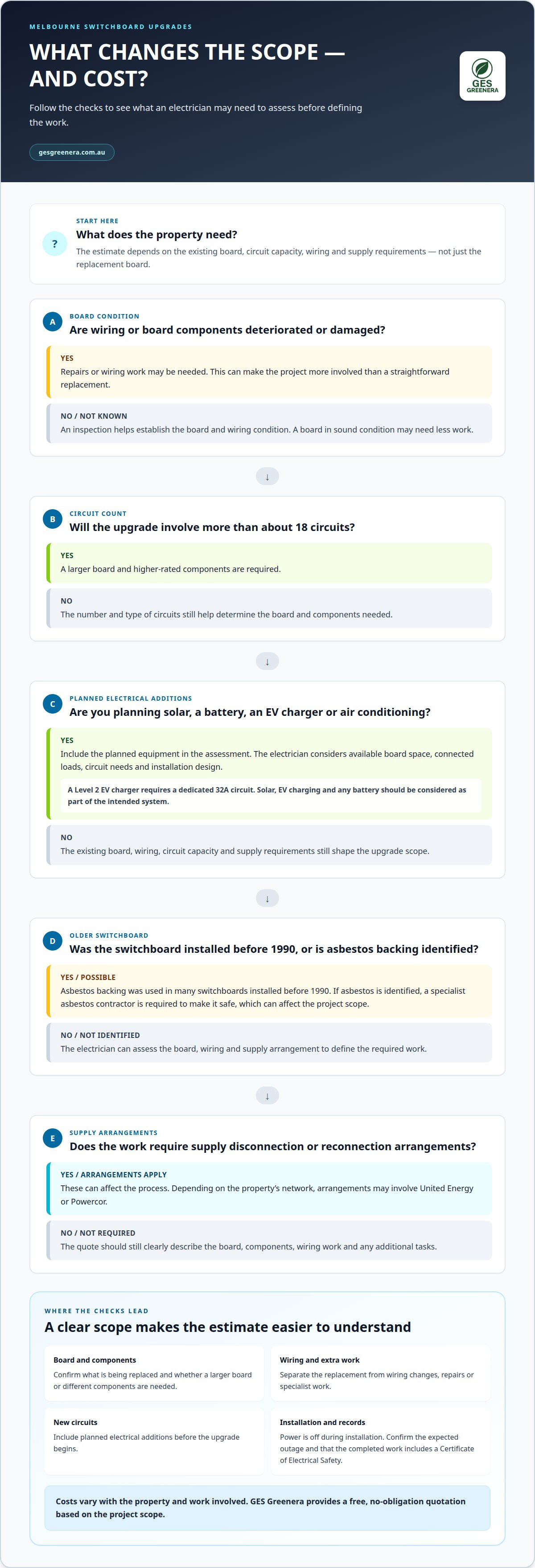
Circuit count is only one factor that affects the price. To upgrade an electrical switchboard in Melbourne, the cost depends on the board’s condition, the number of circuits and whether additional work, such as new circuits or rewiring, is required. Because every job is different, GES Greenera provides a free, no-obligation quotation based on the work involved.
If you’re budgeting for an upgrade, it helps to understand what can change the scope. An older fuse box, limited capacity or electrical work planned alongside the upgrade can all affect what the job involves.
This guide explains the main factors behind switchboard upgrade costs in Melbourne, when circuits for solar, EV charging or air conditioning may be needed, and when replacing an outdated fuse box could make sense. You’ll also learn what to expect from the upgrade process, so you can make a more informed decision about your home’s electrical system.
Key Takeaways
- Melbourne upgrade costs vary with the number of circuits, the board’s condition and any extra electrical work required.
- Allow for the power to be off during installation; the time needed depends on the scope and complexity of the job.
- Planning solar, EV charging or air conditioning? Assess whether the existing board can support the new circuits.
- Older fuse boxes and ceramic fuses may signal that a replacement is worth considering, particularly if you’re planning other electrical upgrades.
How much does a switchboard upgrade cost in Melbourne?
The cost to upgrade an electrical switchboard depends on the number of circuits, the board’s condition, wiring changes and supply requirements. A straightforward replacement involves different work from upgrading an older board with damaged wiring or adding circuits. Consider the full scope, not just the replacement components. GES Greenera provides free, no-obligation quotations for switchboard projects.
A clear quote should set out the board and components, any wiring work, and whether new circuits are required. Supply disconnection and reconnection arrangements can also affect the process. In Melbourne, these may involve United Energy or Powercor, depending on the property’s network. Include any planned electrical additions in the scope before the upgrade begins.
The time required can vary with the scope and complexity of the work. More circuits, wiring changes or complications can extend the work. The electrician disconnects the property from the network supply before removing the old board, then installs and tests the replacement components. Power remains off during the installation.
Plan for appliances, lighting and internet equipment to be unavailable while the supply is disconnected. You can stay at home, but consider how the outage may affect cooking, working or powered medical equipment. A clear schedule helps you arrange essential tasks around the interruption.
Choose a licensed, qualified electrician experienced in switchboard work. Ask for a written scope covering the board, components, wiring and expected outage. Confirm that the completed work includes a Certificate of Electrical Safety, and keep it with your property records.
Rebates depend on the specific government program and eligible work. Don’t assume a standalone switchboard replacement qualifies. If the upgrade is part of a wider project, such as solar installation, review the program’s eligibility criteria for that project.
Factors affecting upgrade costs
The cost of upgrading an electrical switchboard depends on the work the property needs, not just the replacement board. In Melbourne, the main considerations include the existing board’s condition, circuit capacity, wiring and supply requirements. A clear scope helps show which parts relate to the replacement and which involve additional work.
Board condition and supply
An inspection looks at the existing board, wiring and supply arrangement. A board in sound condition may need less work than one with deteriorated wiring or damaged components. Older switchboards can also contain asbestos backing. Asbestos was used in many switchboards installed before 1990, and identified asbestos requires a specialist asbestos contractor to make it safe. That work can affect the project scope.
Melbourne upgrade costs
For a Melbourne home, the number and type of circuits help determine the board and components required. Wiring condition and any changes to the supply arrangement can also affect the work. When reviewing estimates, look for a clear description of the board replacement, wiring work and additional tasks. This helps distinguish a straightforward installation from a project that also involves repairs or specialist work.
Circuit capacity and components
A home with more circuits may need a larger board than a property with fewer connections. Switchboard upgrades involving more than about 18 circuits require a larger board and higher-rated components. Planned additions, such as an EV charger circuit, can also influence board capacity and installation requirements. Share the planned electrical changes when defining the project scope, so the design accounts for connected circuits and future needs.
GES Greenera can assess the switchboard and explain which work relates to the existing board, wiring and planned additions. A project-specific scope makes the next steps clearer. Arrange a switchboard upgrade assessment to discuss the electrical requirements for your Melbourne property.
Adding circuits for solar, EV charging and air conditioning
Solar panels, a home battery, an EV charger or air conditioning can change your electrical system’s requirements. Planning these additions together helps identify switchboard capacity and circuit needs before installation.
Solar- and EV-ready switchboards
A solar- or EV-ready board has capacity planned for the circuits and circuit breakers those systems require. An electrician assesses the existing fuse box, available board space and connected loads, then considers the equipment planned for the property. Readiness doesn’t mean every future installation will fit without further work. The assessment should account for the intended charger, solar system and any battery, rather than treating them as interchangeable.
A Level 2 EV charger requires a dedicated 32A circuit. That circuit must be considered alongside existing household loads and any planned solar connection. Solar and EV charging can operate within the same electrical system, but their compatibility depends on the equipment and installation design. A board assessment helps identify whether the current setup can support the planned additions.
Upgrading for solar circuits
A switchboard may need upgrading for a solar installation if it’s outdated or doesn’t meet Australian standards for solar installations. The electrician assesses the board, protection devices and wiring, then determines whether the system can be connected safely or needs changes. An older board with limited space may need replacing to accommodate the required components.
Include a home battery in the planning discussion, even if you intend to add it later. Its connection can affect the overall system layout, so planning for the intended solar and storage setup can help avoid unnecessary redesign. Air conditioning also needs consideration: the electrician determines circuit requirements from the unit and existing electrical system, rather than assuming spare capacity is available.
Before installation, set out which upgrades are planned now and which may follow. That gives the electrician a clear basis for assessing circuits, breakers and board capacity, while keeping electrical safety central to the design.
Replacing an outdated fuse box
Homes more than 25 years old without a switchboard upgrade may still have ceramic fuses. Replacing an old fuse box can modernise protection and make room for circuits suited to the home’s electrical needs.
Risks of outdated fuse boxes
Ceramic fuses can indicate an older switchboard without modern safety switches. Modern switchboards with built-in safety switches can reduce the risk of electric shocks and electrical fires. An inspection also considers the board’s condition, wiring and whether protection covers the home’s circuits. Heat damage, deterioration or crowded components are reasons to have the installation assessed by a licensed electrician.
Basic fuse box upgrades
A basic replacement involves removing the old fuse box and installing a modern switchboard with circuit protection suited to the connected circuits. The electrician first assesses the wiring and board condition, then determines whether replacement alone is suitable or further work is needed. If the existing supply or main fuse needs attention, include it in the work scope rather than assuming it’s covered.
The main fuse is part of the property’s incoming supply arrangement. Replacing it is different from replacing a circuit fuse inside the board. An electrician assesses whether the main fuse or supply arrangement needs work as part of the upgrade and coordinates any required supply work.
Ceramic fuses, circuit breakers and RCDs
Replacing ceramic fuses with circuit breakers changes how circuits are protected and reset after a fault. Adding RCD safety switches provides extra protection and can reduce the risk of electric shock. In short, circuit breakers protect circuits, while RCDs add protection against electrical faults that can cause shock. The right combination depends on the board and wiring.
Switchboard work isn’t a DIY task. A qualified electrician assesses the installation, completes the replacement and provides the applicable electrical safety documentation. For a professional assessment and residential switchboard replacement, arrange an upgrade suited to your home’s existing wiring and supply.
GES Greenera
GES Greenera helps property owners plan switchboard upgrades around the condition of their existing electrical system and their future needs. Whether you’re replacing an outdated residential board, planning a commercial upgrade or allowing for additional circuits, the work can be considered alongside related electrical projects.
Planning is especially useful if you’re also considering solar PV installation or EV charging. Considering these requirements together can clarify the board capacity and circuit changes the project needs. GES Greenera also provides residential electrical repairs to address electrical issues identified during planning.
Contact GES Greenera to discuss your switchboard upgrade and the electrical work you’re planning.
Plan the next step for your property
Look beyond the replacement itself. A switchboard decision can affect how easily future electrical work fits into your home or business, so consider your plans before settling on the work scope. If you’re preparing to upgrade your electrical switchboard, note any issues you’ve noticed and projects you’re considering. That gives the discussion a practical starting point.
GES Greenera provides residential electrical repairs, commercial switchboard upgrades and solar PV installation. Its electrical services can help address a current concern or plan a switchboard project alongside wider property needs. You don’t need a technical specification to get started; explaining what you’re planning is a useful first step.
Contact GES Greenera to discuss your upgrade and take the next step towards an electrical setup that suits your plans.
Frequently Asked Questions
Can I add circuits for solar or EV to my existing old board?
Possibly, if the board and wiring can safely support the added equipment. An electrician assesses available board space, circuit capacity, wiring condition and the planned solar or charger installation. An outdated board may need upgrading before new circuits are added. If you’re also planning a home battery or air conditioning, include those needs in the assessment so the electrical system is considered as a whole.
Do I need an upgrade if my board just has old-style breakers but works fine?
Not necessarily. Breakers that work don’t confirm that the overall board is suitable. An inspection can assess its condition, wiring and whether the circuits have appropriate safety-switch protection. This is especially useful before adding electrical equipment or renovating. If the board is older, have a licensed electrician assess it rather than relying only on whether the breakers appear to work normally.
Do I need to be home during the upgrade?
You can remain at home during the work, but plan for the supply to be disconnected while the installation is underway. Mains-powered equipment, including the fridge, lights and internet router, won’t operate during the outage. Arrange access to the switchboard and consider whether anyone at home relies on powered equipment or needs to work remotely that day.
Do you need a permit?
Permit requirements depend on the project scope and any associated building work. Treat permit approval and electrical safety documentation as separate matters: a Certificate of Electrical Safety records completed electrical work, but it isn’t a building permit. A licensed electrician can assess the proposed work and identify applicable approvals before the installation is scheduled.
How long does the installation process take?
Most residential switchboard upgrades take 4 to 8 hours, with more complex projects taking longer. A board involving 15 or more circuits can take 1-2 days, while combining the work with rewiring may extend the schedule further. The process includes disconnecting the supply, replacing and testing components, and completing the required electrical safety documentation.
How much does a switchboard replacement cost in Melbourne?
The cost depends on the board’s condition, circuit count, wiring and any additional work required. GES Greenera provides free, no-obligation quotations across Melbourne, including Melton, Melbourne Airport, Diggers Rest, Deanside, Bacchus Marsh, Sunbury, Sunshine, Altona, Williamstown, Essendon, Thomastown, Epping, Eynesbury and Werribee. A written scope helps clarify what the proposed work covers.


