

Planning a commercial switchboard upgrade melbourne project means looking beyond the new equipment. You also need to understand how the work fits your site, what electrical demand it must support and which operations could be affected. If your business is adding equipment or experiencing recurring electrical issues, clear information about the scope and site requirements can help you plan the next steps.
This guide covers common reasons to assess a switchboard and what to prepare for an upgrade, from reviewing current and planned electrical loads to organising access, testing and handover. A switchboard upgrade is not simply a panel replacement. It is a site-specific electrical project, so planning around your premises and day-to-day operations matters.
Key Takeaways
- Expansion, new equipment, recurring electrical issues and ageing infrastructure can all be reasons to have a switchboard assessed.
- A commercial switchboard upgrade melbourne project should account for site conditions, planned electrical loads and available circuit information.
- Prepare by documenting site needs, identifying affected operations, planning access and deciding how staff or tenants will receive updates.
- GES Greenera provides commercial switchboard upgrades to help Melbourne businesses define project priorities and plan practical next steps.
When does a Melbourne business need a commercial switchboard upgrade assessment?
An assessment is useful when your electrical needs are changing or the existing installation is showing signs of strain. It looks at the switchboard and connected installation in the context of how the premises is used and the electrical demand it needs to support. This basic explanation of electric switchboards outlines their role in distributing power, but an assessment needs to account for the specific conditions at your site.
Business expansion, newly installed equipment, recurring electrical issues and ageing infrastructure can all prompt a closer look. These are reasons to assess the installation, not proof that the entire switchboard needs replacing. A symptom can have more than one cause, so a professional assessment helps distinguish a local fault from a broader capacity or condition concern. It can also establish whether a commercial switchboard upgrade melbourne project is suitable for your premises.
Consider current and planned electrical loads together. The switchboard needs to suit the equipment in use now as well as the demand your business expects to add.
Which operational changes can affect switchboard requirements?
New machinery, a change of tenant or an expanded operating area can alter how and when a site uses electricity. For example, equipment added to a production space may increase demand, while a tenancy change can bring different usage patterns or fit-out requirements. The effect depends on the equipment, how it operates and the existing electrical installation. Floor area alone does not determine the right solution.
What signs should prompt a professional assessment?
Recurring circuit tripping, visible damage or unusual heat around a switchboard or electrical equipment warrants professional attention. Note when the issue occurs and what equipment is operating, but do not open the switchboard or attempt repairs. If there is an immediate hazard, stop using the affected equipment if it is safe to do so, keep people clear and seek professional help promptly. An assessment can establish what needs attention before you decide on the upgrade scope.
What does a commercial switchboard upgrade involve at a Melbourne site?
A commercial switchboard upgrade involves assessing the existing installation, selecting or designing a suitable solution, completing the work and testing it. It is not a standard box replacement. The scope depends on how power is supplied and distributed across the premises, which circuits are involved and what electrical demand the site needs to support. A commercial switchboard upgrade melbourne project should therefore be planned around the conditions at your site.
A small commercial tenancy, a multi-tenancy building and a light-industrial site can have very different requirements. Shared supplies, separate occupiers, operating equipment and access arrangements all affect project planning. Circuit schedules, which identify what each circuit serves, help show what is connected and what may be affected. Supply arrangements and planned loads also inform the work. Equipment, technical specifications and compliance documentation need to be determined for the specific project under applicable Victorian requirements.
How do load assessment and future planning shape the scope?
Load assessment considers existing electrical demand alongside documented plans for new equipment, changed operations or additional areas. A proposed machine, for example, may have different requirements from a general office fit-out. Provide equipment details and site plans early so the project can be scoped using relevant information. Future capacity decisions should reflect the site and its likely needs, rather than assumptions that every business requires the same provision.
What components and checks may be part of the work?
Depending on the installation, work may involve the switchboard enclosure and internal components, circuit identification, protective devices and checks of the completed installation. Clear circuit labels help site teams identify what each circuit serves, while testing checks the completed work. The components and documentation depend on the project, so technical details and Victorian compliance requirements need to be established for the site.
GES Greenera provides commercial switchboard upgrades, with the work planned around each business’s installation and operational needs.
How can Melbourne businesses plan an upgrade around site operations?
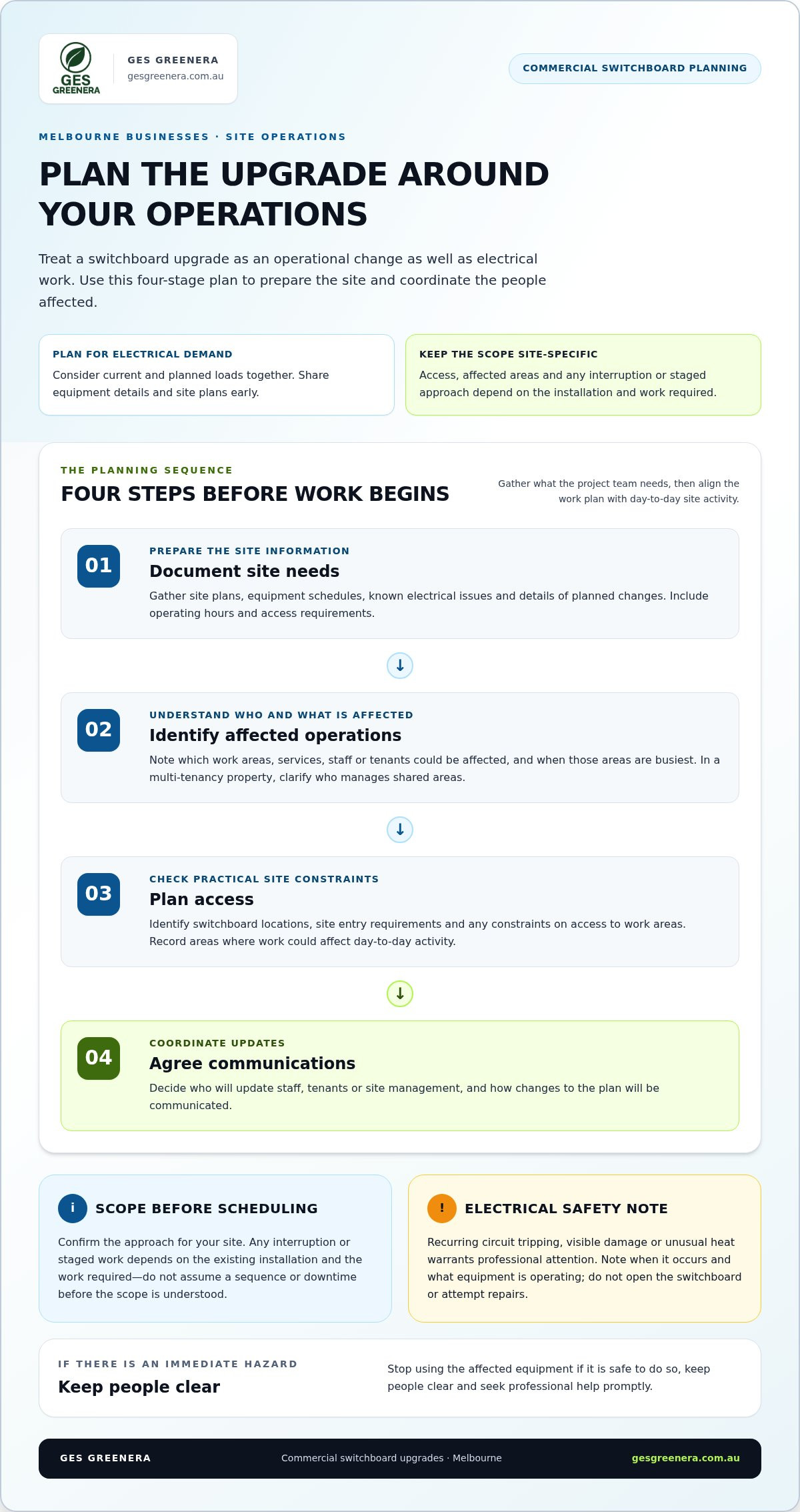
Plan the project as an operational change as well as electrical work. In a warehouse, multi-tenancy building or operating business, access, affected areas and staff or tenant needs can all shape the work plan. Any interruption or staged approach depends on the existing installation and the work required. Confirm the approach for your site rather than assuming a particular sequence or downtime before the scope is understood.
Document planned equipment before the assessment. This gives the project team a clearer picture of future demand and helps shape a practical scope.
- Document site needs. Gather site plans, equipment schedules, known electrical issues and details of planned changes.
- Identify affected operations. Note which work areas, services, staff or tenants could be affected, and when those areas are busiest.
- Plan access. Identify switchboard locations, site entry requirements and any constraints on access to work areas.
- Agree communications. Decide who will update staff, tenants or site management, and how changes to the plan will be communicated.
What information should a business prepare?
Alongside plans and equipment details, record operating hours, access requirements and areas where work could affect day-to-day activity. In a multi-tenancy property, clarify who manages shared areas and how affected occupants will receive updates. For a warehouse, note movement through loading zones and any processes that rely on electrical equipment. These practical details help make the commercial switchboard upgrade melbourne plan reflect how the site actually operates.
How should disruption and handover be managed?
Before work begins, align the site team and electrical project team on access, communications and work sequencing. Whether work can be staged or an interruption is needed depends on the installation. Make the plan specific to the site rather than assuming business can continue as usual. Include testing and handover in the project discussion, and establish which records or certificates apply under the project scope and current Victorian requirements.
For a site-specific commercial switchboard upgrade with GES Greenera, bring your operational priorities and available site information into the project discussion.
How GES Greenera can support a commercial switchboard upgrade in Melbourne
A well-scoped project starts with the site, not a standard replacement plan. GES Greenera provides commercial switchboard upgrades for Melbourne businesses, helping clarify operational priorities, define the work and plan practical next steps. The project should account for the existing installation and the way the premises operates.
What to expect when discussing your project
Start with the essentials: how the site is used, its current electrical demand and any planned changes. Notes on proposed equipment, affected areas, recurring issues and operational priorities help define the project discussion. The scope can then be shaped around the installation and site requirements. Share the information available, such as equipment details or site plans, to make the discussion more specific.
When broader commercial electrical planning is relevant
A switchboard project may connect with wider electrical needs, particularly when new equipment or tenancy changes are planned. If EV charging is part of future site plans, include it in early planning rather than treating it as an automatic part of the switchboard upgrade. GES Greenera also provides commercial electrical services for businesses with needs beyond the switchboard itself.
For related reading, explore the Commercial Electrical Services Melbourne and EV Charger Installation Melbourne guides. These topics can help you consider how broader site requirements relate to switchboard planning, while keeping the project scope specific to your premises.
Whether your premises is in Melbourne, Melton, Sunshine or Werribee, a clear project brief keeps the discussion focused on your site. You do not need every technical detail settled before getting started. Share what you know about the installation, business operations and planned changes with GES Greenera to discuss practical next steps for your commercial switchboard upgrade melbourne project.
Set your site up for its next stage
Electrical infrastructure is part of a business’s ability to adapt. As your premises, equipment or operations evolve, include switchboard requirements in broader business planning. Reviewing likely changes early can help you make considered decisions before electrical needs become urgent.
GES Greenera provides commercial switchboard upgrades and commercial electrical services for businesses across the Melbourne area. Bring your site priorities and available information to the project discussion to clarify what your premises may need.
Discuss your commercial switchboard upgrade with GES Greenera and take the next step with a clear focus on your site’s requirements.
Frequently Asked Questions
When should a business consider a commercial switchboard upgrade?
Arrange an assessment before a major fit-out, the addition of high-demand equipment or a change in how the site operates. A commercial switchboard upgrade melbourne assessment can show whether the existing installation suits the proposed change, rather than leaving the decision to assumptions made during purchasing or leasing. Recurring faults or signs of deterioration are also reasons to seek professional advice, even if the business is not planning an expansion.
Can a business stay open during a commercial switchboard upgrade?
Possibly, but continued operation cannot be assumed. It depends on the installation, the work required and which areas or activities may be affected. A business with separate work zones may have different options from a single-space operation. Discuss essential services, staff access and customer-facing areas early so the project plan can account for operational needs and any interruption.
What information is needed to plan a commercial switchboard upgrade?
Useful details include available electrical drawings, asset or equipment records, maintenance notes and information about recent changes to the premises. For proposed machinery, gather its electrical requirements from the equipment documentation where available. In a leased site, clarify who can provide building or supply information. These records give the project discussion a useful starting point and help identify details for closer investigation.
Does every commercial switchboard upgrade require a three-phase supply?
No. A three-phase supply is not automatically required for every commercial upgrade. The suitable supply arrangement depends on the site’s existing installation, connected equipment and expected demand. A business adding machinery, for example, may have different requirements from a small office changing its lighting. Assess the supply and switchboard design together rather than choosing a phase arrangement based on a general rule.
How does a switchboard upgrade support future business expansion?
An appropriately planned upgrade can help align electrical infrastructure with documented future needs, such as additional work areas or equipment, but it cannot guarantee capacity for every later change. Share realistic expansion plans during project discussions so design decisions can account for them. GES Greenera supports commercial switchboard upgrades across Melton, Melbourne Airport, Diggers Rest, Deanside, Bacchus Marsh, Sunbury, Sunshine, Altona, Williamstown, Essendon, Thomastown, Epping, Eynesbury and Werribee.


