

A heat pump hot water system in Epping makes some noise while running, mainly from its fan and compressor. How noticeable it is depends on the unit, its position and the surroundings, so placement matters when planning installation. A quieter setup starts with choosing a suitable location, not simply picking a system by name.
If you’re concerned about noise near bedrooms, outdoor living areas or neighbouring properties, it’s sensible to consider this before choosing a system. This guide explains what affects operating noise, which system features and household needs to consider, and when a repair may make sense instead of replacement. You’ll also find practical points to weigh before arranging heat pump installation in Epping, helping you make a considered choice for your home.
Key Takeaways
- Plan the unit’s location as well as its capacity to help manage operating noise around bedrooms and outdoor living areas.
- Compare systems by household hot water demand, energy use and running costs to identify a suitable option.
- Use the age and condition of your existing system, along with the fault, to weigh repair against replacement.
- Clear details about your household, current hot water system and installation space can help shape a more useful heat pump enquiry.
Why Install a Heat Pump in Epping?
Homes are the main dwelling type in Epping, but outdoor space and household hot water use still shape which system is suitable. Compare installation needs, incentives and capacity before choosing a replacement.
Supply and installation costs
Supply and installation costs in Victoria depend on the system, tank capacity, site access and any changes needed to existing connections. A quote should clarify which equipment and installation work it covers. Melbourne installations also need a suitable outdoor position, with enough room for the unit and airflow. Many Victorian installations can be completed within a day, but job duration is not a promise of same-day booking.
Rebates and installation requirements
The Victorian Energy Upgrades program offers indicative rebates of up to A$630 for replacing an inefficient gas or electric hot water system with a heat pump. Solar Victoria says eligible households may receive a Solar Homes Program rebate of up to A$1,000, or up to A$1,400 for a locally made system. Installation involves connecting the unit to water and electricity; permit needs depend on the work and property. Check eligibility and incentive conditions before selecting a system.
System options and household sizing
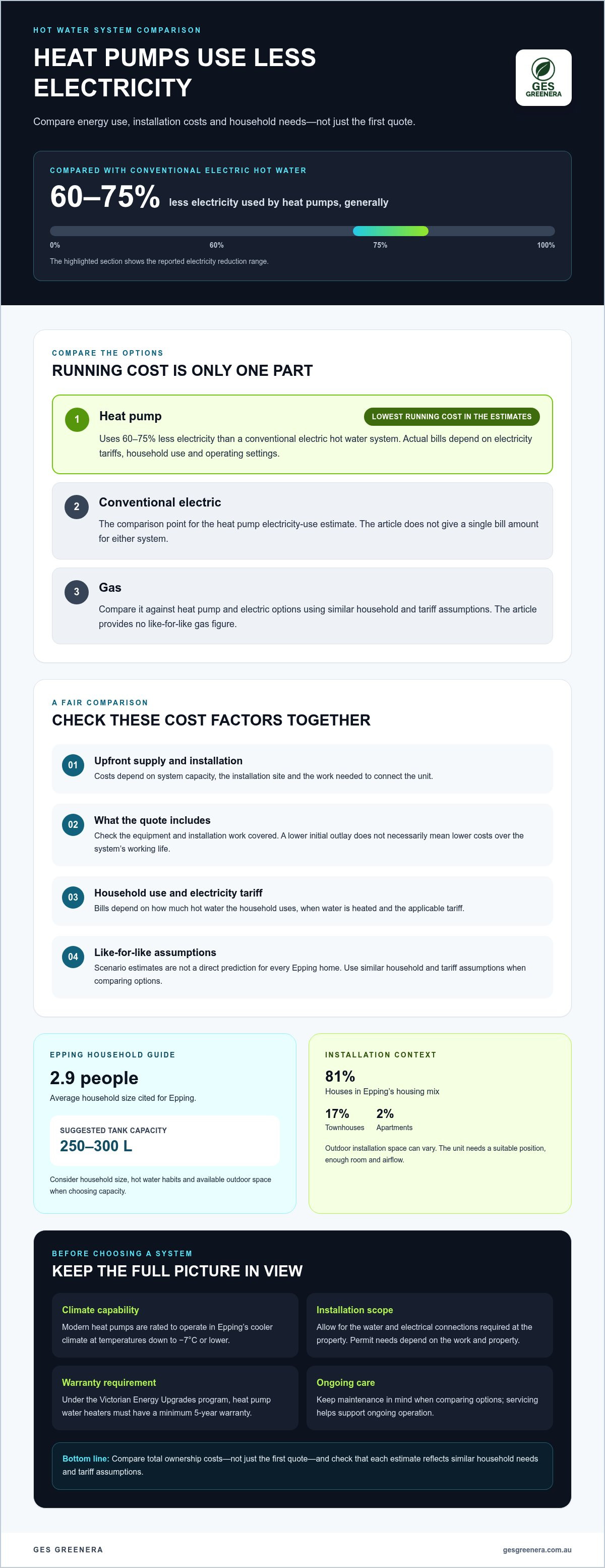
Air-source heat pumps draw heat from surrounding air and transfer it to water. Epping’s housing mix is 81% houses, 17% townhouses and 2% apartments, so outdoor installation space can vary. For Epping’s average 2.9-person household, a 250-300L tank is recommended. Consider household size and hot water habits alongside available space when choosing capacity for a replacement or new installation.
Climate suitability and installation care
Modern heat pumps are rated to operate in Epping’s cooler climate at temperatures down to -7°C or lower, making them an option for Melbourne winters. Ask for the installation scope to cover the electrical and water connections required at the property. Under the Victorian Energy Upgrades program, heat pump water heaters must have a minimum 5-year warranty. Keep maintenance in mind when comparing system options, as servicing helps support ongoing operation.
Which system is most efficient?
Heat pumps generally use 60 to 75% less electricity than conventional electric hot water systems. That makes the heat pump the lowest-running-cost option in those estimates, while actual bills depend on tariffs and household use.
Upfront supply and installation costs are separate from ongoing energy use. The price depends on system capacity, the installation site and the work needed to connect the unit. Compare quotes by checking which equipment and installation work they include, then weigh that against projected running costs. A lower initial outlay doesn’t necessarily mean lower costs over the system’s working life.
Comparisons use different household assumptions. Treat these as scenario estimates, not a direct prediction for every Epping home.
Heat pumps move warmth from air into water, rather than generating heat through a conventional electric element alone. That’s why they can use less electricity, though performance and bills depend on usage, tariff and operating settings. Explore how solar PV system installation can complement a heat pump when assessing household energy use.
For a heat pump hot water system in Epping, compare total ownership costs, not just the first quote. Ask for a clear breakdown of supply, installation and expected running needs. Hot water use also depends on household demand and when water is heated. Check that your comparison uses similar household and tariff assumptions before deciding whether a heat pump, gas or electric system suits your priorities.
Hot water system repairs and replacement
A fault doesn’t always mean your hot water unit needs replacing. Record the symptoms, the system’s age and any changes to your hot water supply, then use those details to assess whether repair or replacement is appropriate.
System replacement
Hot water systems can last up to 12 years, so age is one factor when weighing replacement against a repair. Consider the unit’s condition, recurring faults, household hot water needs and whether a newer system suits your property. If replacing the system, compare the proposed capacity and installation requirements, and ask how rebates may apply to your circumstances.
Replacing a unit also involves planning around the water supply. The installation process may require water to be turned off for one to two hours. Allow for that interruption when scheduling the work, and identify any household needs that depend on hot water during that period.
Common problems and risks
Common signs of trouble include inconsistent water temperature, reduced hot water supply, visible leaks, unusual operating sounds or a unit that stops heating. For a heat pump, note whether the problem affects heating, airflow or normal operation, but don’t open electrical components yourself. Record when the fault occurs and share the details during a repair assessment.
A qualified plumber should check the hot water system, storage tank, temperature and pressure valve once a year. This inspection can identify wear or leaks before they worsen. A repair may be the more economical choice for a solar water heater outside warranty that’s still 5-10 years old, or when the fault is an easy fix. That specific guidance doesn’t apply automatically to every heat pump.
For electrical symptoms, such as a unit that loses power, don’t investigate the wiring yourself. Note whether the hot water stops completely or works intermittently, and arrange a professional assessment. A clear description of the fault can help distinguish an electrical issue from a problem with water connections or the heating system.
Heat pump hot water system enquiries
A useful enquiry describes the household, existing hot water unit and installation setting. These details help clarify heating needs, available space and what reliable hot water means for your household. In Australia, running costs also depend on usage patterns and electricity tariffs, so include your current hot water habits when describing the job.
For Epping homes, water-side connections and heat pump installation are different parts of the job. When assessing an installer, reviews are most useful when they describe practical details such as installation quality, communication, follow-up and whether the completed work matched the agreed scope. These details give more insight than a brief star rating alone.
Make your enquiry specific. Include the details that help explain the work:
- Whether you need a new system, replacement or fault assessment.
- Your existing unit type and any symptoms, such as interrupted heating.
- Household size, hot water habits and preferred installation location.
- Whether the property has solar PV, which may inform energy planning.
Technical requirements matter too. One Melbourne enquiry described an air-source heat pump heating water to 60 degrees C, with a required heat output of 35 kW. That is an example of a detailed project brief, not a standard specification for household hot water units. State your actual hot water needs and the property context rather than assuming that example fits your home.
Clear information can help distinguish a residential hot water request from a larger heating project. It also gives the installer a better starting point for discussing system suitability, installation conditions and expected operation. If solar generation is part of your energy plans, enquire about solar PV installation as a related consideration for household electricity use.
GES Greenera: Residential Electrical Repairs
GES Greenera can help with electrical faults affecting a hot water system or when you’re considering a heat pump upgrade. Its Residential Electrical Repairs address electrical problems, while Heat Pump Installation supports households planning a new system.
If the unit has lost power, trips a circuit or shows signs of an electrical fault, arrange a professional assessment rather than opening electrical components yourself. For a replacement, share your household’s hot water needs, the existing system type and the proposed installation location. These details help guide the next steps.
GES Greenera also provides Solar PV System Installation, which may be relevant when planning household electricity use alongside a heat pump. Contact GES Greenera for a free, no-obligation quotation for electrical repairs or heat pump installation.
Take the next step towards a suitable system
Choosing a heat pump hot water system in Epping is an opportunity to match your household’s hot water needs with an installation that suits your property and energy plans. Before deciding, note what you need from the system, where it could be installed and whether you’re replacing an existing unit or planning an upgrade. A clear brief makes the next conversation more useful.
GES Greenera offers Heat Pump Installation and Residential Electrical Repairs for electrical issues or upgrade planning. Its Solar PV System Installation may also be relevant if you’re considering how hot water heating fits into household electricity use. For commercial properties, GES Greenera offers Commercial Switchboard Upgrades.
Share your project details and discuss the electrical work or system installation you’re considering. Contact GES Greenera about hot water and take a practical next step towards a setup that suits your home.
Frequently Asked Questions
How noisy are heat pumps?
Heat pumps make operating noise from their fan and compressor, but how noticeable it is varies by unit and location. A unit beside a bedroom window, for example, may be more noticeable indoors than one positioned away from living spaces. Consider nearby windows, walls and outdoor areas when planning placement. If an existing system suddenly becomes louder, note when the sound occurs and arrange a professional assessment.
How does a water heater work?
A water heater transfers energy to water, then stores or supplies the heated water for household use. An air-source heat pump takes heat from surrounding air and transfers it to the water. A storage tank holds heated water until a tap or shower is used. The tank’s capacity and heating cycle affect how the system meets changing household demand.
Do I need to have solar panels to get a heat pump?
No, solar panels aren’t required for a heat pump to heat water. The system uses electricity to operate and draws heat from surrounding air. Solar PV can be considered separately as part of a household’s energy setup, but it isn’t a prerequisite for installation. If you already have panels, your electricity use and hot water heating schedule can help inform how you manage household energy.
How much does it cost to replace hot water units?
Replacement costs depend on the selected system and the work required at your property. Factors include tank capacity, access to the installation area, existing connections and any changes needed for the new unit. Request a free, no-obligation quotation that clarifies the equipment and work included, along with how any eligible rebates affect your final outlay.
What is the installed price of a heat pump hot water system in Epping?
The installed price depends on the system capacity, site access and the electrical and water connections needed. For an Epping home, describe the current unit, household demand and intended location when requesting a free, no-obligation quotation. This helps define the installation scope and identify relevant cost factors. Ask for the quote to separate the equipment, installation work and any applicable incentives.
What are the noise levels and placement requirements for heat pump hot water systems?
Noise varies by model, operating conditions and the unit’s location; no single decibel figure applies to every installation. Choose an outdoor position with room for airflow and practical access for maintenance. Consider bedroom windows, neighbouring outdoor areas and sound reflecting from walls. A heat pump hot water system in Epping should be positioned with both everyday noise and service access in mind.


