

What should you do when a circuit breaker keeps tripping or lights start flickering? It’s tempting to reset the switch and carry on, but a recurring fault deserves attention rather than guesswork. Residential Electrical Repairs can help identify the cause and restore safe, reliable power in your home.
It’s understandable to wonder whether an issue can wait, whether it’s safe to investigate and what an electrician will do. Don’t remove covers or attempt electrical repairs yourself. If you notice burning smells, buzzing, heat or repeated power loss, keep clear of the affected area and arrange a professional assessment. Note when the problem occurs, which rooms or circuits are affected and whether anything seems to trigger it.
This guide explains common warning signs, what to do safely and what to expect during a repair visit, from describing the problem to diagnosis and repair options. GES Greenera provides residential electrical repairs and maintenance across Melbourne’s west, including Melton, Sunbury, Bacchus Marsh and Werribee, helping you take a clear, safety-first next step.
Key Takeaways
- Repeated breaker trips, flickering lights and other persistent faults are reasons to arrange a professional assessment.
- Residential Electrical Repairs focus on finding the underlying cause, not just addressing the visible symptom.
- Before a repair visit, note when the fault occurs and which areas of your home are affected.
- GES Greenera provides residential electrical repairs and maintenance across Melbourne’s west, with related services such as switchboard upgrades and smoke alarm testing.
Residential electrical repairs: which household faults need attention?
A household electrical fault can interrupt dinner, work or a quiet night at home, and it isn’t always clear whether the issue needs prompt attention. Residential Electrical Repairs involve diagnosing and fixing faults in a home’s electrical system, with the aim of identifying what’s behind the symptoms and addressing it safely. Notice whether an issue is isolated or recurring, and whether it affects one fitting, a room or several areas. These details help you decide when to stop using affected equipment and arrange an assessment.
Which electrical warning signs should homeowners notice?
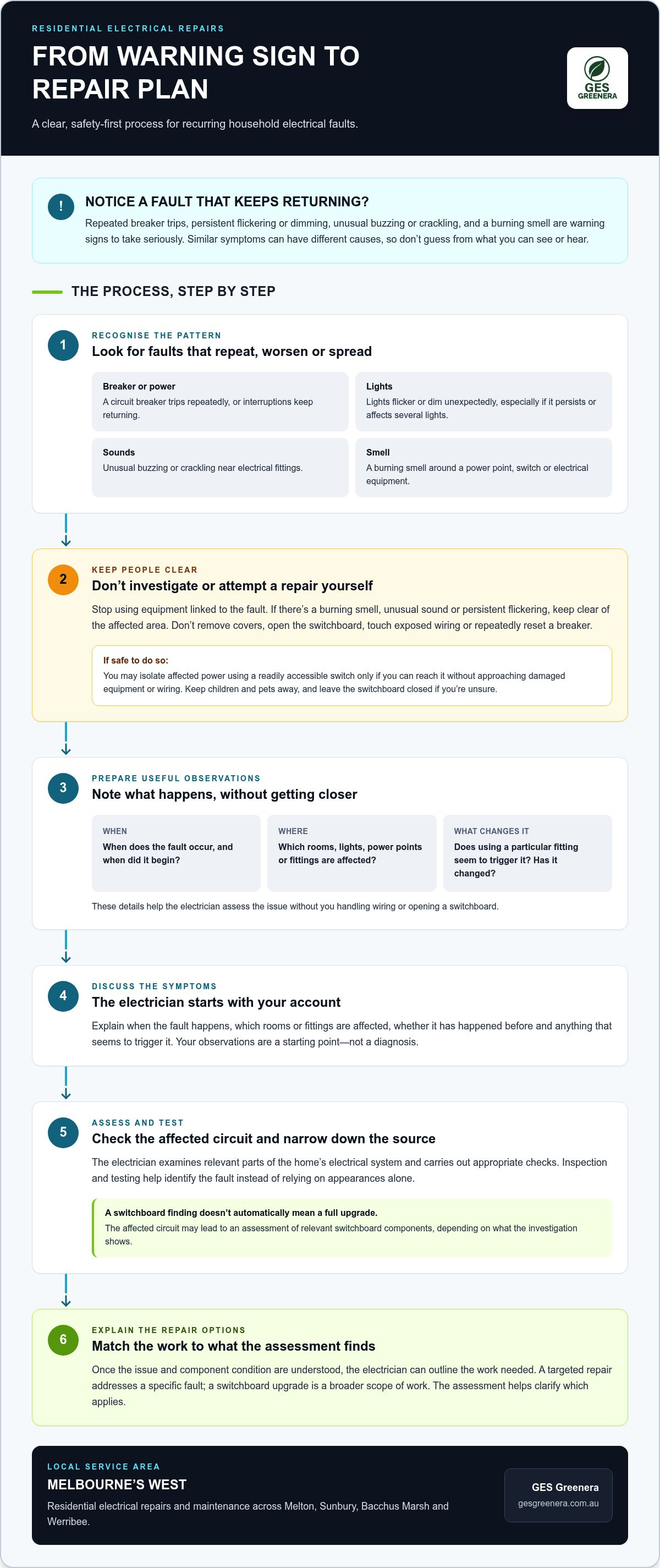
Pay attention to changes that repeat, worsen or affect more than one part of your home. Common warning signs include:
- A circuit breaker that trips repeatedly, or power interruptions that keep returning.
- Lights that flicker or dim unexpectedly, particularly if the problem persists or affects several lights.
- Unusual buzzing or crackling sounds near electrical fittings.
- A burning smell around a power point, switch or electrical equipment.
These symptoms can have different explanations, so don’t assume you know the cause from what you can see or hear. The overview of types of electrical faults describes how faults can take different forms, but identifying a fault in your home requires an electrical assessment. If you notice a burning smell, unusual sounds or persistent flickering, stop using the affected equipment and keep clear of the area.
Recurring faults need diagnosis, not repeated resetting.
Is a small electrical fault safe to ignore?
Not necessarily. A one-off interruption that doesn’t return is different from a breaker that keeps tripping, lights that continue to flicker or a smell that gets stronger. Power returning doesn’t prove the underlying issue has gone away. Avoid repeatedly resetting a breaker or continuing to use equipment linked to the fault. Arrange professional attention if the symptom returns, affects multiple areas or worsens.
For broader guidance on home electrical safety and efficiency, explore this residential electrician guide. If you’re unsure what you’re seeing, describe when the fault occurs and which fittings or rooms are affected. That information can help an electrician assess the issue without you opening a switchboard or handling wiring.
How a residential electrician diagnoses and repairs an electrical fault
A flickering light or a breaker that trips can point to different issues, so the visible symptom is only a starting point. During Residential Electrical Repairs, an electrician works through a structured diagnosis before recommending a fix. The repair depends on what inspection and testing reveal and on the condition of the affected components.
- Discuss the symptoms. Explain when the fault happens, which rooms or fittings are affected, whether it has occurred before and anything that seems to trigger it.
- Assess the affected circuit. The electrician examines relevant parts of your home’s electrical system and carries out appropriate checks.
- Identify the fault. Inspection and testing help narrow down the source rather than relying on appearances alone.
- Explain repair options. Once the issue and component condition are understood, the electrician can outline the work needed.
What happens during electrical fault-finding?
Small details can help guide the assessment. Note, for example, whether a power interruption happens when a particular light or fitting is used, or whether it affects several areas at once. Different faults can produce similar symptoms, and not every tripping breaker has the same cause. An electrician uses your observations alongside inspection and testing to narrow down what needs attention before carrying out repair work.
A safety switch, also called a residual current device (RCD), interrupts power when it detects current leaking from a circuit, helping reduce the risk of electric shock.
When might a repair uncover a switchboard issue?
Investigating a fault may involve assessing relevant switchboard components, particularly if the affected circuit’s operation points back to the board. That doesn’t automatically mean a full upgrade is needed. A targeted repair addresses a specific fault, while a switchboard upgrade is a broader scope of work. The electrician can explain the difference based on the assessment. For more context, see this switchboard upgrades Melbourne guide.
GES Greenera provides residential electrical repairs and maintenance, including fault diagnosis and repair. Read more about the service or discuss a residential electrical repair with GES Greenera.
Handling electrical faults in Melbourne’s west
A fault can be unsettling, but you don’t need to investigate it yourself. Stop using affected equipment and keep people clear of the area. Don’t open the switchboard, touch exposed wiring or attempt electrical repairs. These precautions apply whether you’re at home in Melton, Sunbury, Bacchus Marsh or Werribee, areas GES Greenera serves for residential electrical repairs.
What should you do before an electrician arrives?
Share useful observations without getting closer to the fault. Note which lights, power points or areas are affected, when the problem began and whether it has changed. If a power switch is readily accessible and you can reach it without approaching damaged equipment or wiring, you may isolate the affected power. Don’t touch anything that appears damaged. Keep children and pets away, and leave the switchboard closed if you’re unsure what to do.
When is an electrical issue an emergency?
A recurring interruption without signs of immediate danger still needs assessment, but smoke or fire calls for urgent action. Prioritise people’s safety: move away from the affected area, keep others clear and contact emergency services. Don’t approach electrical equipment or wiring involved in a fire. If there’s no immediate danger, leave the fault alone and arrange professional attention rather than trying to restore power yourself.
For a non-urgent fault, clear notes about what happened can help an electrician understand the issue. Don’t delay seeking help if the symptoms return or worsen, and don’t use equipment that appears damaged. GES Greenera provides residential electrical repairs and maintenance across Melbourne’s west. Arrange a residential electrical assessment to take the next safe step.
Residential electrical repairs with GES Greenera: local support and next steps
GES Greenera provides residential electrical repairs and maintenance for homeowners across Melbourne’s west, including Melton, Diggers Rest, Deanside, Sunbury and Bacchus Marsh. Start by explaining what you’ve noticed. Clear details help frame the conversation and assessment without trying to diagnose the fault remotely.
What information helps explain a household electrical repair?
Before discussing the issue, make a few notes while keeping clear of any electrical hazard. Describe the symptom, the affected room or fitting and whether it happened once or has returned. Mention relevant changes, such as a newly installed light fitting, or whether the circuit interruption happens when particular equipment is used. These details give a useful starting point for understanding the problem and planning an appropriate assessment.
How can electrical maintenance help keep a home dependable?
Professional maintenance can help identify electrical issues that warrant attention before they become a repeated disruption. The right work depends on what the assessment finds. For example, a concern involving the switchboard may lead to discussion of a switchboard upgrade, while questions about household smoke alarms may make smoke alarm testing relevant. Electrical fit-outs are also part of GES Greenera’s residential service range, including fit-outs for new homes.
Residential Electrical Repairs and maintenance address faults affecting your home’s electrical system. Share what you’ve observed and where you’re located so the discussion can start with the relevant details. GES Greenera supports homeowners across Melbourne’s west with repairs and related residential electrical services. For a recurring fault or another household electrical concern, contact GES Greenera about a residential electrical repair.
Make your next electrical decision with confidence
A household electrical concern can also be a useful prompt to think ahead. If you’re planning changes to your home, such as a renovation or new electrical fit-out, include any existing fault or concern in those conversations. Considering existing issues alongside planned work can help you make informed decisions about what your home needs, rather than treating each issue in isolation.
You don’t need to have all the answers before taking the next step. Explain what you’ve noticed and let a professional assessment guide the discussion. Residential Electrical Repairs are a practical way to address faults carefully and make decisions based on the condition of your home’s electrical system.
GES Greenera provides residential electrical repairs and maintenance, with related services including switchboard upgrades and smoke alarm testing. If an electrical issue is on your mind, contact GES Greenera about a residential electrical repair. A clear conversation is a positive first step towards understanding your home’s electrical needs.
Frequently Asked Questions
What counts as a residential electrical repair?
A residential electrical repair addresses a fault in a home’s fixed electrical system, such as a damaged power point, a faulty light switch or a circuit that loses power. Residential Electrical Repairs don’t include fixing the appliance plugged into an outlet. If the fault appears to involve the home’s wiring, fittings or switchboard, describe what you’ve noticed so an electrician can assess the electrical issue.
When should I call an electrician for an electrical fault?
Arrange an electrician’s assessment if a fault returns, affects several fittings or circuits, or is accompanied by a burning smell, buzzing or visible damage. Keep clear of damaged equipment and don’t use the affected fitting. If you see smoke or fire, prioritise getting people to safety and contact emergency services. For other faults, note what happened and share those details when arranging professional help.
Can I reset a circuit breaker that keeps tripping?
If a breaker keeps tripping, don’t repeatedly reset it to restore power. The interruption may be a sign that the circuit needs assessment, and resetting it again won’t identify the reason. Stop using equipment connected to the affected circuit and leave the switchboard closed. If you’re unsure what has tripped or can’t approach safely, don’t attempt to operate the switchboard; arrange professional advice.
Are flickering lights a sign of an electrical problem?
They can be, particularly if flickering continues, affects several lights or happens alongside other changes such as a breaker tripping. A brief flicker alone doesn’t confirm the cause, so avoid guessing or removing a fitting to investigate. If the light or nearby switch makes unusual sounds, smells hot or appears damaged, stop using it and keep clear until it has been assessed.
Which Melbourne suburbs does GES Greenera service for residential electrical repairs?
GES Greenera’s service area includes Melton, Melbourne Airport, Diggers Rest, Deanside, Bacchus Marsh, Sunbury, Sunshine, Altona, Williamstown, Essendon, Thomastown, Epping, Eynesbury and Werribee. These suburbs span Melbourne’s west and other parts of the metropolitan area. If you’re in one of these locations and have a household electrical fault, discuss the repair with GES Greenera.


