

A good solar setup for your Melbourne home depends less on filling the roof and more on how your household uses electricity. A successful solar panel installation is shaped by usable roof space, roof condition, shade, energy use and the capacity of your existing electrical system.
Before getting started, it’s natural to ask whether your roof is suitable, what happens during installation and how grid requirements or Victorian incentives affect your plans. The answers depend on your property, so a site-specific assessment is more useful than choosing a system based on a standard package.
This guide explains what information helps determine system suitability and what to expect from assessment and design through grid connection, electrical work and commissioning. It also outlines how local distributor requirements and current Victorian incentive rules fit into planning. For homeowners across Melbourne’s west, understanding these steps makes it easier to plan a safe, property-specific project.
Key Takeaways
- Use your household’s electricity needs and daily routines to help shape a system that suits how you use power.
- Roof orientation, shading, usable space and your existing electrical setup all matter when planning a solar panel installation.
- Gather recent electricity bills and details about roof access to make an initial assessment more useful.
- GES Greenera installs solar PV systems and provides related electrical services for properties across Melbourne’s west.
Solar panel installation in Melbourne: what the project involves
A residential solar PV installation connects rooftop panels and electrical equipment to a home’s electricity supply, allowing the property to use power generated by sunlight. The system needs to suit household electricity use, the roof’s usable space and condition, the existing electrical infrastructure and the requirements for connecting to the local grid.
Solar planning involves more than choosing panels. It considers how a system can be designed for the property and connected appropriately. Potential bill benefits, battery choices and ongoing maintenance are related topics, but separate from the core installation plan.
What does a residential solar installation include?
Panels capture sunlight and generate electricity. An inverter converts that electricity into a form the home can use, while electrical connections link the equipment with the property’s supply. Together, these components make up a photovoltaic system.
The design and equipment depend on the roof, household requirements and existing electrical setup. For example, the switchboard’s condition and capacity may affect how the system is integrated. Solar PV installation is electrical work, so planning the connection is part of the project, not an afterthought.
Who should consider solar panel installation in Melbourne’s west?
Homeowners in Melton, Sunbury, Werribee and nearby parts of Melbourne’s west can start by considering when the household uses electricity and how much suitable roof space is available. A home with daytime energy use may have different planning needs from one where most electricity is used in the evening.
Roof orientation, shade and roof condition help determine which areas may be suitable for panels. Recent electricity bills can help show usage patterns. It’s also useful to note roof access and any known electrical issues before an assessment. GES Greenera installs residential solar PV systems and provides related electrical services, including switchboard upgrades, so the property’s electrical setup can be considered as part of the project.
How roof, switchboard and local grid conditions shape a solar installation
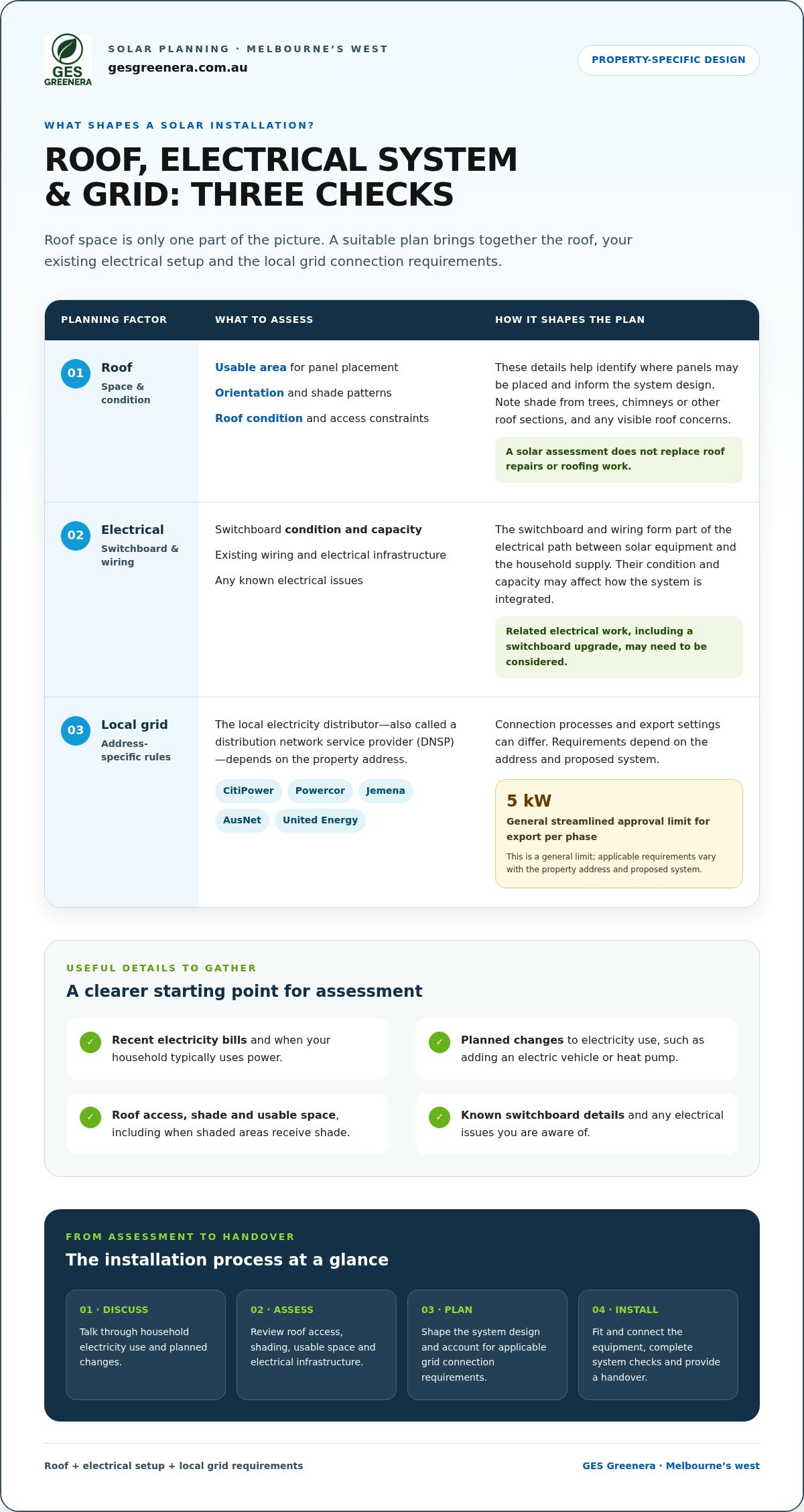
A roof can have suitable space for panels while the home’s electrical setup or grid connection presents separate considerations. Solar panel installation planning needs to account for the roof, electrical system and connection requirements together, rather than relying on roof space alone.
What should be assessed on the roof before installation?
Usable area, orientation and shade patterns help determine where panels may be placed. A chimney, nearby trees or another roof section might cast shade at particular times, affecting how the available space is used. Roof condition also matters. Noting concerns before work begins helps inform the project, although a solar assessment does not replace roof repairs or roofing work.
A site-specific assessment brings these factors together to inform panel placement and system design. When looking at your roof, note which areas receive shade and when, along with any access constraints or visible concerns about the roof surface.
Why check the switchboard and electricity connection?
The switchboard and existing wiring form part of the electrical path between the solar equipment and household supply. Their condition and capacity may affect how a system can be integrated and whether related electrical work needs to be considered. GES Greenera also provides switchboard upgrades, allowing the home’s electrical installation to be considered alongside its solar project.
Grid connection is another part of planning. The local electricity distributor, also called a distribution network service provider (DNSP), depends on the property address. Melbourne-area distributors include CitiPower, Powercor, Jemena, AusNet and United Energy. Connection processes and export settings can differ. A general streamlined approval limit is 5 kW of export per phase, but applicable requirements depend on the address and proposed system.
Connection requirements and current Victorian electrical guidance from official sources such as Energy Safe Victoria are important considerations during planning. They help align the system design and electrical work with the property’s circumstances.
For a site-specific assessment across Melbourne’s west, GES Greenera’s solar PV installation can be planned alongside the home’s existing electrical setup.
Solar panel installation steps: from assessment to system handover
A clear process turns household needs into a system designed for the property. Solar panel installation typically moves through discussion, assessment, system planning, physical installation and commissioning. Grid connection requirements are considered during planning, so the proposed setup accounts for the property’s circumstances.
- Discuss your needs. Talk through household electricity use and planned changes, such as adding an electric vehicle or heat pump.
- Assess the property. Review roof access, shading, usable space and relevant electrical infrastructure.
- Plan the system. Use the assessment to shape the design and account for applicable grid connection requirements.
- Install and commission. Fit and connect the equipment, complete system checks and provide a handover.
What information helps with an initial solar assessment?
Gather recent electricity bills and note when your household typically uses power. Share plans that could change demand, such as future electrification. It also helps to describe roof access, areas that receive shade and any known switchboard details. These notes give the assessment a useful starting point, while an on-site review can consider the property itself.
What happens during installation and commissioning?
Installation involves fitting the planned equipment and completing its electrical connection. The work is specific to the system and property, so it shouldn’t be treated as a fixed-duration job. After installation, commissioning includes checking the system and explaining the handover, so you understand the installed setup and next steps for using it.
If you’re considering a Victorian incentive, check Solar Victoria’s current program rules before including it in your budget. As of October 2026, the solar panel rebate is up to A$1,400 for eligible owner-occupiers, with conditions including a combined household taxable income cap of A$150,000 and a property value under A$3 million. Eligibility rules apply.
For a property-specific assessment in Melbourne’s west, plan your solar PV installation with GES Greenera, including consideration of the home’s electrical setup.
Plan solar panel installation with a local Melbourne electrical team
A practical solar plan brings together four connected questions: how your household uses electricity, whether the roof suits a system, how the existing electrical installation can support it and what connection requirements apply at your address. Considering these factors together keeps decisions grounded in the property rather than a one-size-fits-all package.
How does a tailored solar installation plan help?
Household energy patterns help inform the design. A home that uses more electricity during the day, for example, may have different planning priorities from one where demand rises in the evening. Plans to add an electric vehicle or change heating can also affect future electricity use. Roof space, orientation and shade inform panel placement, while the switchboard and existing electrical infrastructure are considered as part of the wider installation.
A switchboard upgrade may be relevant if the existing setup needs work to support the project, but it isn’t automatically required for every home. GES Greenera provides residential and commercial solar PV installation alongside electrical services, including switchboard upgrades. The project plan can account for the property’s electrical needs and the connection requirements associated with its location.
Discuss your solar installation project in Melbourne’s west
GES Greenera serves Melton, Melbourne Airport, Diggers Rest, Deanside, Bacchus Marsh, Sunbury, Sunshine, Altona, Williamstown, Essendon, Thomastown, Epping, Eynesbury and Werribee. Bringing together household usage information, roof details and any known switchboard concerns can make an initial project discussion more focused. From there, the installation can be considered in the context of the home and its electrical setup, without assuming a particular system or upgrade in advance.
If you’re planning a project in Melbourne’s west, discuss your solar installation with GES Greenera.
Take the next step towards a solar-ready home
Your next step doesn’t need to be choosing equipment. Start by deciding what you want the project to account for, such as changing household electricity use or planned electrical upgrades. That gives the discussion a practical focus and keeps decisions centred on your property.
GES Greenera provides solar PV system installation and electrical services, including residential and commercial switchboard upgrades. If you’re weighing up solar panel installation, discussing your household’s energy use, roof details and electrical setup can help bring those considerations into one project plan.
Discuss your solar panel installation with GES Greenera and take a considered first step towards a system planned for your home.
Frequently Asked Questions
Is solar panel installation worthwhile for a Melbourne home?
It can be, but whether it suits your home depends on your electricity use, roof conditions, system design and connection arrangements. Compare your usage across different times of day, not just the total on your bill. Note whether appliances typically run while the sun is up or mostly in the evening, then weigh those patterns against the project requirements. Don’t assume a particular saving or return without assessing your circumstances.
Can solar panels be installed if my roof is partly shaded?
Possibly. Shade can influence where panels are placed and how the system performs, but the effect depends on its location, extent and changing pattern. A tree may shade one roof area in the morning while another section stays clear. An assessment can consider those conditions and identify design options for the property. Partial shade alone doesn’t establish that a roof is unsuitable, and expected output shouldn’t be assumed without assessment.
Do I need a switchboard upgrade before solar panel installation?
Not necessarily. Whether an upgrade is needed depends on the condition and capacity of your existing switchboard and the proposed system. An older board or previous electrical changes may warrant closer assessment, but neither automatically means replacement is required. An electrical assessment can establish whether any changes are relevant to the project, keeping decisions specific to your home rather than treating an upgrade as standard for every installation.
How long does solar panel installation take?
There isn’t one timeframe that applies to every home. Timing can vary with site conditions, project scope, access and any electrical work identified during planning. A project involving additional switchboard work, for example, may have different requirements from one that doesn’t. Once the property details are understood, the project plan can set out relevant expectations for your installation.
Can I get a Victorian solar rebate for a new installation in 2026?
You may be eligible, but a rebate isn’t available to every household and program rules can change. Before including support in your plans, check Solar Victoria’s current information for the 2026 program and review the eligibility criteria for your household and property. Treat a rebate as subject to approval rather than guaranteed. Confirming current details before making financial decisions can help you plan with accurate information.


