

Queensland’s smoke alarm deadline is clear: by 1 January 2027, existing private homes, townhouses, units and manufactured homes must have interconnected photoelectric smoke alarms, according to the Queensland Government. If an alarm is due for smoke alarm replacement, the right upgrade depends on the property and the rules that apply to it. Replacing one device without considering the whole system can leave important requirements unmet.
It’s understandable to want reliable alarms without nuisance beeping, and to know whether replacement is a simple battery-powered change or a mains-wired job. An occasional beep may point to a battery issue or a faulty alarm, while recurring false alarms can make the alarm’s position and the home’s setup important to investigate.
This guide explains how to choose, install or upgrade alarms, where to place them, and what can contribute to false alarms. It also outlines key Queensland requirements and deadlines for existing homes, rental properties and home sales, so you can understand what applies before deciding on the next step.
Key Takeaways
- Before replacing an alarm in a Queensland home, consider the dwelling’s age and whether the system needs to be interconnected.
- Hard-wired, interconnected alarms need careful installation, and Queensland installations require a certificate of testing and compliance.
- If an alarm beeps occasionally or triggers false alarms, check its condition and placement to help identify the cause.
- Queensland smoke alarm obligations can change when a home is rented or sold, so factor in the property’s situation when planning an upgrade.
How can I upgrade or install smoke alarms?
First, check whether the alarms are battery-powered or connected to mains electricity. Then match the installation and alarm locations to the home’s layout and the applicable state requirements.
Hard-wired and interconnected installation
A hard-wired smoke alarm connects to a home’s electrical system at 240 volts and includes battery backup. Interconnected alarms activate together when one detects smoke, alerting people in other parts of the home. In Queensland, new dwellings require hard-wired, interconnected alarms in specified locations under the Building Regulation 2021. A hard-wired interconnected installation also requires a certificate of testing and compliance under section 227 of the Electrical Safety Regulation 2013.
Professional installation and DIY maintenance
Professional installation covers connecting alarms to mains power and linking them into an interconnected system. In Queensland, residents can install photoelectric alarms powered by non-removable 10-year batteries themselves. That does not make mains electrical work a DIY task. For maintenance, test and clean alarms regularly, and act on faults. A single occasional beep may indicate a battery change is needed or the alarm is faulty. An expired or faulty alarm may not alert occupants to smoke, leaving them without a working warning.
Installation locations
Installation locations are the positions where alarms can detect smoke and alert people throughout the home. In Queensland homes, alarms must be installed on each storey and in every bedroom or sleeping area. Fire Rescue Victoria recommends alarms in all bedrooms. Victorian law also requires alarms between each bedroom sleeping area and the rest of the house. In NSW, Fire and Rescue NSW recommends alarms in bedrooms, living spaces and the garage.
State and territory requirements
Smoke alarm rules vary between Australian states and territories. Queensland homes require alarms on each storey and in each bedroom or sleeping area; NSW legislation requires at least one working alarm on each level. Victorian law also requires at least one alarm on each level. In Victoria, homes constructed, largely renovated or extended after 1 August 1997 must have hard-wired alarms with battery backup. For homes constructed, largely renovated or extended after 1 May 2014, alarms must also be interconnected. These examples show why location and dwelling history matter when planning an upgrade.
False alarms and suitable alarm placement
A false alarm sounds when there’s no fire. Check the alarm’s condition, battery and position before deciding whether it needs replacement.
False alarms
Steam, cooking aerosols and accumulated dust can contribute to unwanted alarms. Note what was happening just before the alert, such as cooking or a steamy bathroom, then check the alarm for visible dust. Keep it clear and clean it as the manufacturer directs. If alerts continue without an obvious cause, the unit may be faulty or poorly positioned. Don’t disable an alarm to stop nuisance alerts, as this removes its warning.
Battery signals
A low-battery signal is a short beep that indicates the alarm needs attention. It may sound once every 30 seconds to a minute. Check the alarm’s instructions to identify the signal, then replace a removable battery if required. Some alarms use non-removable batteries, so a persistent low-power alert may mean the complete unit needs replacement. A beep can also indicate a fault, so don’t assume every sound means the same thing.
Alarm placement
Alarm placement is the position of each unit within a home. In Victoria, smoke alarms should be within 1.5 metres of bedroom doors. Follow the manufacturer’s instructions when choosing a mounting position, and consider whether walls, ceilings or nearby fittings could affect access or cleaning. Keep alarms unobstructed so smoke can reach the sensing chamber. If a room’s layout changes, review whether the existing position still suits the space.
To investigate recurring alerts, record which alarm sounds and what was happening at the time. Check the battery, clean the cover gently, and review the unit’s age and placement. If the cause remains unclear, smoke alarm testing can help identify a fault or maintenance issue.
Photoelectric and interconnected alarm requirements
Queensland’s requirements set a clear upgrade deadline for existing homes. The alarm type, connection method and reason for replacement all matter when planning the work.
Hard-wired or interconnected alarms
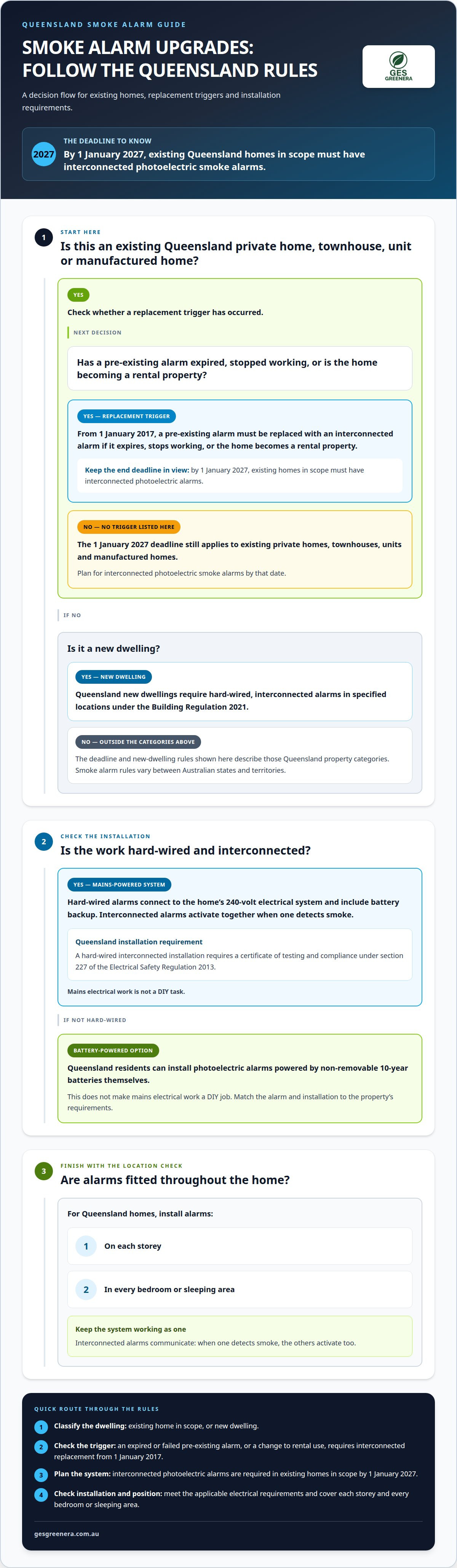
An interconnected alarm system links multiple alarms so one detecting smoke activates the others. By 1 January 2027, existing private homes, townhouses, units and manufactured homes in Queensland must have interconnected photoelectric smoke alarms, according to the Queensland Government.
Queensland’s requirements also affect replacement before that deadline. From 1 January 2017, pre-existing alarms must be replaced with interconnected alarms if an alarm expires, stops working or the home becomes a rental property. So a failed unit can trigger a wider upgrade, rather than a like-for-like swap. Check the alarm’s age and the property’s use when deciding what work is needed.
Hard-wired alarms connect to mains electricity and have battery backup. Queensland requires hard-wired, interconnected alarms in specified locations in new dwellings under the Building Regulation 2021. An interconnected installation should be considered as a system: the alarms need to communicate, not simply sit in separate rooms. In Queensland, hard-wired interconnected installations require a certificate of testing and compliance under section 227 of the Electrical Safety Regulation 2013.
Photoelectric alarm lifespan
A photoelectric alarm detects smoke using a light-sensing chamber. Its service life is separate from its battery life, so a long-life battery does not determine how long the complete alarm remains suitable.
Queensland residents can install photoelectric alarms with non-removable 10-year batteries themselves, but that battery period is not a universal alarm lifespan. Check the replacement date marked on the unit and follow its manufacturer’s instructions. In Victoria, all smoke alarm units should be replaced every 10 years. For a Queensland alarm that expires sooner, the replacement must meet the applicable requirements for the dwelling and its use. Keep the unit’s date visible or record it, so an ageing alarm isn’t mistaken for a current one.
Queensland smoke alarm replacement deadlines
A replacement deadline is the date by which a home must meet the applicable alarm requirements. In Queensland, plan around the dwelling’s status, the alarm’s condition and any sale or tenancy change.
Queensland’s Fire Services Act 1990 sets retrospective smoke alarm requirements for existing dwellings. By 1 January 2027, existing private homes, townhouses, units and manufactured homes must have interconnected photoelectric alarms. Treat this as a whole-home upgrade deadline, not simply a date for changing one old unit.
There are also earlier replacement triggers. From 1 January 2017, a pre-existing alarm must be replaced with an interconnected alarm if it expires, stops working or the home is converted into a rental property. If one alarm fails, consider the required system across the dwelling before arranging replacement.
A property sale creates a separate deadline. For a Queensland home sale contract signed after 31/12/2021, the seller must upgrade the dwelling to the updated interconnected domestic smoke alarm standard before transfer. Build the required work into the sale preparations, rather than leaving it until transfer is close.
Rental responsibilities depend on the state or territory. In Queensland, a landlord must test and clean each alarm within 30 days before a tenancy starts; during the tenancy, renters must test and clean each alarm at least once every 12 months. Renters don’t need a qualification or licence for domestic alarm testing or cleaning. In Victoria, rental providers must fit alarms and maintain rented premises in good repair; landlords or agents handle annual cleaning and battery replacement.
To check the deadline, identify whether the property is owner-occupied, rented or being sold, then note any alarms that are expired or faulty. Match the required upgrade to that situation and schedule the work before the relevant tenancy start or property transfer.
Arrange smoke alarm testing to assess alarm condition and identify units needing attention before a Queensland deadline.
GES Greenera: Residential Electrical Repairs
GES Greenera provides residential electrical repairs for homeowners dealing with electrical faults or planning electrical work alongside an alarm upgrade. If a smoke alarm problem involves its mains connection or the home’s electrical system, electrical repairs can help address the underlying issue. For battery-powered alarms, checking the battery and cleaning the unit may be more appropriate than electrical repairs.
For interconnected or hard-wired systems, consider the broader electrical setup as well as each alarm. GES Greenera also handles new-home electrical fit-outs and residential switchboard upgrades, which may be relevant when planning wider electrical changes. The right work depends on the issue and the property’s requirements.
Contact GES Greenera to discuss residential electrical repairs for your home.
Plan your next electrical safety step
During your next home maintenance check, include alarm condition in a wider look at electrical safety. Note any fault, recurring alert or installation concern, then decide whether the alarm needs routine testing, a battery change or electrical attention. Keeping those observations together can make a future smoke alarm replacement easier to plan and help you explain the issue clearly.
GES Greenera provides residential electrical repairs for electrical faults, as well as commercial switchboard upgrades and solar PV system installation. These services address different needs, but each can be part of a considered approach to electrical work for homes and businesses. For alarm concerns involving an electrical fault, start with the issue you’ve identified and discuss the relevant work.
Contact GES Greenera about smoke alarms to discuss your next step. A clear plan can make it easier to keep your home’s electrical systems and alarms in good order.
Frequently Asked Questions
Hard-wired or battery operated?
Either type can suit, but the home’s wiring and applicable state rules affect the choice. In Queensland, residents can install photoelectric alarms powered by non-removable 10-year batteries themselves. Hard-wired alarms connect to mains electricity, so installation involves electrical work. Before choosing a battery model, consider whether it meets the requirements for your dwelling and whether you need alarms to interconnect throughout the home.
How many do I need to buy?
The number depends on your home’s layout and the rules where you live. Work through a floor plan, marking each storey, bedroom and sleeping area, then compare those locations with your state or territory requirements. For example, Queensland homes need alarms on each storey and in each bedroom or sleeping area. Include every alarm in your count if the system must interconnect.
How much does a smoke alarm expert cost?
The cost depends on the work required, including the number of alarms, their power connection and whether interconnection or fault investigation is needed. GES Greenera provides a free, no-obligation quotation. For an accurate scope, note which alarms beep, appear damaged or need testing, and whether the home has hard-wired units. This helps distinguish routine testing from electrical installation work.
What does it mean to be compliant with the new laws?
For existing Queensland private homes, townhouses, units and manufactured homes, compliance means having interconnected photoelectric smoke alarms by 1 January 2027, according to the Queensland Government. An interconnected system activates its other alarms when one detects smoke. If the installation is hard-wired and interconnected, Queensland requires a certificate of testing and compliance. Check the dwelling type and alarm arrangement against the applicable requirements.
When should smoke alarms be replaced in Australia?
Replacement timing depends on the alarm and the state or territory. In Victoria, all smoke alarm units should be replaced every 10 years. In Queensland, an alarm that expires or stops working must be replaced with an interconnected alarm under the applicable requirements. Check the date marked on each unit and act on faults rather than relying only on the battery’s stated life.
How much does smoke alarm replacement cost in Australia?
The cost depends on the number of units, alarm type, wiring and whether the existing system needs interconnection or fault repairs. GES Greenera’s quotation is free and carries no obligation. For homes in Melton, Melbourne Airport, Diggers Rest, Deanside, Bacchus Marsh, Sunbury, Sunshine, Altona, Williamstown, Essendon, Thomastown, Epping, Eynesbury or Werribee, the property’s existing setup helps define the work involved.


