

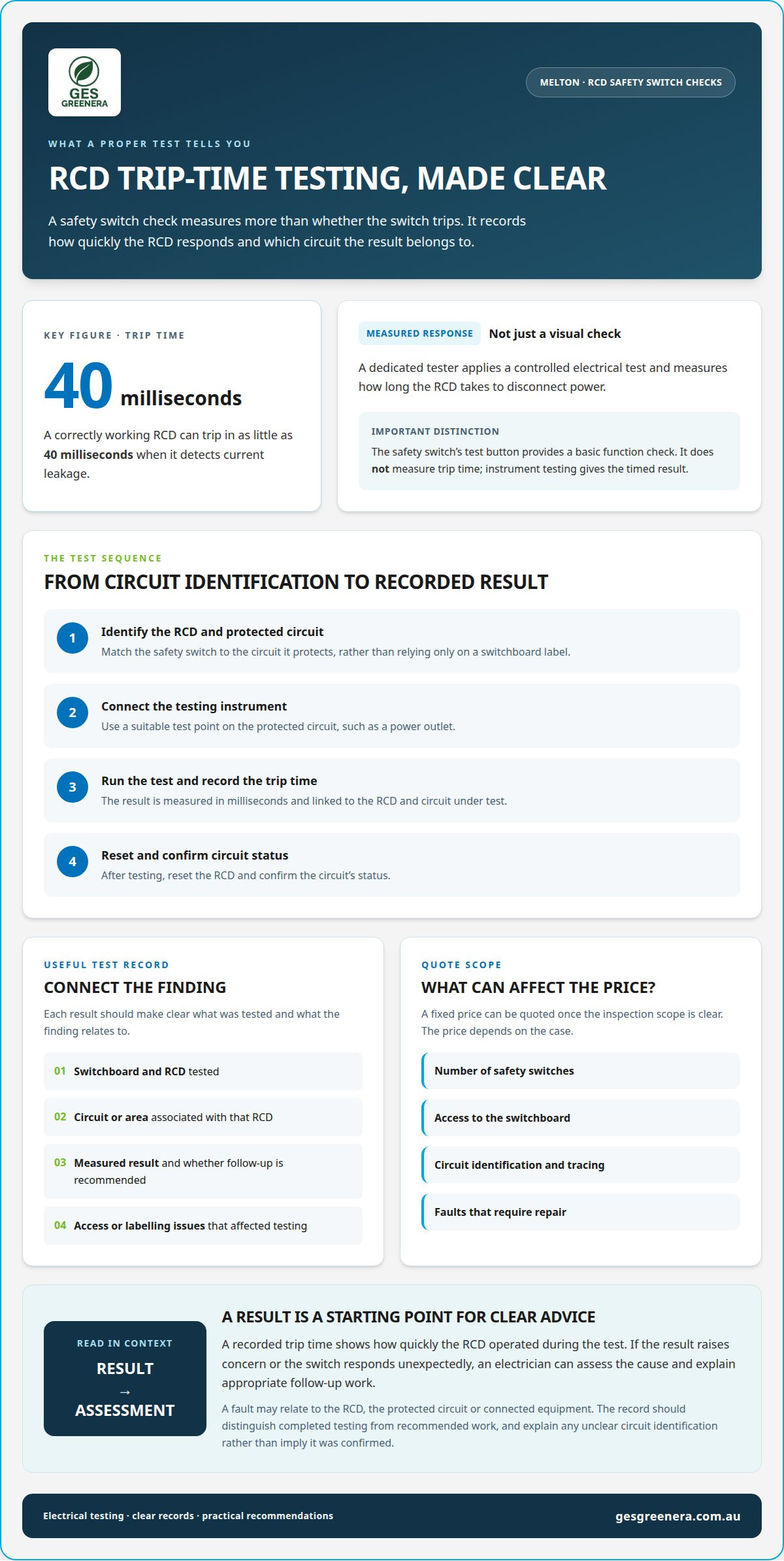
A safety switch test should show more than whether the switch trips. During an RCD safety switch check in Melton, the trip time is measured: a correctly working RCD trips in as little as 40 milliseconds. It’s designed to cut power in a fraction of a second when it detects current leakage.
It’s reasonable to want clear test results, straightforward pricing and practical advice if a safety switch doesn’t pass. GES Greenera provides electrical services in Melton, Melbourne Airport, Diggers Rest, Deanside, Bacchus Marsh, Sunbury, Sunshine, Altona, Williamstown, Essendon, Thomastown, Epping, Eynesbury and Werribee.
This guide explains what trip-time testing measures, what test records and recommendations tell you, and how an electrician can assess a safety switch fault. You’ll also learn what affects the scope of a quote and how to prepare useful information before arranging work.
Key Takeaways
- Learn how an electrician locates safety switches and identifies which circuits they protect.
- Understand what trip-time testing checks and how the result helps assess RCD operation.
- See what useful test records and recommendations can include, so you can follow up on any identified work.
- Find out how faults are assessed and when electrical repairs may be needed to restore safe operation.
Can I get a fixed price for safety switches?
A fixed price can be quoted once the inspection scope is clear. The price depends on the case and is provided after a quote request. Key factors include the number of safety switches, access to the switchboard, circuit identification, and any faults requiring repair. Describe the property and switchboard access when requesting a quote.
The electrician starts at the switchboard by identifying each RCD, also called a safety switch, and matching its circuit information to the areas or equipment it protects. A label such as “lights” may need clarification if it doesn’t say which rooms are covered. The electrician can trace and test circuits to build a clearer picture.
For each protected circuit, the electrician can:
- Record the RCD and its switchboard position.
- Identify the connected circuit, such as lighting or power outlets.
- Check that the circuit’s recorded label matches the test findings.
Testing links each RCD to the circuit it protects, rather than relying only on a switchboard label. If a label is unclear, the test process can help identify the circuit and record the result against it. This makes the outcome easier to understand and helps pinpoint which circuit needs attention if a fault is found.
Where barcoding is used, a unique barcode can identify an RCD or circuit in the test record. Scanning it can help match the switchboard label with the corresponding circuit details. A barcode supports identification, but it doesn’t replace testing or explain a failed result. Ask for the records to connect each identifier clearly with its circuit and test outcome.
Clear circuit identification helps define the work before a quote is prepared. Missing labels, several RCDs or circuits that are difficult to trace can affect the inspection scope. A written record of the tested circuits also gives you a practical reference for recommendations or follow-up repairs.
Measuring RCD trip time
An RCD trip-time test measures how quickly a safety switch disconnects power after detecting current leakage. A correctly working RCD trips in as little as 40 milliseconds. The exact test result is recorded in milliseconds, giving a measured response rather than a simple visual indication.
The electrician identifies the RCD and circuit under test, then selects a suitable test point on that circuit, such as a protected power outlet. A dedicated tester applies a controlled electrical test and measures how long the RCD takes to trip. This checks the switch’s response under the test conditions.
The process generally follows these steps:
- Identify the RCD and the circuit it protects.
- Connect the testing instrument at an appropriate point on that circuit.
- Run the test and record the measured trip time.
- Reset the RCD and confirm the circuit’s status after testing.
Read the result in context. A recorded trip time shows how quickly the RCD operated during the test. If a result raises concern, it should lead to further assessment, not guesswork based on the switch’s appearance. Testing each relevant RCD also helps distinguish one switch’s result from another’s.
The test button on a safety switch provides a basic function check, but it doesn’t measure trip time. Instrument testing provides that timed result. Ask for the recorded figure and the circuit it relates to, especially if the switchboard has several RCDs. This makes the findings easier to understand and compare during future checks.
If testing identifies a fault or an unexpected response, an electrician can assess the cause and explain appropriate repair work. For a safety switch issue that needs electrical attention, electrical fault repairs may be the next practical step.
Recording test results and recommendations
A useful test record connects each result to the safety switch and circuit tested. It should identify the switchboard, the RCD or safety switch, its circuit label and the measured outcome. This helps you understand which part of the installation a finding relates to, rather than leaving you with an unexplained result.
For example, a record might link “kitchen power” to the relevant switchboard label and note the test outcome beside it. If the label is unclear, the record should say so rather than imply the circuit was positively identified. Barcodes can also help connect a physical circuit with its recorded test details.
Look for practical details such as:
- The switchboard and RCD tested.
- The circuit or area associated with that RCD.
- The measured result and whether follow-up is recommended.
- Any access, labelling or identification issue affecting the test.
Recommendations should explain the finding in plain language. An electrician might note that a safety switch did not operate as expected, identify the affected circuit and recommend further assessment or repair. If the concern is an unclear circuit label, the next step may be to trace the circuit and update its identification. Each action should relate to a recorded observation.
Use the record to distinguish completed testing from suggested work. A recommendation is not a repair already carried out. If repairs are completed later, keep their details with the original findings so the history shows what was identified and what action followed. This is useful when a switchboard has several circuits or different people manage the property.
Before filing the results, compare each circuit description with the labels on the board. Note any mismatch for discussion, such as a “garage” label that appears to relate to another area. Clear records help you understand the test, make informed decisions about recommended work and identify the correct circuit if an electrical issue returns.
Safety switch fault assessment and repairs
A failed test needs diagnosis before a repair is selected. An electrician can assess whether the issue relates to the RCD, the circuit it protects or connected equipment. For example, if a switch trips when a particular circuit is energised, the investigation should focus on that circuit rather than assume the RCD is faulty.
The electrician should narrow down the cause methodically by inspecting the switchboard, reviewing the test result and investigating the affected circuit. They may isolate parts of the circuit or connected loads to find where the fault occurs. Each finding helps determine whether repairs are needed and what should be addressed.
Depending on the findings, the recommended action may involve:
- Repairing a fault in the affected electrical circuit.
- Replacing a faulty safety switch or related component.
- Investigating connected equipment that contributes to tripping.
- Retesting after repair to assess the switch’s operation.
Don’t treat a switch that trips repeatedly as a nuisance to work around. Note which circuit is affected and what was operating when the trip occurred. If power cuts out while a particular area or item is in use, that detail can help focus the assessment. Don’t open the switchboard or attempt electrical repairs yourself.
After addressing the cause, the electrician can explain what work was completed and whether further attention is recommended. A clear handover connects the repair to the original fault, identifying the circuit involved and describing the action taken. This gives you useful context if the same issue returns.
If a safety switch fault needs professional attention, arrange an assessment through residential electrical repairs. Sharing the affected circuit and the circumstances of each trip helps describe the problem clearly.
GES Greenera: Residential Electrical Repairs
GES Greenera provides residential electrical repairs, including professional assessment and repair of safety switch faults. If testing finds a switch that doesn’t operate as expected, or it trips repeatedly, a licensed electrician can investigate the affected circuit and determine the appropriate next step.
Share the test result, the circuit involved and what was happening when the switch tripped. For example, note whether the issue occurred while using a particular outlet or circuit. These details help explain the problem and focus the assessment.
Once the cause is identified, recommended work may address the faulty switch or another electrical issue affecting the circuit. The electrician can explain the fault and the repair required.
Contact GES Greenera to discuss residential electrical repairs for a safety switch fault.
Make your next electrical decision with confidence
Your electrical setup may change as rooms are repurposed, equipment is added or renovation plans develop. These changes are a prompt to consider whether the existing arrangement still suits how you use the property. A change in household routines can alter which areas matter most and what you rely on day to day.
An RCD safety switch check in Melton can provide a starting point for discussing changing electrical needs, particularly before work is planned. Explain what has changed and what you want the space to support. GES Greenera can connect the safety-check discussion with broader electrical planning, keeping the next step focused on the property’s actual use.
If you’re ready to discuss your situation, contact GES Greenera about a safety check. A considered next step can help you make informed decisions for your home.
Frequently Asked Questions
Are your electricians licensed for this work?
Yes. GES Greenera states its electricians are licensed, qualified and experienced. For an RCD-related job, describe whether you need a check, an assessment of an unusual result, or attention to a switchboard issue. This helps clarify the work you’re asking about. Electrical work should be carried out by a licensed professional with the relevant experience for the task.
Do you offer safety switches in Melton and Bacchus Marsh?
GES Greenera provides electrical work in Melton and Bacchus Marsh, as well as Melbourne Airport, Diggers Rest, Deanside, Sunbury, Sunshine, Altona, Williamstown, Essendon, Thomastown, Epping, Eynesbury and Werribee. If you need a new safety switch, explain whether it’s for a home or another property and what prompted the request. This helps distinguish a new installation from a concern about an existing switch.
How do I test an RCD safety switch at home in Australia?
Follow the instructions supplied with your specific RCD and use only its designated test control. Before testing, consider whether anyone at home relies on powered equipment or devices that could be interrupted. Record which switch you tested and the date. If the procedure or result is unclear, pause and seek advice from a licensed electrician rather than experimenting with the switchboard.
How often should RCD safety switches be tested in Victoria?
Follow the testing interval in the manufacturer’s instructions for your particular safety switch. Keep those instructions with your household electrical records and note each test date so the schedule is easy to follow. If the paperwork is unavailable, identify the switch model and seek guidance from a licensed electrician. Don’t substitute an assumed interval for the device’s own instructions.
What should I do if an RCD safety switch fails its test?
Treat a failed result as a reason to arrange professional assessment, rather than relying on that switch as normal protection. Keep the circuit information and test outcome available, and don’t try to repair or replace electrical components yourself. If the switchboard has several similar switches, clearly identify which one was tested so the electrician can focus on the relevant device.
Who can inspect or repair an RCD safety switch in Melton, Victoria?
A licensed electrician can inspect an RCD safety switch and determine what electrical work is appropriate. GES Greenera serves Melton and undertakes electrical work for residential and commercial properties. When arranging an inspection, have the property type and any relevant switchboard information ready. This helps explain the request and gives the electrician useful context for the visit.


