

A solar quote covers more than the panels on your roof. Solar panel cost in Bacchus Marsh depends on system size, panel and inverter choices, roof and electrical work, and any eligible rebate. A clear quote should show how these factors contribute to the upfront amount.
It’s understandable to want a clear figure before deciding, but different homes can need different systems and installation work. Rebates may reduce the upfront amount, while equipment choices and site requirements affect what the quote includes.
This guide explains the main factors behind solar pricing, how rebates may affect the amount you pay, and what to look for in an itemised quote. You’ll also learn how panel and inverter choices affect the system, helping you compare options and decide what suits your home.
Key Takeaways
- Compare system size alongside roof conditions and any electrical work needed; these details can change the scope of an installation.
- Understand how eligible rebates and small-scale technology certificates affect the upfront amount, and read any offer or finance terms carefully.
- Look for a quote that separates equipment, installation, rebate deductions and additional work, with a design suited to your home.
- Panel and inverter choices shape system performance and value. Learn what each component contributes before settling on an option.
What determines solar panel costs in Australia?
For homeowners, the final quote reflects the system design, equipment and work required at the property. A useful comparison separates these items, including any rebate and additional electrical work.
For a practical overview of Australian pricing factors and equipment choices, watch this video:
Installation cost factors
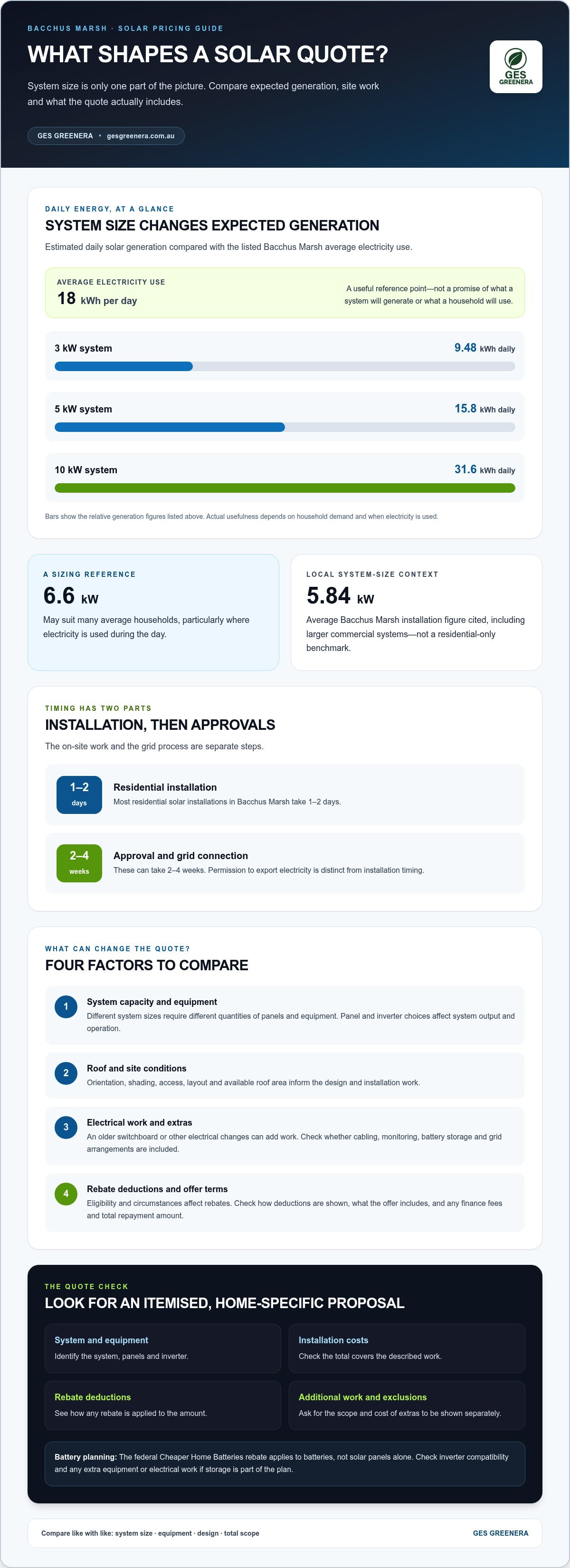
System capacity is a key factor: a 5 kW system and a 10 kW system require different quantities of panels and equipment. Roof orientation, shading, access and layout also affect the design and installation work. An older switchboard or other electrical changes can add work to the project. Compare quotes against your household’s electricity use and available roof area, not system size alone.
In Bacchus Marsh, most residential solar installations take 1-2 days. Approval and grid connection can take 2-4 weeks, so installation timing and permission to export electricity are separate steps.
The value of exported electricity therefore differs from the value of using solar power at home.
Quote inclusions and equipment
A quote should identify the system, panels, inverter, installation costs, rebate deductions and additional work. The Australian Government’s Solar Consumer Guide also recommends a site-specific design. Check where the panels are proposed to sit and whether the total covers the described work, not just the equipment.
Panel and inverter choices affect system output and operation. If you’re considering a solar battery, check that the proposed inverter arrangement supports it. Some systems may need different equipment or additional electrical work to accommodate storage. A clear quote should list the included components and any required additions, so you can compare like with like.
How Much Can I Save With A Solar System Rebate?
Rebates may reduce upfront costs, but the benefit depends on system eligibility and household electricity use. In Bacchus Marsh, compare the rebate-adjusted amount with the system’s expected output and how much electricity you can use during daylight hours.
A 6.6 kW system may suit many average households, particularly where power is used during the day. For context, average electricity consumption in Bacchus Marsh is listed as 18 kWh per day. Estimated generation is 9.48 kWh daily for a 3 kW system, 15.8 kWh for 5 kW, and 31.6 kWh for 10 kW. Actual usefulness depends on matching system size to household demand and usage times.
Small-scale technology certificates (STCs) can lower the upfront amount. Their quantity depends on location, installation date and the electricity generated or displaced. Solar Victoria support is assessed against eligibility rules, property details and the quote process. Rebate amounts and availability can depend on the system and your circumstances, so treat any estimate as indicative rather than a personal entitlement. Treat that estimate as an example, not a personal entitlement.
The federal Cheaper Home Batteries rebate applies to batteries, not solar panels alone. A solar-only system may suit households that use electricity while panels are generating. A battery stores surplus solar power for later, including the evening, but adds equipment and installation considerations. Planning for a future battery may involve checking inverter compatibility and allowing space for storage.
Solar deals and interest-free finance should be compared by their full terms, not the headline offer. Check which equipment and installation work the offer includes, how rebate deductions are shown, and the total repayment amount and fees. For an efficient design matched to your household’s use, explore solar PV installation options.
Where does the money in a solar quote actually go?
When comparing solar installers serving Bacchus Marsh, match the system size, equipment, design and total scope. Quotes can differ if one includes extra electrical work or storage and another does not.
In-home assessments and quotes
An in-home assessment considers roof space, orientation, shading, switchboard condition and household electricity use. These details inform the proposed system and highlight site-specific work before installation. If an assessment is advertised as free, check that the quote clearly states what the offer covers. A site visit and a written quote should leave you with a design tailored to your home, not a generic package.
Quote comparisons and exclusions
Compare quotes for the same system size and battery configuration, then review the equipment and installation scope. The Australian Government recommends that quotes identify the system, equipment, installation costs, rebate deductions and additional work. Its Solar Consumer Guide also recommends a site-specific design. Look for exclusions such as switchboard changes or extra cabling, which can affect the scope and total.
Questions for solar installers
Ask what panels and inverter the quote includes, whether the design accounts for shading, and how much electricity the system is expected to generate. For a 10 kW proposal, check whether the quoted capacity refers to panels or inverter output. Ask how rebates are applied, what warranties cover, and whether payment terms include a deposit or staged payments. Written answers make competing residential quotes easier to assess.
Quote assumptions and extras
Quotes are based on assumptions about roof access, existing wiring, switchboard capacity and the agreed system size. Different site conditions may mean extra work is needed. Ask for any additional work to be itemised, with its scope and cost shown separately from the base installation. Check whether monitoring equipment, battery storage and grid connection arrangements are included in the proposal.
Solar panel and inverter costs
Panel and inverter choices shape system cost, but capacity and installation design matter too. The average Bacchus Marsh installation is 5.84 kW, including larger commercial systems. For a household quote, compare like-for-like residential capacity, equipment and installation scope, rather than relying on the system size alone.
Panel technology, efficiency and manufacturer influence equipment selection. Higher-quality monocrystalline panels and branded inverters can increase upfront costs, while roof orientation and shading affect the design. Ask how the proposed panel layout suits your roof and whether the inverter can handle the system’s expected output.
In Bacchus Marsh, Powercor lists a maximum inverter size of 10 kW and export limit of 5 kW for single-phase homes. For three-phase homes, Powercor lists a maximum inverter size of 30 kW and export limit of 15 kW. These network limits can affect the system design and the amount of surplus electricity sent to the grid.
Inverter type also matters if you may add a solar battery later. A battery-ready design needs compatible equipment and suitable installation planning; adding storage later may involve different components or electrical work. Ask whether the quote covers solar only or includes battery integration, and how adding storage later could affect the setup.
The Australian Government’s solar quote guidance recommends listing equipment, installation costs, rebate deductions and additional work separately. This breakdown helps distinguish hardware costs from labour and site-specific requirements. Check whether the quoted system uses a standard or premium panel and inverter combination, and how it suits your household’s electricity use.
Before choosing, compare the full design and its inclusions. Plan your solar system installation around your roof, inverter needs and future storage plans.
GES Greenera: Residential Electrical Repairs
GES Greenera provides Solar PV System Installation for homeowners planning a solar project, as well as Residential Electrical Repairs for household electrical faults. These services can help with the move from comparing system designs to arranging an installation, or with electrical issues that need attention.
For broader property projects, GES Greenera also provides EV Charging Station Installation and Commercial Switchboard Upgrades. Choose the service that fits the work: solar installation for a new system, repairs for a household electrical fault, or a switchboard upgrade for a commercial property.
Share your project requirements and the details you’ve gathered from solar quotes to discuss the next step. Contact GES Greenera about your electrical or solar project.
Take the next step with a practical solar plan
Before choosing a system, note what you want it to do for your household. Consider when you use the most electricity, whether you may add a battery later, and what electrical work could affect the project. These priorities help focus the discussion on a suitable design, not just the upfront amount.
GES Greenera provides Solar PV System Installation for solar projects, Residential Electrical Repairs for household electrical faults, and Commercial Switchboard Upgrades for business premises. If you’re weighing solar panel cost in Bacchus Marsh, bring your priorities and questions about the quote to the discussion. A clear brief helps focus on the system and electrical work relevant to your property.
Contact GES Greenera today to discuss your solar or electrical project. A considered next step can make the decision feel more manageable.
Frequently Asked Questions
What is the typical cost of a solar system?
On the Australian market, residential solar systems typically range from A$5,100 to A$11,000, with a median of about A$7,200. For the solar panel cost in Bacchus Marsh, treat this range as a market guide, not a quote for your home. The final amount varies with system capacity, panel and inverter selection, roof access, electrical work and battery inclusion. Compare systems with matching inclusions before judging value.
What is the average cost of a 6.6 kW solar system in Bacchus Marsh, Victoria?
There’s no single fixed average for the solar panel cost in Bacchus Marsh for a 6.6 kW system. The amount reflects panel and inverter choices, roof layout, access, switchboard condition and any battery provision. Treat capacity as a system rating, not a complete price guide. For a useful comparison, match equipment and installation scope, then account for rebate deductions and additional work shown in each quote.
How much do 10 kW and 13 kW solar systems cost in Bacchus Marsh?
The cost of a 10 kW or 13 kW system depends on its design and site requirements, so capacity alone can’t set a dependable quote. A 10 kW system in Bacchus Marsh is estimated to generate approximately 31.6 kWh per day. Output from a 13 kW system depends on its design and conditions. Consider whether the extra capacity fits your household’s electricity use.
What factors affect solar panel installation prices in Bacchus Marsh?
Prices reflect the equipment, roof design, access, electrical work and grid connection arrangements. Powercor’s listed limits for single-phase homes are a 10 kW maximum inverter size and 5 kW maximum export; for three-phase homes, the listed limits are 30 kW and 15 kW. According to the Australian Government, solar connection processes also depend on arrangements in the local electricity grid.
Which solar rebates and incentives are available in Victoria for Bacchus Marsh homeowners?
Eligible homeowners may benefit from small-scale technology certificates (STCs), while Solar Victoria support depends on eligibility rules, property details and the quote process. The federal Cheaper Home Batteries rebate applies to batteries. STC eligibility and quantity depend on location, installation date and electricity generated or displaced. Available rebates step down on 1 January 2027, so timing can affect the upfront deduction.
How much can households in Bacchus Marsh save with rooftop solar?
Savings depend on how much solar electricity your household uses instead of buying from the grid. Running appliances or charging an EV during sunny periods can increase direct use, while exported electricity earns the feed-in rate.


