

An annual service does not replace urgent help when an electrical fault occurs. Most electrical equipment and systems should be serviced at least once a year. Scheduled servicing can be complemented by repairs when problems arise, but emergency attendance and planned visits serve different needs.
It can be difficult to tell whether a fault needs immediate attention or can wait for planned work. Regular checks by a qualified electrician can help identify minor issues before they become more disruptive. A tailored electrical maintenance schedule should reflect the equipment and conditions at your property.
This guide explains how emergency support fits alongside preventive work, what affects maintenance frequency, and why qualified electrical work matters. It also covers how statutory compliance relates to electrical maintenance in Australia, what to consider when arranging a service, and how GES Greenera’s electrical repairs and related services can help.
Key Takeaways
- Separate urgent electrical faults from planned servicing so you can respond appropriately when a problem arises.
- Use equipment type, operating conditions and exposure to severe weather to shape a practical maintenance schedule.
- Learn how qualified preventive checks can identify developing issues before they disrupt a home or workplace.
- Understand how statutory obligations relate to electrical work and what to consider when organising compliance-focused maintenance.
Do you provide emergency maintenance services?
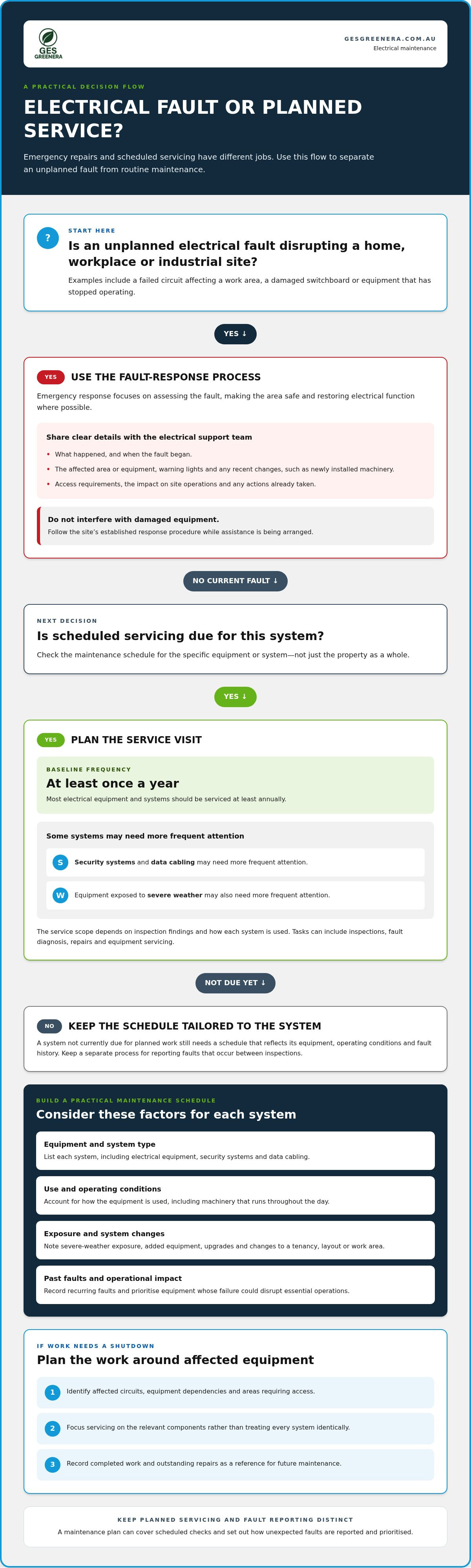
Emergency maintenance addresses unplanned electrical faults that disrupt a home, workplace or industrial site. A failed circuit affecting a work area, a damaged switchboard or equipment that stops operating may need attention outside planned servicing. Unlike routine inspections, emergency response focuses on assessing the fault, making the area safe and restoring electrical function where possible. A maintenance plan can explain how to report and prioritise faults.
Before arranging help for a fault, note what happened, which area or equipment is affected, any warning lights and recent changes, such as newly installed machinery. Share these details with the electrical support team, including access requirements and the impact on site operations. Don’t interfere with damaged equipment. Follow the site’s established response procedure while arranging assistance.
Commercial and industrial electrical maintenance should account for how a fault affects staff, customers, production and building systems. Losing power to one office is different from a fault that stops a production line or affects several work areas. Clear records help electricians understand the disruption and plan an inspection. Include the affected equipment, when the fault began and any actions already taken.
Commercial electrical maintenance can combine planned inspections with a clear process for reporting unexpected faults. For example, a facilities manager can log recurring circuit trips, flickering lights or a switchboard concern, then share that history during an assessment. This can help distinguish an isolated fault from a pattern that needs broader investigation. Keep maintenance records accessible to the people responsible for the site.
Commercial electrical fit-outs also benefit from a maintenance plan based on the installed equipment and how the space is used. A new tenancy, office layout or industrial work area can change demands on circuits and switchboards. Record the changes, identify affected equipment and arrange inspections as part of ongoing electrical maintenance. This gives the maintenance team a clearer starting point if a fault occurs later.
Maintenance frequency and emergency services
Planned servicing organises inspections, while emergency repairs address faults between visits. A useful electrical maintenance schedule reflects the equipment, how it is used and the effect a fault could have on daily operations.
Maintenance frequency
Most electrical equipment and systems should be serviced at least once a year. Security systems and data cabling may need more frequent attention, as may equipment exposed to severe weather. Build your electrical maintenance schedule by listing each system, its operating conditions and past faults. Prioritise equipment whose failure could disrupt essential operations, such as a key workplace circuit.
Planned shutdowns and component servicing
A planned shutdown creates a window for work that requires equipment to be taken out of service. Before scheduling one, identify affected circuits, equipment dependencies and areas requiring access. Servicing can then focus on the relevant components instead of treating every system identically. Record completed work and outstanding repairs to give future electrical maintenance a clear reference.
Service tasks can include inspections, fault diagnosis, repairs and equipment servicing. The scope depends on inspection findings and how each system is used. A home with recently added equipment, for example, may need different attention from a workplace where machinery runs throughout the day. Record faults, upgrades and completed repairs to help plan future visits.
Different systems within one property can have distinct maintenance needs. An electrician may address wiring or a switchboard, while security equipment and data cabling have separate service requirements. Identify the affected system and describe its symptoms when arranging work. This helps direct the inspection to the relevant equipment.
Organise maintenance records by system, such as electrical equipment, security systems and data cabling. For an urgent fault, describe what has stopped working and its effect on operations. Keep planned visits focused on scheduled servicing, with a separate process for reporting faults that occur between inspections.
Preventive maintenance by a qualified electrician
Preventive work checks electrical equipment before faults interrupt daily use. A qualified electrician can assess the system, record issues and recommend practical next steps.
Preventative maintenance plans
A preventive maintenance plan sets out which equipment needs attention, what inspections cover and when work is due. Include previous faults, system changes and operating conditions, such as equipment used heavily throughout the day. This gives each inspection a clear focus and helps track whether recommended repairs have been completed.
Preventive maintenance is planned work intended to identify or reduce developing problems. Reactive maintenance starts after a fault, such as a failed circuit or equipment that stops working. A plan can include both: scheduled checks for known risks and a process for reporting unexpected faults.
To verify an electrician’s licence in Australia, use the official electrical licensing register for your state or territory. Match the electrician’s name and licence details, then review the listed work scope and any conditions. Licensing is administered by each jurisdiction, so use the relevant register rather than assuming another state’s requirements apply.
Preventing fires and power outages
Regular checks by a qualified electrician can help reduce the risk of electrical fires, electric shocks and power outages in the home. During an inspection, the electrician can assess relevant equipment and identify issues that need attention. Report a loose connection, damaged cable or recurring circuit trip clearly, rather than ignoring it or repeatedly resetting the circuit.
Preventive electrical maintenance also supports reliable operation. A well-maintained system can provide appliances with clean, stable power, which may extend their lifespan and possibly reduce energy bills. Keep records of warning signs, repairs and equipment changes, then share them during the next scheduled visit.
Use inspection findings to prioritise repairs and plan follow-up work. Addressing a minor issue early may help avoid a more disruptive fault later. Don’t attempt electrical repairs yourself; leave testing and repair work to a qualified electrician.
Statutory electrical maintenance and compliance
Electrical maintenance and statutory compliance are related, but they address different questions. Maintenance helps keep equipment operating safely and efficiently; compliance means meeting the obligations that apply to the premises, equipment and work. A routine service plan should support compliance, not be treated as proof that every applicable requirement has been met.
Start by identifying the property type, the electrical work involved and the systems in use. A home, commercial tenancy and industrial site can involve different equipment and responsibilities. A new switchboard, altered wiring or change in how a work area operates, for example, may affect what needs assessment. Ask a qualified electrician to explain the work and provide relevant records when it is complete.
Keep a practical compliance file for each site. Include inspection findings, repair records, equipment details and follow-up actions. Note who completed the work, what was assessed and which issues remain open. These details help a facilities manager track decisions, arrange maintenance and document how concerns were addressed. They also help an electrician understand the system before starting later work.
Compliance can also inform energy-efficiency decisions. If equipment is changed to reduce energy use, record the modification and its effect on connected circuits. Adding an EV charger, for instance, can change electrical demand and may require an assessment of the existing installation. Document each upgrade as a change rather than assuming the existing maintenance plan covers it.
- Identify the premises, equipment and work involved.
- Record inspections, repairs, modifications and open issues.
- Schedule follow-up work around the system and its obligations.
Because obligations depend on the work and setting, use a qualified electrician to clarify the relevant compliance steps before organising maintenance. Keep the resulting records with the site’s electrical documentation. For help with a home electrical repair or a new installation, discuss your electrical work.
GES Greenera: Residential Electrical Repairs
GES Greenera provides residential electrical repairs for faults and other electrical issues in the home. Arrange a qualified assessment when a problem arises, or repairs to address an identified fault. Describe the affected area, what happened and any warning signs so the electrician can assess the issue appropriately.
For broader projects, GES Greenera also provides commercial switchboard upgrades, solar PV system installation and EV charging station installation. These services address different needs, from upgrading a commercial switchboard to adding solar generation or home charging. The right work depends on the property and its electrical system.
For support with a residential electrical repair or one of these projects, contact GES Greenera.
Turn your maintenance notes into a practical next step
Use inspection records to decide what needs attention first and who will coordinate the work. A concise brief can bring together the affected equipment, previous repairs, unresolved issues and planned changes to the property. This gives your next conversation a clear purpose and helps keep follow-up actions visible.
Look beyond the immediate fault, too. If your plans involve a broader electrical project, identify how it connects to the existing system. GES Greenera provides residential electrical repairs, commercial switchboard upgrades and solar PV system installation to address different property needs.
Whether you’re planning work or addressing an electrical concern, explain the situation and the outcome you need. That makes it easier to begin a focused discussion about your electrical maintenance requirements and the next practical step.
Contact GES Greenera about electrical maintenance and take the next step with confidence.
Frequently Asked Questions
How Often Should Maintenance Be Performed?
Most electrical equipment and systems should be serviced at least once a year. Security systems and data cabling may need more frequent attention, as may equipment exposed to severe weather. At home, note changes such as a new charger or repeated circuit trips. Share that history with the electrician so the servicing schedule reflects your equipment and property conditions.
What does electrical maintenance include in Australia?
A service can include inspecting electrical equipment, testing relevant components, diagnosing faults and carrying out repairs. The specific work depends on the system and inspection findings. A visit might focus on a damaged cable, a switchboard concern or a circuit that keeps tripping. Ask for a clear record of findings and recommended actions to help organise follow-up work.
How often should electrical installations be inspected and tested in Australia?
There is no single inspection interval that suits every installation. The appropriate schedule depends on the installation type, its use and condition, exposure to harsh conditions, and applicable state or territory requirements. A domestic installation and equipment in a demanding workplace may need different approaches. Keep records of past inspections and changes, then use them to plan the next assessment.
What are the electrical safety inspection requirements for Australian homes and businesses?
Requirements depend on the property, the work being done and the rules that apply in its state or territory. Homes and workplaces can have different responsibilities, so identify the premises and equipment involved before arranging an inspection. For a business, record who manages electrical issues and how faults are reported. Keep inspection and repair documents together to make maintenance planning easier.
What steps are involved in a routine electrical maintenance inspection?
A routine visit usually starts with a discussion of reported faults, recent changes and the equipment needing attention. The electrician then assesses relevant parts of the installation, performs suitable checks and explains any issues found. After the inspection, record the findings, completed repairs and recommended follow-up. For example, note which circuit was assessed and whether further work remains.
Which electrical maintenance tasks must be carried out by a licensed electrician in Australia?
Work involving fixed wiring, switchboards, circuits or changes to an electrical installation should be handled by a licensed electrician. Examples include altering a circuit, repairing wiring or upgrading a switchboard. Don’t remove covers or attempt repairs yourself. Licence rules are administered by state and territory authorities, so confirm that the electrician’s licence is appropriate for the work and jurisdiction.


