

A Melbourne electrician can help with an urgent fault, but opening hours and emergency availability vary between businesses. Treat exposed wiring, burning smells or repeated power loss as reasons to act promptly, and keep clear of the hazard while you arrange help. The right response depends on what’s happening and whether the property can be kept safe in the meantime.
It’s understandable to want a clear answer when an electrical problem disrupts your home or workplace. This article explains what to expect from urgent repair services and how residential, commercial and industrial electrical work can differ. You’ll also learn about switchboard services and the factors that shape the next step, so you can better understand the work needed and make a practical decision.
Key Takeaways
- Know what to do first when an electrical fault feels urgent, and what details can help explain the problem clearly.
- Identify the kinds of repairs and installations commonly needed in homes and commercial premises.
- Learn what to consider when a switchboard needs repair, installation or an upgrade.
- See how residential, commercial and industrial electrical work differs, and where GES Greenera’s services may fit.
Opening hours and emergency availability
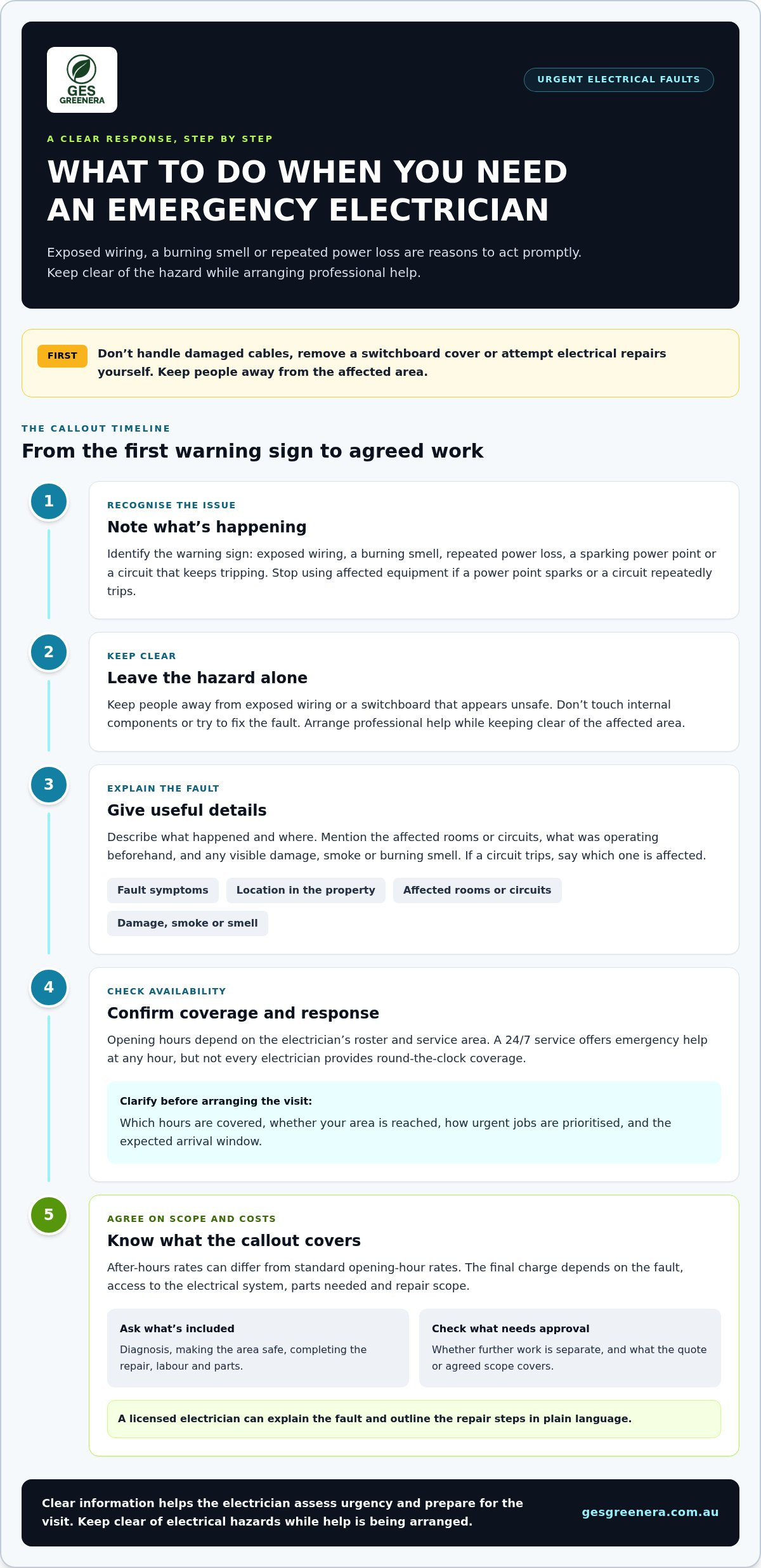
Urgent electrical faults need a clear response. Opening hours depend on each electrician’s roster and service area, so understand the coverage before arranging a callout.
24/7 Emergency electrical services
A 24/7 service means emergency electrical help is available at any hour, including overnight. It doesn’t mean every electrician offers round-the-clock coverage. Ask about the hours covered, the areas reached and how urgent jobs are prioritised. For example, a burning smell or exposed wiring needs prompt attention. Keep people away from the affected area while arranging professional help. A reliable service explains the response process clearly, including what information it needs to assess the situation.
Emergency electrical callouts
An emergency callout starts with a clear description of the fault and its location. Explain what happened, which circuits or rooms are affected, and whether there’s visible damage, smoke or a burning smell. This helps the electrician assess the urgency and prepare for the visit. Keep clear of exposed wiring, and don’t attempt repairs yourself. During the call, clarify the expected arrival window and whether the visit covers diagnosis, making the area safe, or completing the repair. These details help set expectations before work begins.
Emergency and after-hours rates
After-hours rates can differ from standard opening-hour rates because timing, urgency and the work required affect the callout. The final charge also depends on the fault, access to the electrical system, parts needed and repair scope. Pricing depends on the individual job and is provided after a quote request. Before approving work, understand what the callout covers, how labour and parts are treated, and whether further work needs separate approval. A licensed electrician can explain the fault and outline the repair steps in plain language.
Residential and commercial electrical services in Melbourne
Compare a Melbourne electrician by relevant experience, licensing, clear quotes, communication and workmanship. For domestic safety in Victoria, keep clear of exposed wiring and leave fixed electrical work to a licensed electrician.
Melbourne suburbs and service areas
GES Greenera provides electrical services across Melbourne, including Melton, Melbourne Airport, Diggers Rest, Deanside, Bacchus Marsh, Sunbury, Sunshine, Altona, Williamstown, Essendon, Thomastown, Epping, Eynesbury and Werribee. When describing a job, give the suburb and site address, as a home and a commercial property may have different access and scheduling needs.
Residential work can include repairs, lighting and new-home electrical fit-outs. Commercial jobs may involve shops, schools and other workplaces. For a school, describe the affected room and any access restrictions. For a rental property, note the fault and coordinate access with the property manager before arranging the visit.
To request a free, no-obligation quote, share the fault or planned work, property type and suburb. Explaining the scope helps the electrician understand what’s required. Replacing a light fitting, for example, is different from tracing a fault across several circuits. Ask what the proposed work includes, such as diagnosis, materials and follow-up tasks.
Domestic electrical safety rules
In Victoria, fixed wiring, switchboards and electrical repairs should be handled by a licensed electrician. Don’t remove a switchboard cover or handle damaged cables. If a power point sparks or a circuit repeatedly trips, stop using the affected equipment and describe the symptoms when arranging help.
When comparing electrical services, look for licensed, qualified and experienced electricians, clear communication and a written scope. Explain the specific job, such as faulty kitchen lighting or a new-home fit-out, and ask what the work involves. A clear quote identifies the planned work and any relevant exclusions, making it easier to understand the next steps.
Switchboard installation, repair and upgrades
A switchboard distributes electricity around a property and houses protective devices. Its condition matters when circuits trip, new equipment is planned or faults recur.
Switchboard installation and upgrades
A switchboard installation or upgrade begins with assessing the existing board, wiring and property requirements. If you’re adding an electric vehicle charger at home, for example, the electrical capacity and switchboard arrangement may need to be considered together. At a commercial site, planned equipment changes can also affect what the board needs to support.
The electrician can explain the proposed scope, including which parts will be installed or replaced. Discuss how the work relates to planned lighting, appliances or other electrical installations. A clear explanation helps you understand the purpose of the upgrade and how it fits your property.
Switchboard repairs
If a circuit trips, note which one is affected and what was operating beforehand. A repeated trip affecting kitchen power, for example, gives the electrician a useful starting point. Don’t remove covers or touch internal components. Describe any buzzing, visible damage or burning smell, and keep clear of a switchboard that appears unsafe.
Electrical faults can also appear as flickering lights, dead power points or circuits that stop working. A repair visit may involve tracing the fault, identifying damaged components and explaining the repair needed. Regular maintenance can help address persistent issues before they disrupt daily use, but recurring symptoms still need a proper diagnosis.
Electrical work can extend beyond the switchboard. A new antenna installation or repair may address poor television reception, while data and TV cabling can support connected spaces. Describe the affected room and equipment so the electrician can distinguish an antenna issue from a power fault. For any installation or repair, agree on the scope and expected finish before work begins.
Residential, commercial and industrial electrical work
The setting affects the work, even when a fault sounds similar. A Melbourne home, retail tenancy and commercial site can have different equipment, access needs and priorities. Identify the property type, affected area and impact when describing the job.
At home, electrical work may involve repairing a faulty circuit, fitting new lighting or preparing wiring for a new installation. A residential switchboard upgrade may also form part of planned changes, such as adding an electric vehicle charger. Information about existing equipment and its intended use helps define the work.
Commercial electrical work supports places such as offices, shops and schools. A lighting fault across a shop floor differs from a switchboard issue affecting several parts of a building. Describe the affected areas and how the fault disrupts staff or customers. For a tenancy, include access arrangements and relevant site requirements.
At operational sites, electrical work centres on the systems and equipment in use. A fault affecting equipment may need a different assessment from a household power point repair. Tell the electrician the equipment involved, the symptoms and when the problem occurs. Site access, work sequencing and coordination with operations can shape the practical approach.
Match the requested work to the property and the outcome you need. Separate an immediate fault from planned improvements when describing the job. A business may need a commercial switchboard upgrade while planning new equipment; a homeowner may need a repair before considering a broader fit-out. This makes the scope easier to define.
- Residential: Explain the room, circuit or equipment affected.
- Commercial: Note business impacts, site access and affected areas.
- Industrial: Identify equipment and operational constraints.
For electrical work at a home or business, discuss your electrical project and explain the property type, fault or planned upgrade.
GES Greenera: Residential Electrical Repairs
GES Greenera provides residential electrical repairs for faults that disrupt everyday use, from a dead power point to lighting that stops working. Explain what has failed, when it happens and which areas are affected. This helps clarify the repair required and the next steps.
For larger projects, GES Greenera also provides commercial switchboard upgrades, solar PV system installation and EV charging station installation. These services can suit a business planning switchboard improvements, a property considering solar or a home preparing for an electric vehicle charger. The property and its electrical requirements help define the project scope.
For residential electrical repairs or an installation project, contact GES Greenera for a free, no-obligation quotation, or visit gesgreenera.com.au.
Plan your next electrical step
Once you’ve identified the fault or project, describe the outcome you need. Note what’s happening, which areas are affected and whether you need a repair or an upgrade. This gives a Melbourne electrician a clear starting point for discussing the work and its scope.
GES Greenera provides residential electrical repairs, commercial switchboard upgrades and solar PV system installation. These services address different needs, from resolving a home electrical fault to planning a commercial switchboard project or considering solar. Share the property type and your priorities to focus the discussion on a practical solution.
Ready to discuss your electrical requirements? Contact GES Greenera today and outline the work you have in mind. A clear first conversation can help you take the next step with confidence.
Frequently Asked Questions
What if my home repair is urgent or an emergency?
Keep people away from the affected area and don’t touch damaged wiring or electrical equipment. Tell the electrician whether you can see sparks, smell burning, or have lost power throughout the home or in one room. GES Greenera advertises emergency electrical availability around the clock. Explain the immediate symptoms clearly so the urgency and type of help needed can be understood.
What services do electricians in Melbourne offer?
GES Greenera provides electrical repairs, lighting work, switchboard upgrades, new-home electrical fit-outs, solar installations and EV charging installations. Services also include smoke alarm testing and data and TV installations. The service area includes Melton, Melbourne Airport, Diggers Rest, Deanside, Bacchus Marsh, Sunbury, Sunshine, Altona, Williamstown, Essendon, Thomastown, Epping, Eynesbury and Werribee. Describe your property and project to identify the work you need.
How much does an electrician cost per hour in Melbourne?
There’s no single hourly rate that applies to every electrical job. The cost depends on the work scope, fault complexity, access, timing and any materials required. A short repair and a larger installation involve different tasks, so an hourly figure alone may not show the full cost. GES Greenera provides free, no-obligation quotations for its projects, with pricing set out after a quote request.
What is the typical call-out fee for a Melbourne electrician?
A call-out fee depends on the electrician’s pricing structure and the circumstances of the visit, including timing and location. Clarify whether the quoted amount covers attendance only, diagnosis, labour or additional work. For example, tracing an intermittent fault may require further work after the initial assessment. GES Greenera offers free, no-obligation quotations, so you can understand the proposed scope before proceeding.
How do I find a licensed electrician in Victoria?
Look for an electrician who states they’re licensed, qualified and experienced, then match their experience to your job. For example, a switchboard upgrade calls for relevant switchboard experience, while a solar project needs experience with that type of installation. Ask for a written scope that explains the work and intended outcome. GES Greenera states its electrical work complies with AS/NZS 3000:2018.
How can I verify an electrician's licence in Victoria?
Ask for the electrician’s licence details and check that the name and licence class relate to the person and work involved. If anything doesn’t match, contact the relevant Victorian electrical regulator before work starts. Keep the quote and licence details with your project documents. GES Greenera’s electricians are licensed, qualified and experienced.


