

A successful reverse cycle air conditioner installation starts with your home, not just the unit. Room layout, how you use each space, available wall positions and electrical requirements all help determine a practical system plan.
Before work begins, it helps to understand the decisions involved: which rooms need heating and cooling, where the indoor and outdoor units could go, and what access the installation requires. GES Greenera provides air conditioning solutions, with installation planning shaped around the home’s conditions.
This guide covers the main steps before, during and after installation, including system layouts, site and electrical considerations, unit placement, preparation and final checks. Whether you’re upgrading one room or planning heating and cooling for more of your Melbourne home, you’ll know what information to gather and what to discuss during the assessment.
Key Takeaways
- Consider room size, layout, insulation, glazing and how each space is used when assessing your home’s heating and cooling needs.
- Understand the usual installation stages, from site assessment and planning to testing and guidance on operating the system.
- Use a site checklist to identify factors that can affect unit placement, electrical preparation, access and drainage.
- GES Greenera combines air conditioning solutions with residential electrical services for a considered installation process.
What to plan before reverse cycle air conditioner installation in Melbourne
Choosing a system starts with understanding what you want it to do. Reverse cycle air conditioner installation depends on the home as much as the unit: room size, layout, insulation and window glazing all contribute to the heating and cooling requirements. List the rooms you use most, when they’re occupied and whether you want to condition one space or several.
A reverse cycle system transfers heat to provide heating or cooling. For a plain-English overview of how heat pumps work, see Wikipedia’s explanation. When comparing layouts, consider how much of the home you want to condition and whether the rooms are open to one another or separated by doors and hallways.
For a visual overview of a ductless mini-split installation, watch this video:
What should you consider before choosing a system?
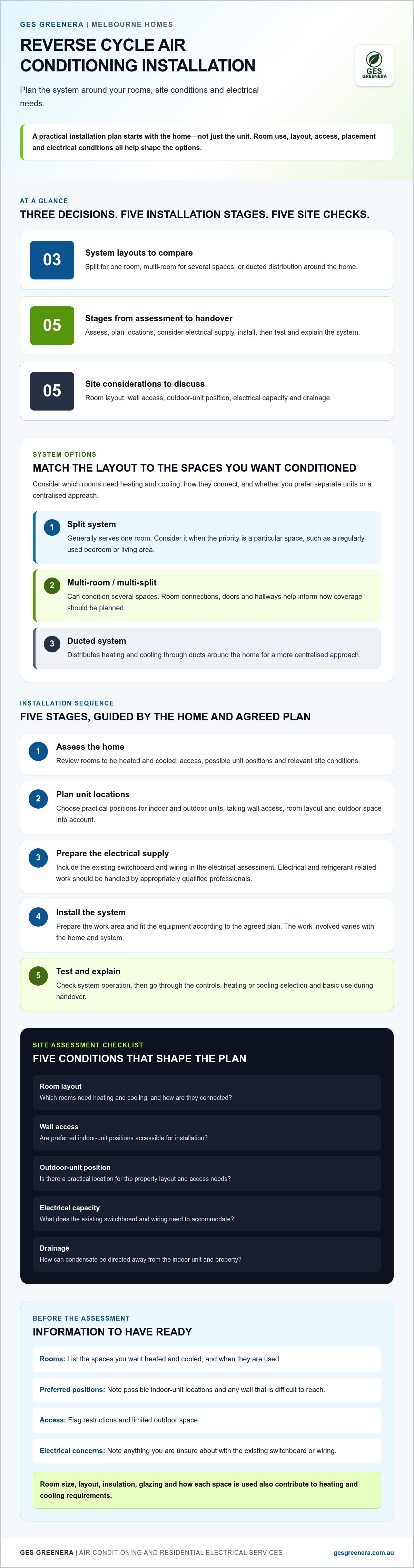
A split system generally serves one room, while a multi-room setup can condition several spaces. A ducted system distributes heating and cooling through ducts around the home. To compare these layouts, identify the rooms that need coverage, how they connect, and whether you want separate units in particular spaces or a more centralised approach. For example, regularly used bedrooms may lead to different priorities from an open-plan living area.
A site assessment helps match the system and unit positions to the home before equipment is selected.
What should homeowners have ready for an installation assessment?
Make a list of the rooms you want heated and cooled, when you use them, and any preferred positions for indoor units. Note access restrictions and practical concerns, such as a wall that’s difficult to reach or limited space outside. These details help guide the discussion, while the home’s conditions determine which options are practical.
Also note any concerns about the existing switchboard or wiring. This gives the electrical assessment useful context and helps identify what needs to be considered in the installation plan. GES Greenera’s air conditioning solutions and residential electrical services support a coordinated approach to planning.
How reverse cycle air conditioner installation works, step by step
A well-organised installation follows a sequence, with the chosen equipment and site conditions guiding the work. For a broader overview of sustainable heating and cooling, the Australian Government’s YourHome guide covers system types and home design considerations.
- Assess the home: Review the rooms to be heated and cooled, access, possible unit positions and relevant site conditions.
- Plan unit locations: Choose practical positions for the indoor and outdoor units. Wall access, room layout and available outdoor space can all shape the plan.
- Prepare the electrical supply: Consider the existing switchboard and wiring as part of the electrical assessment. Electrical and refrigerant-related work should be handled by appropriately qualified professionals.
- Install the system: Prepare the work area and fit the equipment according to the agreed plan.
- Test and explain: Check system operation, then go through the controls and basic use with you.
What happens during installation day?
The team follows the agreed installation plan, taking care around the work area as equipment is fitted and connected. Before the visit, clear access to the relevant rooms and outdoor area, and make arrangements for household members or pets. The work involved depends on the home and system, so the installation process can vary.
Why testing and handover matter
After installation, functional checks help establish that the system operates as intended. During handover, learn how to use the controls, select heating or cooling, and manage basic operation. Ask questions as the setup is explained so you’re clear on how to use the system.
Commissioning checks system operation before handover and gives you an opportunity to learn the controls.
GES Greenera brings air conditioning solutions and residential electrical services to the installation process. Explore GES Greenera’s air conditioning solutions.
Which home and site conditions can affect reverse cycle installation?
Every home presents different installation considerations. Room arrangement, accessible wall space and the outdoor area can influence equipment placement and system layout. Existing electrical conditions also need to be assessed rather than assumed to be suitable or unsuitable. A site assessment identifies practical options and constraints before the reverse cycle air conditioner installation is planned.
| Site consideration | Planning question |
|---|---|
| Room layout | Which rooms need heating and cooling, and how are they connected? |
| Wall access | Are the preferred indoor-unit positions accessible for installation? |
| Outdoor-unit position | Is there a practical location that suits the property layout and access needs? |
| Electrical capacity | What does the existing switchboard and wiring need to accommodate? |
| Drainage | How can condensate be directed away from the indoor unit and property? |
How does the home’s layout affect unit placement?
Indoor units need to be positioned with the intended coverage in mind. A room’s shape, doorways and connection to adjoining spaces affect how air can move through the area. The outdoor unit’s position also needs to account for access and the property layout. Considering both locations together helps create a practical installation plan.
When might another system layout suit the home better?
A single split system is generally planned for one room, while a multi-split layout connects units serving several rooms. Ducted systems distribute conditioned air through ducts, which may suit a home seeking a more centralised approach. Compare the layouts against the rooms you want to condition and how your home is arranged. See the ducted air conditioning installation guide, or explore the VRV air conditioning guide for centralised options.
Electrical assessment is part of installation planning, alongside the assessment of room coverage and unit positions. GES Greenera combines air conditioning solutions with residential electrical services. Explore air conditioning solutions for your home.
Arrange reverse cycle air conditioner installation with GES Greenera
A considered installation connects your household’s heating and cooling needs with the conditions at your home. Identify the rooms you want to condition, assess the site, plan unit locations and electrical requirements, then install and test the system before handover. GES Greenera provides air conditioning solutions and residential electrical services for homeowners across Melbourne, including Melton, Sunbury, Bacchus Marsh and Werribee.
What information helps move the project forward?
Start with a few practical details. You don’t need to know the technical answer before planning begins. Sharing your priorities helps shape the assessment.
- List the rooms you’d like heated and cooled, and when they’re usually in use.
- Describe the home’s layout and any preferred indoor or outdoor unit locations.
- Mention known electrical concerns, switchboard questions or access constraints.
This information connects your day-to-day needs with the site assessment and installation plan. It also gives the electrical assessment useful context, so existing conditions can be considered as part of the project.
How does reverse cycle air conditioning compare with other options?
A reverse cycle system can suit homeowners looking for one system to provide both heating and cooling. The right configuration depends on which rooms need coverage and how the home is arranged. A single-room split, multi-room setup or ducted system may each suit different requirements. Start by deciding which areas matter most and whether you prefer room-by-room or more centralised coverage. For broader context on choosing a system for a Melbourne home, read the Melbourne reverse cycle air conditioning homeowner guide.
Ready to plan your reverse cycle air conditioner installation? Arrange your reverse cycle installation with GES Greenera.
Plan a comfortable upgrade with confidence
A successful reverse cycle air conditioner installation starts with your home’s needs, not a one-size-fits-all choice. Room use and layout help guide the system configuration, while site and electrical assessments inform unit placement and installation planning.
From the initial assessment through installation, system checks and handover, each stage helps you understand the work and how to use your heating and cooling system. GES Greenera brings air conditioning solutions and residential electrical services together for homeowners in Melbourne communities including Melton, Sunbury and Werribee.
Ready to take the next step? Arrange your reverse cycle air conditioner installation with GES Greenera. Share your household priorities and site details to start planning an upgrade around your home.
Frequently Asked Questions
How long does reverse cycle air conditioner installation take?
Installation time depends on the system type and conditions at your home. A single-room split system may involve a different scope of work from a multi-room or ducted setup. Access, unit locations and any electrical work can also affect the schedule. The installation plan takes these project details into account, as the same timeframe does not apply to every job.
Do I need an electrician to install a reverse cycle air conditioner?
Yes. Electrical work for an air conditioner should be handled by a qualified electrician. The electrical supply and existing switchboard need to be considered during planning, and any concerns can be assessed before installation proceeds. Avoid attempting electrical connections yourself. GES Greenera provides air conditioning solutions alongside residential electrical services.
Can a reverse cycle air conditioner be installed in any room?
Not every room will suit every system or unit position. Room size, layout, wall access, intended use and the location of the outdoor unit all influence the installation plan. For example, a bedroom and an open-plan living area have different coverage needs. An assessment helps determine practical placement and whether a single-room or broader system layout better matches your home.
What happens during reverse cycle air conditioner installation?
The process generally begins with a site assessment and a plan for indoor and outdoor unit locations. The electrical supply is considered, then the equipment is installed according to the agreed setup. After installation, the system is tested and the controls and basic operation are explained. The details vary depending on the home, system configuration, access and installation requirements.
Is reverse cycle air conditioning suitable for Melbourne homes?
It can suit households looking for one system to provide both heating and cooling, but the right configuration depends on the home and the rooms you want to condition. GES Greenera provides air conditioning solutions across local areas including Melton, Melbourne Airport, Diggers Rest, Deanside, Bacchus Marsh, Sunbury, Sunshine, Altona, Williamstown, Essendon, Thomastown, Epping, Eynesbury and Werribee. A site assessment helps guide the system layout and unit placement.


