

One system can heat and cool your home, but choosing the right size and setup matters more than simply buying the biggest unit. If you’re considering reverse cycle air conditioning Melbourne homeowners can use through changing seasons, understanding how the system works and what your home needs can help you compare options.
It’s reasonable to ask whether reverse-cycle air conditioning can keep rooms comfortable through a chilly Melbourne winter and a warm summer, and whether the energy ratings tell the whole story. In heating mode, the system moves heat from outside into your home. In cooling mode, it moves heat back outside. Comfort and energy use depend on more than the unit alone.
This guide explains the heating and cooling cycle, compares system types and outlines the home features that can affect comfort and energy use. You’ll also find practical questions to ask a qualified local installer, so you can assess your options with greater confidence.
Key Takeaways
- Assess whether reverse cycle air conditioning melbourne suits your home by considering its layout and heating and cooling needs, not just the unit size.
- Compare system types against the rooms you use and the areas you want to condition.
- Prepare details about your floor plan, insulation, routines and existing heating before arranging an assessment.
- Note your priorities and any home constraints, then discuss them with a qualified professional.
What is reverse-cycle air conditioning, and why do Melbourne homes use it?
Reverse-cycle air conditioning is a heat-pump system that heats and cools a home by moving heat between indoors and outdoors. Instead of creating warmth in the same way as a conventional heater, it transfers available heat. That gives Melbourne households one system for cooler seasons and warmer periods. Whether it’s a good fit depends on the home’s layout and heating and cooling needs.
If you’re comparing reverse cycle air conditioning Melbourne options, understanding this basic principle can help you assess different system types. The heat pump technology behind the system uses a refrigerant cycle to carry heat from one place to another.
How does a reverse-cycle system switch between heating and cooling?
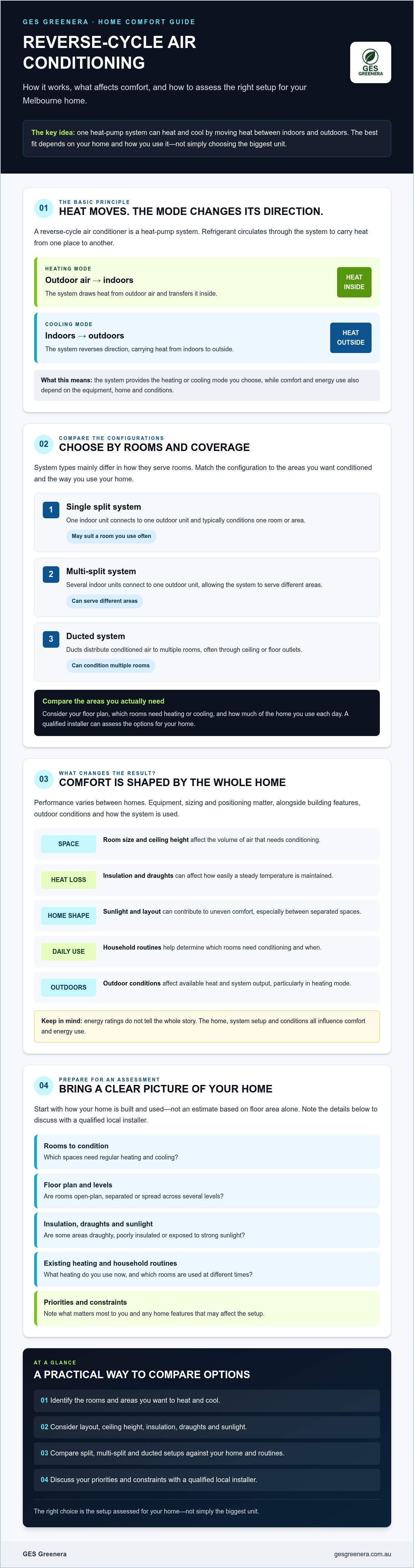
In heating mode, the system draws heat from outdoor air and transfers it inside. In cooling mode, it reverses direction, carrying heat from indoors to outside. Refrigerant circulates through the system to move that heat. You choose the mode, and the system operates to provide the requested heating or cooling.
What types of reverse-cycle air conditioning suit different homes?
The main difference between system types is how they serve rooms. A single split system has an indoor unit connected to an outdoor unit and typically conditions one room or area. A multi-split system connects several indoor units to one outdoor unit, allowing it to serve different areas. A ducted system distributes conditioned air through ducts to multiple rooms, often using ceiling or floor outlets.
Each configuration has trade-offs. A split system may suit a room you use often, while multi-split or ducted options can serve more of the home. Consider your floor plan, which areas need heating and cooling, and how much of the house you use each day. A qualified installer can assess the options for your home rather than relying on a general rule.
Can reverse-cycle air conditioning handle Melbourne’s changing weather?
It can suit Melbourne’s warm spells and cooler seasons, but no single system is right for every home. The outcome depends on the equipment, how it’s sized and positioned, and the conditions it needs to handle. System performance varies between homes because building features, outdoor conditions and the way a system is used all affect comfort and energy use.
Will reverse-cycle air conditioning provide heating in a Melbourne winter?
In heating mode, the system draws heat from outdoor air and transfers it indoors. Available heat and system output can vary with outdoor conditions, so don’t assume every model will feel the same in every home. Older construction, draughts and the rooms you want to heat are useful details to discuss with a qualified installer. YourHome’s guidance on most energy-efficient heating and cooling can help you understand broader selection considerations.
What affects comfort and energy use at home?
A room may be harder to keep comfortable if the system isn’t suited to the space or the home’s ability to hold heat. Consider:
- Room size and ceiling height: These affect the volume of air the system needs to condition.
- Insulation and draughts: Gaps and poor insulation can make it harder to maintain a steady temperature.
- Sunlight and layout: Sun-facing rooms and the distance between spaces can contribute to uneven comfort.
- Household routines: The rooms people use, and when they use them, can help determine a suitable setup.
Outdoor conditions matter too, particularly as the system switches between heating and cooling through the year. If you’re considering how heating, cooling and solar generation fit into household energy planning, see the 2026 Melbourne home solar guide.
GES Greenera also provides air-conditioning solutions for homes. Find out more about GES Greenera’s air-conditioning solutions.
How should you assess a reverse-cycle system for your Melbourne home?
Start with how your home is built and used, rather than estimating capacity from floor area alone. Room size matters, as do ceiling height, insulation, sunlight, draughts, the floor plan and which rooms need heating or cooling. A qualified local installer can consider these factors together when assessing system capacity and configuration.
Before an assessment, note:
- Rooms: Which spaces need regular heating and cooling?
- Layout: Are those rooms open-plan, separated or spread across several levels?
- Insulation and sunlight: Are some areas draughty or exposed to strong sun?
- Routines: When and where is your household usually at home?
- Existing heating: What do you use now, and which comfort problems would you like to address?
Which system type fits your layout and daily routine?
A single-room setup may suit a space you use most. If you want comfort in multiple areas, discuss whether several zones or whole-home coverage may be appropriate. Think about where indoor units could go, which rooms need individual control and whether parts of the home are usually unused. Ask the installer to compare your needs with suitable configurations.
What should you ask before choosing a system?
Use these questions to make the assessment more useful:
- How does the proposed capacity suit the rooms, floor plan and home conditions?
- Why is this configuration suitable for the areas we want to heat and cool?
- What cleaning and maintenance does the manufacturer recommend?
- How should I compare the system’s energy-rating information?
Australian air conditioners display a Zoned Energy Rating Label, with star ratings for hot, average and cold climate zones. Compare the relevant heating and cooling information for Melbourne rather than relying on a single overall impression. A considered reverse cycle air conditioning melbourne choice should suit your home and usage, not just one specification. To explore air-conditioning solutions, review system options with GES Greenera.
What should Melbourne homeowners do before arranging reverse-cycle air conditioning?
A little preparation can make a conversation with an installer more useful. Before choosing a system, identify your comfort needs, note any home constraints and seek qualified advice. This planning guide can help you organise your questions, but it isn’t a substitute for a site assessment or installation instructions.
How can you prepare for an installer conversation?
Write down which rooms you want to heat or cool and when your household typically uses them. Note practical constraints, such as limited wall space, a multi-level layout or rooms that are difficult to keep comfortable. If available, gather a floor plan and details about insulation, draughts and existing heating. This gives an installer useful context for discussing options.
For homeowners researching reverse cycle air conditioning melbourne, explaining how the home is used is as helpful as knowing which system types exist. Be ready to describe your priorities, such as comfort in a particular living area or coverage across several rooms.
When is professional electrical advice useful?
Electrical requirements depend on the proposed system and the home’s existing setup, so don’t assume every property needs the same considerations. Ask how the system proposal relates to your home and whether any electrical factors should be assessed during planning. For broader safety context, read this Melbourne residential electrician guide.
GES Greenera provides air-conditioning solutions. Professional advice can help you explore what may suit your home. Confirm service availability for your address when making an enquiry.
Ready to take the next step? Contact GES Greenera to discuss your air-conditioning needs and the details to consider for your home.
Plan your next step with confidence
Reverse-cycle air conditioning can provide both heating and cooling, but comfort depends on choosing a system that suits your home. Room layout, insulation, sunlight and daily routines all help shape what may work well. When comparing reverse cycle air conditioning melbourne options, look beyond a unit’s headline rating and prepare to discuss your home’s specific needs.
Before deciding, note which rooms you use most, what heating you already have and any features that could affect installation. A qualified professional can help you explore suitable system types and capacity. This planning guide is a useful starting point, not a substitute for advice based on your home.
GES Greenera lists air-conditioning solutions alongside residential electrical services. Service availability can vary by suburb, so confirm that your address is covered. Discuss your air-conditioning needs with GES Greenera and take a considered next step towards a more comfortable home.
Frequently Asked Questions
How does reverse-cycle air conditioning work?
Reverse-cycle air conditioning moves heat between indoors and outdoors to provide heating or cooling. In heating mode, it takes heat from the outside air and transfers it inside. In cooling mode, it carries heat from your home outdoors. The system uses circulating refrigerant to move heat, rather than generating warmth in the same way as a conventional heater.
Is reverse-cycle air conditioning suitable for Melbourne winters?
It can provide heating during a Melbourne winter, but suitability depends on the system and the home. A heat-pump system transfers heat from outdoor air indoors, and its output can vary with outdoor conditions. Insulation, draughts, room layout and the spaces you want to heat also affect comfort. Discuss your home’s construction and heating needs with a qualified installer before choosing.
Can one reverse-cycle air conditioner heat and cool a whole house?
It depends on the system configuration and your home’s layout. A single split system is generally intended to condition one room or area, so it may not provide even comfort throughout a whole house. Multi-split systems can serve several areas, while ducted systems distribute conditioned air through ducts. Ask an installer to assess the rooms, floor plan and household use.
What affects the efficiency of reverse-cycle air conditioning?
Efficiency and comfort are influenced by how well the system suits the space and how the home holds heat. Room size, ceiling height, insulation, draughts, sunlight and everyday use all matter. Compare the Zoned Energy Rating Label’s heating and cooling information for Melbourne’s climate zone, but treat it as one comparison aid. Correct sizing and configuration also need professional assessment.
How do I choose a reverse-cycle air conditioner in Melbourne?
For reverse cycle air conditioning melbourne, compare system options against the rooms you use, your floor plan, insulation and existing heating. Check the Zoned Energy Rating Label for heating and cooling ratings relevant to Melbourne, then ask an installer to explain the proposed capacity and configuration. GES Greenera lists air-conditioning solutions for selected areas, including Melton, Melbourne Airport, Diggers Rest, Deanside, Bacchus Marsh, Sunbury, Sunshine, Altona, Williamstown, Essendon, Thomastown, Epping, Eynesbury and Werribee. Confirm availability for your address.


