

The heat pump with the strongest efficiency claim may still be the wrong choice for your home. When comparing melbourne heat pumps, look beyond the headline rating: household hot-water demand, Melbourne’s changing weather and the space available for an outdoor unit all matter. Noise, airflow and installation requirements can also affect where a system will work best.
Before replacing your existing hot-water system, compare how heat pumps work and what they require at your property. This guide explains how they use warmth from the surrounding air and what to consider when switching from gas or electric storage. You’ll learn how to compare capacity and efficiency against your household needs and verified product information.
We’ll also cover the site conditions an installer should assess, including unit placement and electrical requirements, and what to clarify about plumbing work. Check current Victorian and federal incentives with the relevant authorities rather than relying on assumptions about eligibility or discounts. By the end, you’ll have practical questions to help decide whether a heat pump suits your Melbourne home and prepare for an informed installation quote.
Key Takeaways
- Understand how a heat pump moves ambient heat into stored water and how its main components work together.
- Compare melbourne heat pumps with gas and resistive electric systems by considering energy source, household needs and installation requirements.
- Choose tank capacity based on occupants, hot-water habits and the system’s recovery performance, not bedroom count alone.
- Use a written quote checklist to clarify the equipment, work included, exclusions, electrical and plumbing responsibilities, and commissioning.
Melbourne heat pumps for hot water: how the system works
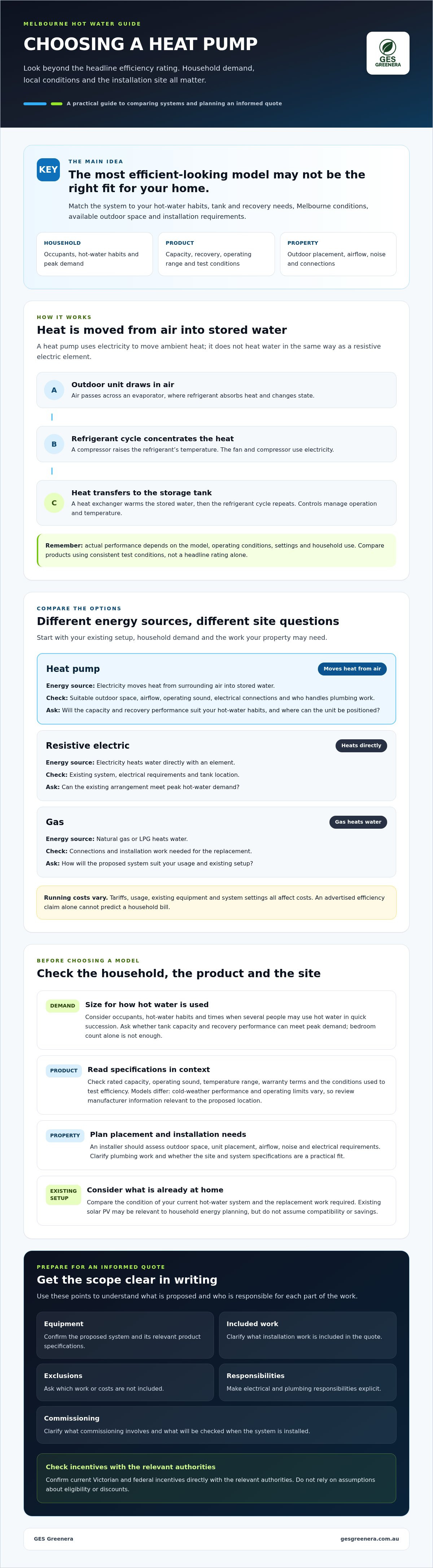
A heat pump hot water system transfers ambient heat from the surrounding air into water rather than generating heat directly. Its outdoor unit draws in air, a refrigerant cycle captures and concentrates the heat, and a heat exchanger transfers it to water in a storage tank. Controls manage operation and temperature. For a plain-English overview of the underlying technology, see how air-source heat pumps work.
A heat pump water heater uses electricity to move heat into water; a resistive electric water heater uses electricity to generate heat directly through an element. A heat pump still uses electricity, so hot water isn’t cost-free. Actual performance depends on the model, operating conditions, settings and household use. Check the conditions used to test a product’s efficiency claims, and compare like with like rather than relying on a headline rating alone.
What happens during a heat pump hot water cycle?
The outdoor unit draws air across an evaporator, where refrigerant absorbs heat and changes state. A compressor raises the refrigerant’s temperature, then the heat transfers to the stored water before the refrigerant cycle repeats. The compressor and fan need electricity to run. Because test results can vary with air temperature and other conditions, check the manufacturer’s test method and specifications before comparing models.
Is a Melbourne winter too cold for a heat pump?
There’s no single answer for every system. Operating limits and cold-weather performance vary by model, and colder conditions can affect how a unit performs. When comparing melbourne heat pumps, check the manufacturer’s stated operating range and performance information for conditions relevant to your area and proposed installation location. Product specifications describe tested or stated operation, not a guarantee of the same results in every household. A site assessment can help determine whether the location and system specifications are a practical fit.
Compare Melbourne heat pumps with gas and electric hot water
Each system uses a different energy source, so start by comparing your existing setup, household demand and installation site. The Australian Government’s guide to comparing hot water systems offers further background.
| System | Energy source | Installation considerations | Household fit and question to ask |
|---|---|---|---|
| Heat pump | Electricity moves heat from the air into stored water. | Needs suitable outdoor space and electrical connections; clarify who handles plumbing work. | Ask whether capacity and recovery suit your hot-water habits, and where the unit can be positioned. |
| Resistive electric | Electricity heats water directly with an element. | Check the existing system, electrical requirements and tank location. | Ask whether the existing arrangement can meet peak demand. |
| Gas | Natural gas or LPG heats water. | Confirm what connections and installation work the replacement requires. | Ask how the proposed system suits your usage and existing setup. |
Running costs vary with tariffs, usage, existing equipment and system settings, so a general efficiency claim can’t predict your bill. Advertised efficiency alone can’t tell you what a household will pay, because tariffs, usage and operating conditions also affect running costs.
When might a heat pump suit a household?
Consider how much hot water you use, the condition of your current system and whether there’s a suitable outdoor location. If several people use hot water in quick succession, ask how the proposed tank capacity and recovery performance will meet that peak demand. Existing solar PV may be relevant to household energy planning, but don’t assume a particular system will be compatible or deliver savings. See the 2026 Melbourne home solar guide for broader solar context. For space heating and cooling, the Melbourne reverse-cycle air conditioning guide covers a separate use: conditioning indoor spaces, not heating hot water.
What should you compare beyond efficiency labels?
Check rated capacity, operating sound, temperature range and warranty terms in current manufacturer information. Compare models under consistent test conditions, then discuss whether those specifications suit your site and household. GES Greenera installs heat pump systems, so you can discuss heat pump installation requirements and clarify which work is included.
Size and plan a Melbourne heat pump installation
Good sizing starts with how your household uses hot water, not a bedroom-count rule. Tank capacity should account for the number of occupants, peak-use patterns and the system’s recovery performance, which affects how quickly it reheats water after use. Before comparing melbourne heat pumps, gather details that will help an installer assess both demand and the site.
Before an assessment, gather your household size and hot-water habits, details of the existing system, photos or measurements of the proposed location, and any product specifications you’re considering.
- Map household demand: Note busy periods, back-to-back showers and other regular hot-water use.
- Record the existing system: Share its type, location and any known limitations.
- Identify a proposed location: Ask the installer to assess clearance, airflow, noise exposure, drainage and access for installation and future servicing.
- Review product specifications: Check capacity, recovery performance and site requirements against your household’s needs.
What should a site assessment cover?
Ask how outdoor-unit placement affects ventilation, noise and access, and what drainage arrangements are required. Confirm the electrical supply requirements and who is responsible for plumbing connections and related work. For broader home electrical safety context, read this Melbourne residential electrician guide.
Which Victorian rebates or incentives may apply?
Incentive rules, product requirements and eligibility can change. Before deciding, check current details for Solar Victoria’s hot water rebate, Victorian Energy Upgrades, including VEECs, and federal Small-scale Technology Certificates with the relevant official sources. Start with Solar Victoria’s hot water rebate information, and confirm your own circumstances rather than assuming you qualify. GES Greenera installs heat pump systems; discuss your heat pump installation requirements and confirm the work scope for your property.
Choose a Melbourne heat pump installer with confidence
A written quote should explain what’s proposed and who is responsible for each part of the job. When comparing melbourne heat pumps providers, look beyond a model name or brief summary. Check credentials relevant to the work, product documentation, warranty conditions and whether the provider covers your suburb.
Questions to ask before accepting a heat pump quote
Ask the provider to explain why the proposed capacity and model suit your household’s hot-water demand and the conditions at your property. Request the details in writing, including:
- The equipment specified and the product documentation used to assess suitability.
- Installation work included, plus any exclusions or additional work that may be required.
- Who is responsible for electrical work, plumbing connections and removal of the existing system.
- How commissioning will be completed, what the handover covers, and what after-installation support is available.
- Applicable warranty terms, including what they cover and any conditions to follow.
A clear scope helps you compare providers on a like-for-like basis and resolve responsibilities before work proceeds.
What to expect when contacting GES Greenera
GES Greenera lists heat pump installation and electrical services, but the work involved can depend on your property. Be ready to share your suburb, existing hot-water system, household use and details about the proposed unit location. Ask the team to confirm service coverage for your suburb and clarify who handles plumbing connections, removal and commissioning for your project.
Before proceeding, make sure the written scope reflects your discussion and that you understand the product documentation and warranty conditions. Discuss heat pump installation with GES Greenera.
Make your next hot-water decision with confidence
The right system depends on more than an efficiency label. Compare options against your household’s hot-water habits, site conditions and product specifications, then check that the proposed tank capacity and installation plan suit your home. For melbourne heat pumps, local weather and outdoor placement are also worth discussing with an installer.
Before you proceed, get the equipment, installation scope, exclusions and electrical and plumbing responsibilities clearly set out. Check current product documents and warranty conditions, and confirm incentive details with official sources rather than assuming you’re eligible.
GES Greenera lists heat pump installation among its sustainable energy services, alongside residential electrical work and solar PV installation. If you’re in Melton, Melbourne Airport, Diggers Rest, Deanside, Bacchus Marsh, Sunbury, Sunshine, Altona, Williamstown, Essendon, Thomastown, Epping, Eynesbury or Werribee, ask whether your address is currently covered and clarify who will handle each part of the installation. Discuss a heat pump installation for your Melbourne home and take the next step with a clearer idea of what your household needs.
Frequently Asked Questions
Are heat pump hot water systems suitable for Melbourne winters?
Some heat pump hot water systems are designed to operate in Melbourne winter conditions, but cold-weather performance and operating limits vary by model. For melbourne heat pumps, check the manufacturer’s stated temperature range and performance information for your location and proposed unit position. An installer can assess airflow and site conditions. Suitability depends on the product and household use, so don’t treat a general claim as a guarantee.
How do I choose the right heat pump hot water system size?
Choose capacity based on household demand, usage patterns and the system’s recovery performance, not bedroom count alone. Consider how many people use hot water, when peak demand occurs and whether showers or other uses happen close together. Ask the installer to explain why the proposed tank capacity and recovery rate suit your household. The model’s specifications and your existing system can also inform the assessment.
Can a heat pump hot water system work with solar panels?
A heat pump may be considered alongside household solar PV, but compatibility and any potential benefit depend on the equipment, controls, electricity use and how your household uses energy. Don’t assume an existing solar system will automatically suit a particular heat pump or reduce bills. Ask the installer to check the relevant product specifications and your electrical setup before making a decision.
Are rebates available for Melbourne heat pumps in 2026?
Eligible households may be able to access the Solar Victoria Hot Water Rebate, with possible additional support through Victorian Energy Upgrades and federal Small-scale Technology Certificates. Eligibility, product requirements, discount values and availability depend on current scheme rules and your circumstances. Check details directly with Solar Victoria and the relevant programme administrators before committing, and don’t assume an installer will manage an application on your behalf.
What should a heat pump installation quote include?
A written quote should identify the proposed equipment and capacity, installation scope, exclusions, electrical requirements, who handles plumbing connections and removal, commissioning, warranty terms and after-installation support. GES Greenera lists service locations including Melton, Melbourne Airport, Diggers Rest, Deanside, Bacchus Marsh, Sunbury, Sunshine, Altona, Williamstown, Essendon, Thomastown, Epping, Eynesbury and Werribee. Confirm coverage for your address and responsibilities for your project.


