

Could your solar panels need less hands-on care than you think? Solar panel maintenance isn’t simply a matter of climbing onto the roof for a regular clean. For Victorian homes, monitoring performance and knowing when to call a professional can be more useful, and safer, than routine DIY work.
It’s understandable to wonder whether a dip in output is a fault, a cloudy spell or a build-up of dirt. You may also be unsure how often panels need cleaning, what your warranty requires and where safe homeowner checks end. This guide explains how to read your system’s performance, recognise changes worth investigating and clean panels only when conditions warrant it.
We’ll cover what to check on your inverter display or monitoring app, why a single low-output day may not signal a problem, and why roof access and electrical work should be left to professionals. Energy Safe Victoria recommends having your system serviced by a licensed A-Grade electrician at least every two years. You’ll learn when that inspection matters and how to care for your system safely.
Key Takeaways
- Make solar panel maintenance practical by using your inverter display or monitoring app to track generation over time.
- Compare similar periods and consider weather, shade and household electricity use before treating a change in output as a fault.
- Clean panels only when dirt or debris appears to be affecting them, and avoid roof access or methods that could put you at risk.
- Persistent inverter problems, damaged components or signs of an electrical fault need assessment by a licensed electrician.
Solar Maintenance for Melbourne Homeowners
Solar systems are built to operate outdoors, so they generally need limited routine attention. For Melbourne homeowners, useful solar panel maintenance starts with tracking how the system performs and noticing visible changes from a safe position. It doesn’t mean scheduling frequent washes or attempting electrical repairs. A measured approach helps you spot a genuine change without treating every cloudy day as a fault.
In short: monitor system performance and visible condition yourself, clean panels only when needed, and leave electrical testing and repairs to a qualified professional.
What counts as solar panel maintenance?
Maintenance has three distinct parts: monitoring, cleaning and electrical servicing. Monitoring means checking generation information on the inverter display or system app. Visual observation means noticing changes you can see safely from the ground, such as obvious debris or damage. Cleaning addresses surface dirt when it appears to be affecting the panels. Electrical servicing involves checking the inverter, wiring and other system components, and isn’t a DIY task.
The panels are only one part of the system. The inverter converts the electricity they generate, and its display or monitoring information can help you understand whether the system is operating as expected. For an overview of how panels work, including their construction and performance, see this guide to the Solar panel.
Why a monitor-first approach makes sense
Before judging a change, learn your system’s usual pattern. Use the same display or app to track generation over time, and compare similar periods rather than isolated readings. Cloud cover, shade and seasonal daylight can affect generation. Household electricity use affects how much of that power you use at home, but a change in usage doesn’t necessarily mean the panels are generating less.
- Use your inverter display or app to become familiar with its generation readings and any alerts.
- Note when changes occur and whether they repeat, rather than relying on one observation.
- Consider weather, shade and the time period you’re comparing before deciding a change needs attention.
Understanding how solar fits into a Melbourne home can also help put system performance in context. The 2026 Melbourne home solar guide explores solar’s broader role in household energy use.
How to check solar panel performance and spot a problem early
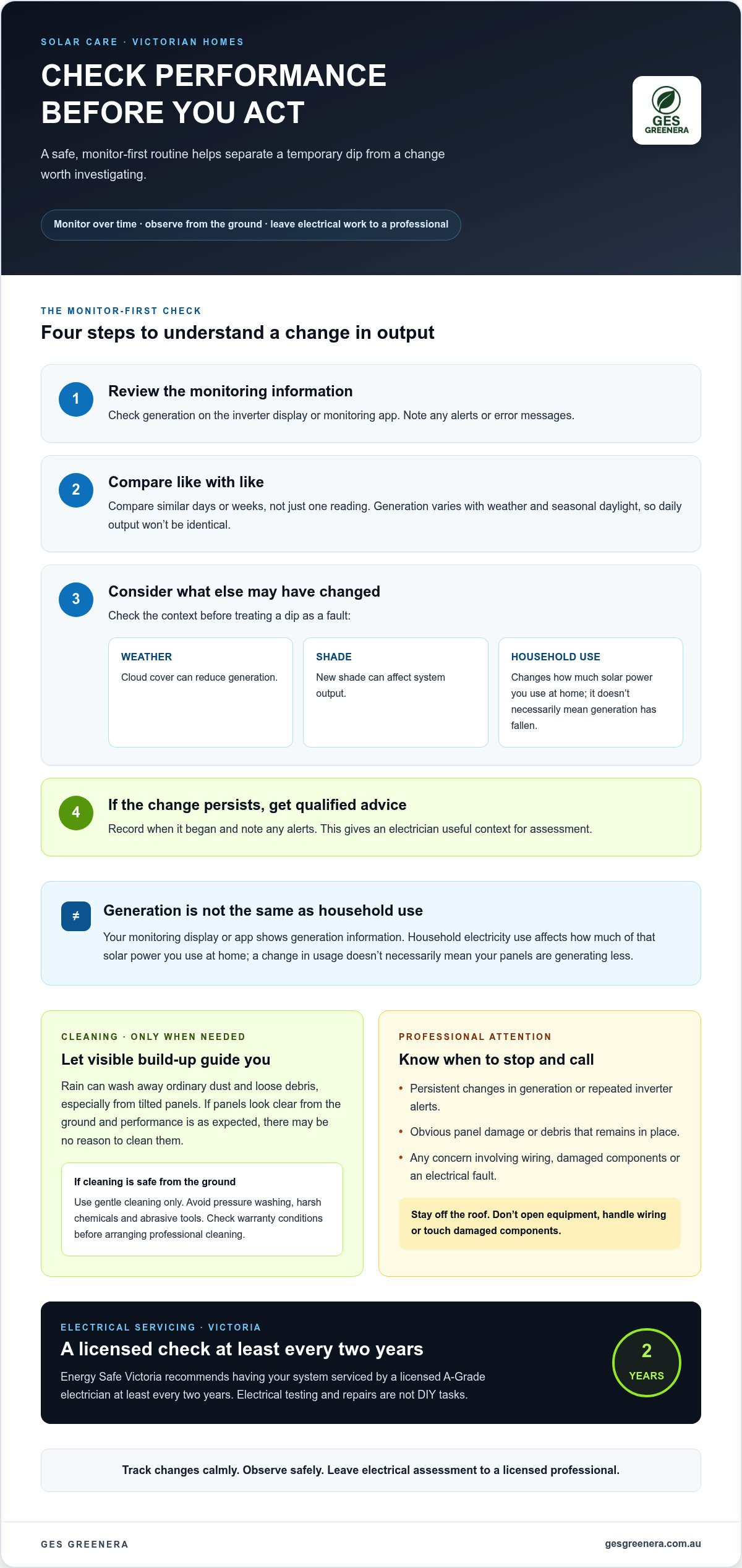
A simple routine can help you distinguish a temporary dip from a change that deserves attention. Use your monitoring app or inverter display and work through these steps before deciding what to do next.
- Review the monitoring information. Check the generation reading and note any alerts or error messages shown on the display or app.
- Compare like with like. Look at similar periods, such as comparable days or weeks, rather than drawing conclusions from one reading. Seasonal daylight and changing weather affect generation, so output won’t be identical every day.
- Note what else may have changed. Cloud cover or new shade can reduce generation. Household electricity use affects how much solar power you use at home, but it doesn’t necessarily mean the panels are generating less.
- Get qualified advice if the change persists. Record when the change began and any alerts displayed. Those details give an electrician useful context.
Which warning signs call for professional attention?
From a safe position on the ground, look for obvious panel damage, debris that appears to remain in place or other visible changes. Don’t climb onto the roof to investigate. A persistent change in generation or a repeated inverter alert also warrants assessment. A persistent, unexplained change in output calls for investigation, not DIY electrical work.
Don’t open the inverter or other equipment, handle wiring or touch damaged components. Electrical checks belong with a licensed electrician. For general consumer information about solar energy and system care, the U.S. Department of Energy Solar Energy Technologies Office provides further guidance.
Keep notes about what you observe, but don’t try to diagnose a fault yourself. If a concern points to an electrical issue, GES Greenera’s electrical repairs and maintenance can support homeowners in Melbourne’s west.
When to Clean Solar Panels and Avoiding Unsafe DIY
Cleaning isn’t automatically part of every solar panel maintenance routine. Rain can wash away ordinary dust and loose debris, particularly on tilted panels. Check for visible build-up and monitor system performance before deciding a wash is needed. Rain won’t remove everything, though. Bird droppings or stuck debris may remain and could need attention if they’re affecting a panel and can be reached safely from the ground.
Does rain clean solar panels well enough?
Let what you can see guide your next step. If panels look clear from the ground and your system is performing as expected, there may be no reason to clean them. If you can safely reach an affected area without climbing or leaning, Victorian guidance supports gentle cleaning. Avoid pressure washing, harsh chemicals and abrasive tools, which may damage the panels.
When should you avoid cleaning them yourself?
Stay off the roof. If a panel can’t be reached safely from the ground, cleaning it isn’t a DIY job, even when dirt is visible. Before arranging professional cleaning, review your system’s warranty conditions so the cleaning method and work don’t conflict with its requirements.
- Ground-reachable light cleaning: Gentle cleaning may be practical for a small amount of accessible dirt. Don’t stretch, climb or use equipment from an unsafe position to reach further.
- Roof access or heavy soiling: Leave difficult access and substantial build-up to a professional cleaner. Consider warranty conditions and the risks of working at height.
Don’t use cleaning as a reason to handle wiring, open equipment or touch damaged components. If you notice an electrical concern while checking the panels, leave it to a licensed electrician. Arrange electrical support from GES Greenera for a system concern that needs professional attention.
Solar panel servicing in Victoria: when to call a licensed electrician
Some checks are best left to a professional. Contact a licensed electrician if you notice damaged components, persistent inverter issues or signs of an electrical fault. Solar panel maintenance can involve more than cleaning: electrical servicing assesses system components and safety, not just the appearance of the panels.
What can a licensed electrician check?
An electrician can inspect the system’s electrical components, investigate faults and assess whether the inverter or other equipment needs attention. In Victoria, solar electrical work and fault diagnosis must be handled by an appropriately licensed electrician. Don’t open equipment, touch damaged parts or attempt to test wiring yourself.
Energy Safe Victoria recommends having a solar system serviced by a licensed A-Grade electrician at least every two years. Follow current Solar Victoria guidance and your system documents when setting a servicing schedule. A professional assessment is also appropriate if a persistent fault appears between scheduled checks.
Keep your installation details, product warranty information and workmanship records together. These documents help explain the system’s history during a service discussion and make warranty conditions easier to refer to if a component needs attention.
Getting support across Melbourne’s west
GES Greenera provides residential electrical repairs and maintenance across Melbourne’s west, including Melton, Melbourne Airport, Diggers Rest, Deanside, Bacchus Marsh, Sunbury, Sunshine, Altona, Williamstown, Essendon, Thomastown, Epping, Eynesbury and Werribee. For context on keeping household electrical systems safe and efficient, see the residential electrician safety and efficiency guide.
If a system issue needs professional attention, contact GES Greenera for electrical support. Share the inverter alert or performance change you’ve observed, along with any relevant installation or warranty records. This gives the electrician a clearer starting point for assessing the concern.
Keep your solar system ready for what’s next
Your household’s energy needs can change over time. New appliances, a home office or plans for an electric vehicle may alter how you use the power your system generates. Keep that bigger picture in mind when reviewing your solar panel maintenance needs. Performance monitoring helps you understand how your home uses energy, as well as spot possible faults.
If an electrical concern needs attention, professional support can help you decide on a safe next step. GES Greenera provides residential electrical repairs and maintenance, as well as solar PV system installation, for homeowners across Melbourne’s west. Whether you’re responding to a system issue or considering solar for your home, you can contact GES Greenera for electrical support.
Stay observant, leave electrical work to a licensed professional and make decisions based on your system’s needs. A steady, safety-first approach can help you feel more confident about the energy your home produces.
Frequently Asked Questions
Do solar panels need to be cleaned every year?
No, an annual clean isn’t automatically necessary. Decide based on visible soiling, safe access and whether build-up may be affecting your system. Rain can wash away some ordinary dust, but it may leave stubborn marks behind. Check your monitoring information and warranty terms before arranging a clean, and consider the cost and risks of accessing panels that can’t be reached safely.
Can I clean solar panels myself?
Only consider cleaning if the panels are safely reachable from the ground and your manufacturer’s instructions and warranty allow it. A ground-level view can help you decide whether there’s an obvious issue, but don’t climb onto the roof or improvise with long tools. Avoid pressure washers, harsh chemicals and abrasive materials. For heavy soiling or difficult access, arrange professional cleaning.
How often should a solar system be serviced in Victoria?
Current Victorian guidance recommends servicing by a licensed A-Grade electrician at least every two years. Follow current Energy Safe Victoria and Solar Victoria guidance, along with your system documents. Arrange an assessment sooner if you notice damage or an ongoing fault. This applies to homes across Melton, Melbourne Airport, Diggers Rest, Deanside, Bacchus Marsh, Sunbury, Sunshine, Altona, Williamstown, Essendon, Thomastown, Epping, Eynesbury and Werribee.
What should I do if my solar inverter shows a fault?
Record the displayed message or indicator and note when it appeared. Check the manufacturer’s instructions for safe user-level guidance, but don’t open the inverter or handle wiring. If the alert remains or generation changes unexpectedly, arrange qualified electrical advice. Having your installation details and warranty documents ready can help explain the system’s history and support a clearer assessment.


