

What if a solar inverter warning doesn’t mean you need a new unit straight away? If your panels are producing less power or your household is drawing more electricity from the grid, it’s understandable to wonder whether the inverter has failed. For homeowners considering solar inverter replacement melbourne, start by recording what the system is showing and when its performance changes.
A fault can have more than one cause, so base a replacement decision on the existing system rather than a guess. An assessment can help identify whether the inverter needs attention or replacement. The new unit also needs to suit your panels, electrical setup and site conditions.
This guide covers common signs of inverter trouble, what affects replacement suitability and which details can help plan the work. It also explains the replacement process for Melbourne homes. GES Greenera provides solar PV and residential electrical services, including solar inverter replacement tailored to the existing system.
Key Takeaways
- A fault display or reduced output alone doesn’t confirm inverter failure. Record recurring error messages, shutdowns, status lights and monitoring changes.
- String, hybrid and microinverter setups work differently, so a replacement needs to suit your existing solar system.
- For solar inverter replacement melbourne, knowing what to expect from assessment, compatibility planning, replacement and handover helps you prepare.
- Gather your inverter details and fault observations to help GES Greenera plan solar PV and residential electrical work for your home.
Solar inverter replacement in Melbourne: which warning signs deserve attention?
A fault display or drop in solar output can be unsettling, but neither proves the inverter needs replacing. Persistent error messages, repeated shutdowns, unusual status lights or a sudden change in monitoring data are signs worth recording. They help describe what’s happening, but other issues can produce similar symptoms. Cloudy weather, seasonal changes, shading from trees, or problems with isolators and wiring can also affect system performance.
A warning sign is an observation, not a diagnosis. A professional assessment is needed to confirm whether the inverter itself has failed. If you’re considering solar inverter replacement melbourne, note when the issue occurs and whether it coincides with changes in weather, sunlight or household use. For background on types of solar inverters and their function, see this overview of how inverters work within a solar system.
What can Melbourne homeowners safely check?
Gather information without opening equipment or handling electrical parts. Record any displayed error code, when it appears and whether the inverter stops producing. Compare monitoring data with recent patterns, allowing for changes in weather and daylight across the seasons. Note whether performance changes or shutdowns happen at particular times, and whether the issue is ongoing or intermittent. Don’t open the inverter or touch wiring, isolators or other electrical components. Leave those checks to a professional.
When does a fault need prompt attention?
Repeated fault messages or persistent shutdowns warrant professional assessment, particularly if generation remains disrupted. Visible damage, a burning smell or unusual heat should be treated as safety concerns. Keep clear of the equipment and arrange prompt professional help rather than investigating it yourself. A professional can assess whether the inverter or another part of the system is causing the problem.
How a replacement inverter must match your existing solar system
A solar inverter converts the electricity produced by your panels into alternating current your home can use. The right replacement depends on how the full system is configured. A string inverter connects a group of panels to one central unit; microinverters sit at individual panels, while a hybrid inverter can manage solar generation and battery storage. These arrangements aren’t interchangeable by default.
Replacement suitability depends on the whole solar system, not inverter size alone. System age, panel configuration, household phase supply and existing export settings all inform what may be suitable. A unit with a seemingly appropriate capacity may still need to be assessed against the panels, wiring and site conditions. For further reading on maximizing solar inverter reliability, see the American Clean Power Association’s resource.
Which system details help guide the replacement choice?
Find the existing inverter’s make, model and capacity, along with installation records if you have them. A clear photo of the label can help capture the details. Panel layout, the home’s single- or three-phase supply and the system’s current export settings may all affect compatibility. Roof and equipment access, existing wiring and the age of other components also help shape a replacement plan for your Melbourne home.
Should a replacement leave room for future solar upgrades?
If you’re considering a battery, extra panels or another system change, mention it during planning. Future plans can influence which replacement options make sense now, though suitability depends on the existing system and site. A battery-ready option isn’t automatically the best fit. The 2026 Melbourne home solar guide offers more context on planning solar around household needs.
For solar inverter replacement melbourne, GES Greenera draws on its solar PV installation and residential electrical experience to assess your existing setup and plan the replacement. Share your inverter details and any upgrade plans through GES Greenera’s solar electrical support.
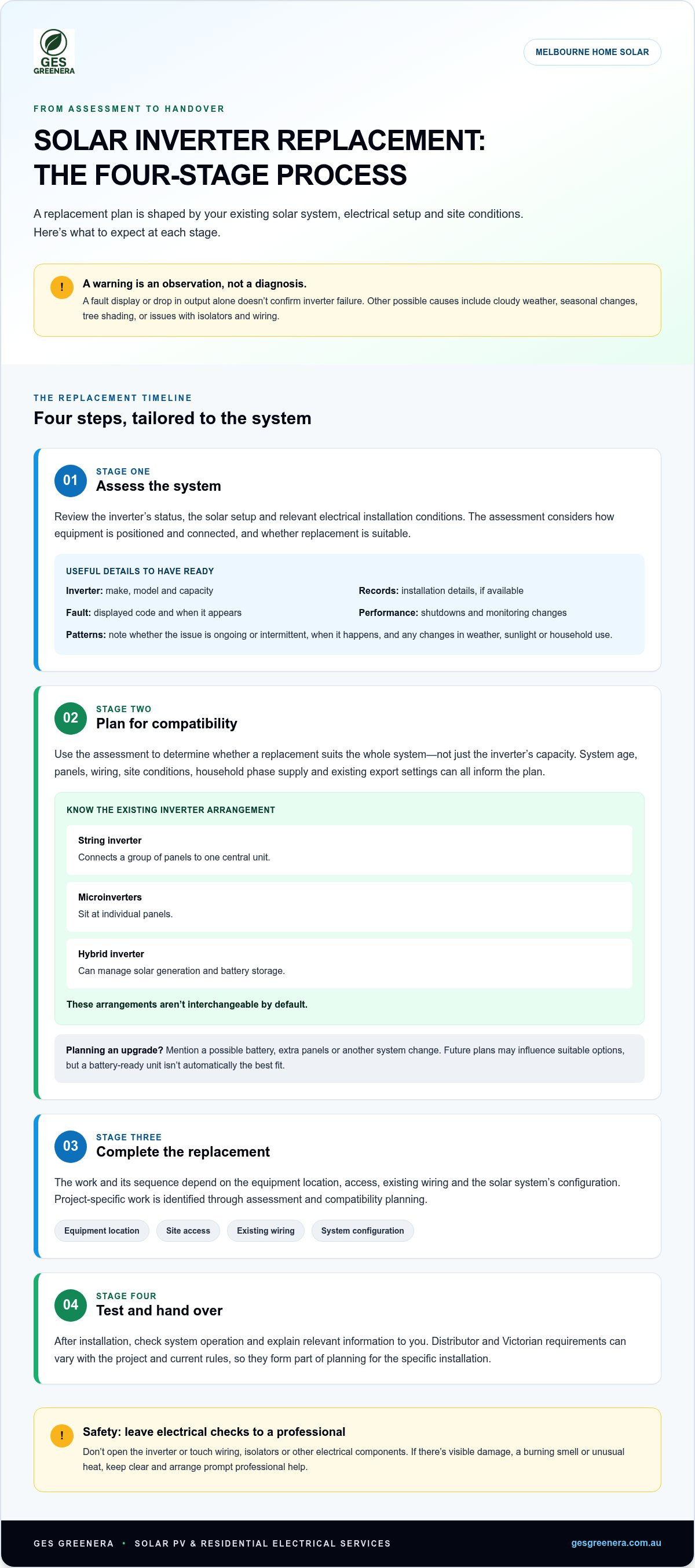
What to expect during solar inverter replacement in Melbourne
A clear process helps you understand what’s being assessed and why a replacement plan may differ from one home to another. Solar inverter replacement melbourne generally involves assessment, compatibility planning, replacement, testing and handover. Site access, existing wiring and the solar system’s configuration can affect the work and its sequence.
- Assess the system. Review the inverter’s status, the solar setup and relevant electrical installation conditions.
- Plan for compatibility. Use the assessment to determine whether the replacement suits the system and identify any project-specific work.
- Complete the replacement. The work is shaped by the equipment location, access and existing wiring.
- Test and hand over. Check system operation after installation and explain relevant information to you.
What happens at the assessment?
The assessment looks beyond the fault display. The inverter’s status and system details are considered alongside installation conditions, including how the equipment is positioned and connected. This helps establish whether replacement is suitable and what work the project may involve. Having the inverter details, system records and notes about the fault ready can make the discussion more useful.
Distributor and Victorian requirements can vary according to the project and current rules. These requirements form part of planning for the specific installation, rather than assuming every replacement follows the same process. For broader home electrical safety context, see this residential electrician Melbourne guide.
How are testing and handover handled?
After installation, the system’s operation is checked and relevant information is explained to the homeowner. Use the handover to understand what was changed and which system information to keep for future reference. The checks and project details depend on the equipment and installation.
For a replacement plan tailored to your solar system and site, arrange solar inverter replacement with GES Greenera.
Arrange solar inverter replacement with GES Greenera
If you’re considering solar inverter replacement melbourne, a few details about your system can make the first discussion more useful. GES Greenera provides solar inverter replacement alongside solar PV installation and residential electrical services, with the work planned around your existing system and property. Local coverage includes Melton, Sunbury, Sunshine, Werribee and nearby Melbourne suburbs.
What information should you have ready?
Gather what you can find. Useful information includes:
- The inverter make, model and approximate system age.
- Any displayed error code, including when it appeared and whether it recurs.
- Changes you’ve noticed in monitoring data or solar output.
- Clear photos of display messages, taken without opening or handling the equipment.
These observations help describe the issue and give the assessment a practical starting point. If you have installation records or system documents, keep them handy too.
A practical local next step
Share the information you’ve collected and describe what the system has been doing. GES Greenera can assess the solar setup and tailor the replacement work to the site, including its existing configuration and electrical conditions. This gives you a clearer starting point for understanding the next steps, whether your home is in Melton, Sunbury, Sunshine, Werribee or a nearby Melbourne suburb.
Ready to discuss your system? Arrange a solar inverter assessment with GES Greenera.
Make your next solar decision with confidence
A replacement can be a useful point to think about how your household wants to use solar over the coming years. Sharing planned changes, such as adding a battery or adjusting how you use electricity at home, gives the assessment more context. It also helps focus the discussion on a solution that suits your system and priorities, rather than choosing equipment based on capacity alone.
If you’re ready to take the next step with solar inverter replacement melbourne, GES Greenera can help you understand your system’s needs through solar and residential electrical services. Bring along the details and observations you’ve gathered to start a discussion tailored to your home.
Arrange a solar inverter assessment with GES Greenera and move towards a clear, considered plan for your solar system.
Frequently Asked Questions
Is a solar inverter worth replacing if the panels still work?
It may be worth assessing, but working panels don’t show whether the inverter is faulty or suitable for continued use. Note whether the system’s output has changed and whether the inverter displays a fault. An electrician can consider these observations alongside system performance, inverter condition and compatibility. The findings help determine whether repair, continued use or replacement is the appropriate next step.
Can a solar inverter be replaced without replacing the solar panels?
Yes, replacing the inverter alone may be possible if the panels and remaining system are suitable. The new unit must work with the system’s configuration and installation conditions, so don’t assume any inverter will fit. System age and planned upgrades, such as adding a battery, can also influence the decision. An electrical assessment helps establish suitable options.
How much does solar inverter replacement cost in Melbourne?
There’s no single price that suits every solar inverter replacement melbourne project. The scope depends on the inverter, existing solar system, site conditions and any associated electrical work. An assessment helps establish what the job involves. GES Greenera provides local support in Melton, Melbourne Airport, Diggers Rest, Deanside, Bacchus Marsh, Sunbury, Sunshine, Altona, Williamstown, Essendon, Thomastown, Epping, Eynesbury and Werribee.
What happens if my solar inverter stops working?
If the inverter stops operating, solar generation may stop or drop, while your home may draw electricity from the grid if grid supply is available. Note any display messages and review monitoring data, but don’t open the unit. Persistent faults need professional attention. Keep clear if you notice visible damage or unusual heat, and arrange an electrical assessment to investigate safely.
How long does a solar inverter usually last in Australia?
There isn’t one service life that applies to every inverter. Equipment, operating conditions, installation and maintenance can all affect how it performs over time. Check the manufacturer’s documentation and any system records for information relevant to your unit. Age alone doesn’t establish that replacement is needed; if performance changes or a fault appears, an assessment can help clarify the inverter’s condition.


